Pass Through vs Enclosed Laser Cutter: Which One Should You Buy?
Learn the differences between pass-through and enclosed laser cutters, covering material length limits, Class 1 optical safety, and workshop ventilation needs.

On this page
Top picks at a glance
As an Amazon Associate I earn from qualifying purchases.
- 1
 OMTech 100W CO2 Laser Engraver with 4 Way Pass Through Air9.7/10View on Amazon
- 2
 Twotrees TS5 7000mW Laser Engraver for Tumblers Fully9.6/10View on Amazon
- 3
 VEVOR 60W CO2 Laser Engraver9.6/10View on Amazon
- 4
 WECREAT Vision Pro 45W Laser Cutter and Engraver for TumblersView on Amazon
- 5
 IKIER Flex 3.5W Laser Engraving Machine Laser Cutter EnclosedView on Amazon
- 6
 Twotrees TTS-20 Max 20000mW Laser Engraver and Cutter MachineView on Amazon
- 7
 Longer New Upgrade RAY5 Laser Engraver CutterView on Amazon
- 8
 ATOMSTACK Swift 12W Laser Engraver Cutter for Wood & MetalView on Amazon
- 9
 ACMER S2 Laser EngraverView on Amazon
Makers crafting custom wooden signs, leather belts, architectural panels, and dimensional parts often hit the physical boundaries of standard desktop machines. When deciding between a pass through vs enclosed laser cutter, the choice comes down to material length flexibility versus contained workshop safety. A fully enclosed laser cutter seals the entire work area within a protective housing for Class 1 optical safety and efficient smoke containment, but limits your stock to the physical bed dimensions. A pass-through laser cutter features front, rear, or side access slots that let you feed continuous sheet goods and oversized boards through the machine, but opening those slots alters optical containment and demands strict ventilation discipline. The sections below explain these mechanical differences step by step to help you pick the right design for your workshop.
Other machines to compare
 WECREAT Vision Pro 45W Laser Cutter and Engraver for TumblersCheck price on Amazon
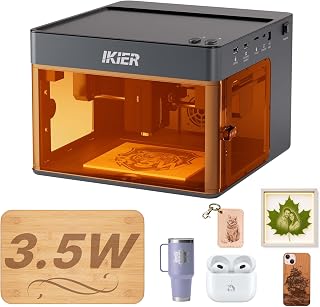 IKIER Flex 3.5W Laser Engraving Machine Laser Cutter EnclosedCheck price on Amazon
 Twotrees TTS-20 Max 20000mW Laser Engraver and Cutter MachineCheck price on Amazon
 Longer New Upgrade RAY5 Laser Engraver CutterCheck price on Amazon
 ATOMSTACK Swift 12W Laser Engraver Cutter for Wood & MetalCheck price on Amazon
 ACMER S2 Laser EngraverCheck price on Amazon
LaserEngraveHQ earns a commission from purchases made through these links, at no extra cost to you. Read our affiliate disclosure.
Pass-through capability is not a separate machine category, but a structural feature built into select enclosed lasers. When pass-through doors are opened, the machine operates without full optical enclosure, requiring proper wavelength-matched protective eyewear and direct exhaust management.
Step 1: Understand how pass-through slots expand material handling
The primary advantage of a pass-through design is processing boards and sheet goods that exceed the boundaries of the cutting table. In a standard enclosed machine, the physical walls stop any sheet wider or longer than the interior cavity. If a piece does not fit completely inside the cabinet with the lid closed, the laser cannot process it.
Pass-through machines solve this limit by incorporating hinged or removable access doors on opposing walls. For example, VEVOR lists an 80W CO2 laser featuring a 20 x 28 in working area with 2-Way pass-through doors at the front and back. These openings allow makers to slide long planks of plywood or acrylic through the bed, run a section, advance the material forward, and cut the next segment. Similarly, OMTech lists a 90W CO2 machine with a 28″ × 20″ work area and 4-way pass-through doors that accommodate longer items from multiple directions.
Some desktop diode enclosures handle oversized stock through motorized feed systems rather than passive doors. The WECREAT Vision Pro 45W enclosed cutter features a 22.83″ x 15.75″ laser bed, but the maker notes an optional auto pass through feeder that expands the workspace to 18.11” x 137” for continuous sign making. In contrast, fixed compact machines like the VEVOR 10W enclosed diode laser (model JL3PRO) restrict all cutting strictly to an 11.8 x 11.8 in working area with no pass-through option.
Step 2: Evaluate optical safety and laser classification
Laser safety represents the most critical operational difference between these machine configurations. Enclosed laser cutters generally achieve a Class 1 laser classification under normal operating conditions. A Class 1 designation means the laser radiation remains completely contained within a protective housing during operation, preventing stray beam reflections from escaping into the room. For instance, the VEVOR 10W enclosed diode listing specifies Class 1 safety protection with an aluminum frame, protective filtering cover, emergency stop, and security lock. The WECREAT Vision Pro 45W also lists Class 1 certification, using an eye-protective cover that automatically filters blue laser light and shuts off the beam if the lid opens.
Opening pass-through doors changes this safety balance entirely. When pass-through panels are opened to feed oversized stock, the optical barrier is broken. The beam path is no longer fully enclosed, which effectively converts a Class 1 device into an uncontained open laser system during the cut. Escaping reflections from infrared or visible laser beams can cause permanent eye damage or skin burns.
For deeper background on optical safety tiers, review our laser classes explained guide. When operating with open pass-through slots, everyone in the workshop must wear certified laser safety glasses. Eyewear protects only when marked with an optical density and wavelength range matching the machine, such as the 455 nm wavelength stated for the VEVOR 10W diode. Furthermore, machines like the OMTech 90W list a Class 2 designation with a cover interlock that automatically cuts the beam when the primary window opens, but feeding material through open pass-through doors requires bypassing or accommodating those interlocks carefully.
Step 3: Manage smoke, fumes and workshop ventilation
Laser processing vaporizes organic and synthetic materials, generating dense smoke, particulate matter, and odor. A fully sealed enclosed laser cutter provides a controlled negative-pressure environment when paired with an exhaust fan. The airtight cabinet directs all combustion byproducts directly out through ducting or into an air filtration system. For detailed extraction options, consult our fume extractor guide and our article on workshop ventilation requirements.
When you open pass-through access doors to feed oversized material, maintaining negative pressure becomes significantly harder. Air leaks through the open gaps, allowing smoke and fumes to escape into the workshop instead of exiting the exhaust duct. To counteract this leakage, workshops using pass-through cutting often require higher airflow exhaust blowers or supplemental fume collection hoods positioned directly above the open slots.
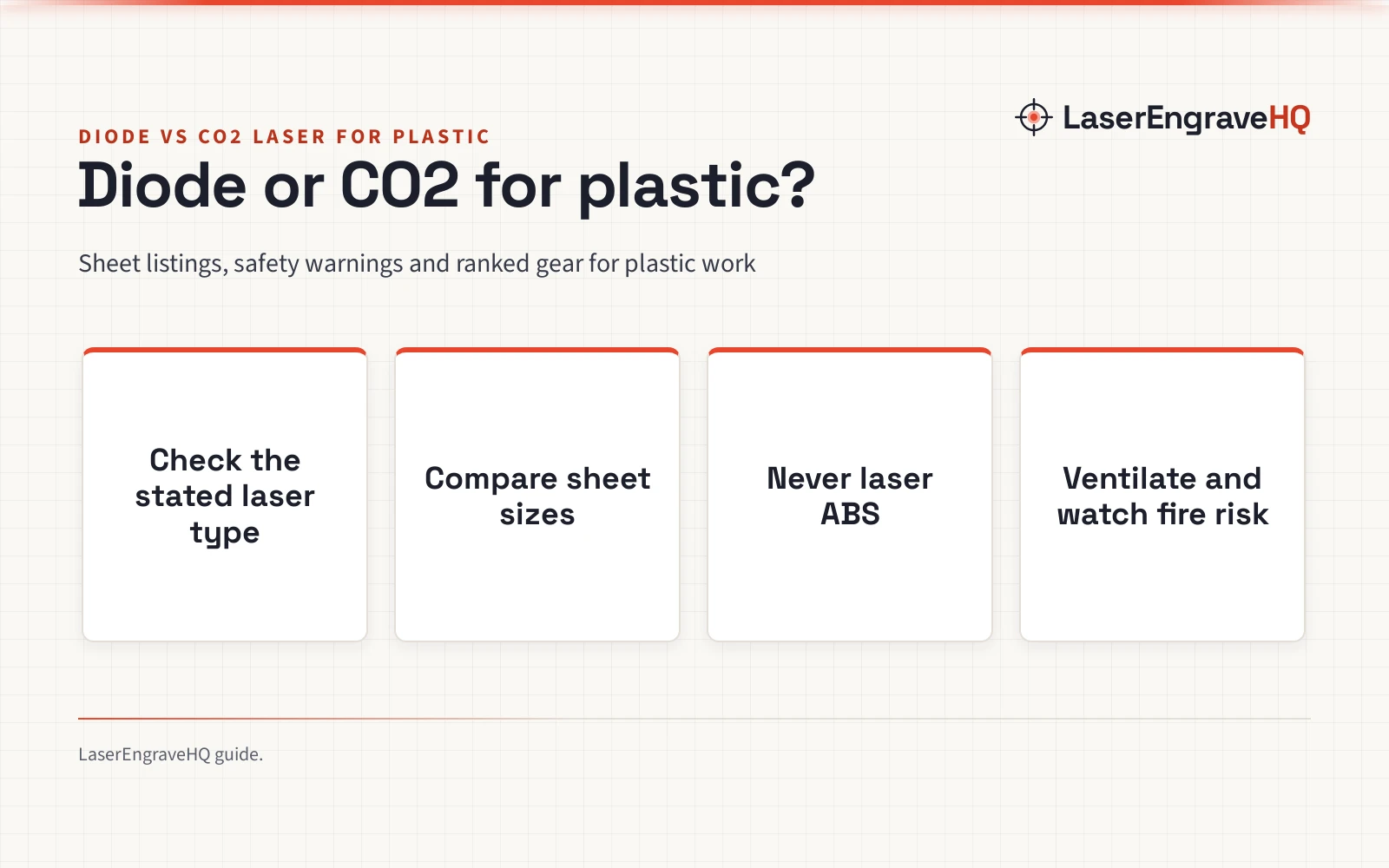
Material selection is equally vital. Regardless of machine enclosure style, never process PVC, vinyl, PVC-based faux leather, polycarbonate, or ABS. Cutting these forbidden materials releases corrosive hydrogen chloride gas and harmful airborne compounds that damage machine optics and create serious workshop hazards. Check our prohibited materials guide before vaporizing unfamiliar stock.
Step 4: Check structural bed clearance and physical dimensions
Pass-through capability does not mean unlimited material clearance. A pass-through slot allows longer stock to feed along one axis, but the width and thickness of the material remain restricted by the machine frame, honeycomb bed structure, and vertical slot opening.
Slot height limits how thick a board you can pass through the machine. For instance, the VEVOR 80W CO2 laser listing specifies cutting materials up to 0.59 in thick in one pass, while the OMTech 90W lists engraving as deep as 0.4 in with a Yongli H2 tube delivering up to 8000 hours of usage. If your board thickness exceeds the vertical clearance of the pass-through slot, the door cannot accommodate it regardless of length. Furthermore, VEVOR notes an overall machine weight of 282 pounds for its 80W unit, while OMTech lists 227 pounds for its 90W cutter. These heavy, floor-standing or large-bench frames require dedicated workshop floor area and sturdy support tables.
On desktop machines without pass-through doors, cutting depth depends entirely on optical power and focal clearance within the sealed cabinet. The WECREAT Vision Pro 45W lists the ability to cut 1” wood (25mm wood and 20mm black acrylic in one pass) inside its enclosed chamber, weighing 78.8 pounds. Meanwhile, the compact VEVOR 10W enclosed diode cutter lists cutting 0.2 in basswood in a single pass at speeds up to 7000 mm/min, weighing 14.99 pounds. If your work consists of small ornaments, coasters, and plaques that fit within these standard bed sizes, a fixed enclosed machine provides complete containment without the structural footprint and complexity of pass-through hardware.
Step 5: Match the enclosure style to your project workflow
Choosing between these machine formats depends on what products you plan to sell and where you operate. If your production centers on long wooden banners, oversized porch signs, custom leather straps, or repetitive batching from continuous roll stock, a pass-through laser cutter provides the physical clearance you need without forcing you to buy an industrial wide-format flatbed. For broader machine comparisons across laser types, see our guide on how to choose a laser engraver and our overview of diode vs CO2 lasers.
Conversely, if your workshop is located in a home office, spare bedroom, school, or shared makerspace where bystander safety and odor control are paramount, a fully enclosed laser cutter is the safer and more practical choice. Fully sealed cabinets keep stray radiation locked away, contain fine dust, and exhaust cleanly through standard ductwork. If you decide that complete containment suits your shop best, explore our curated recommendations in our best enclosed laser engraver guide and our roundup of the best CO2 laser cutter for home use.
Common mistakes to avoid
- Assuming pass-through doors allow unlimited material thickness without checking vertical slot clearance.
- Operating with open pass-through doors without wearing certified wavelength-matched laser safety glasses.
- Failing to upgrade workshop exhaust ventilation to handle smoke escaping through open feed slots.
- Attempting to feed warped or bowed boards that catch on the internal laser nozzle during movement.
- Purchasing a massive pass-through machine when all planned products fit standard desktop bed dimensions.
- Processing prohibited plastics such as PVC, vinyl, or ABS that release corrosive vapors into your workspace.
Pass through vs enclosed laser cutter: the short version
- Identify your maximum workpiece length and whether your projects require continuous sheet feeding.
- Evaluate workshop space and ensure adequate clearance both in front of and behind pass-through doors.
- Verify optical safety requirements, recognizing that open pass-through doors remove Class 1 containment.
- Confirm ventilation capacity to ensure escaping fumes do not linger in enclosed workshop spaces.
- Select a fully enclosed laser for home and classroom safety, or a pass-through model for oversized sign and board fabrication.
After selecting your machine style, calibrate your cutting settings with sample cuts on scrap pieces and establish an organized material support setup around your work table.
FAQ: lasers and CNC
What is a pass-through laser cutter?
A pass-through laser cutter is an enclosed or semi-enclosed machine equipped with openings on opposing sides, typically the front and back. These slots allow rigid sheet materials, long boards, and continuous rolls to pass completely through the work area. This mechanical configuration enables makers to cut or engrave oversized items section by section without being limited by the depth of the interior bed.
Does opening a pass-through door affect laser safety?
Yes. Opening a pass-through door breaks the physical enclosure that provides Class 1 laser containment. When the access panels are open, stray reflections and scattered laser energy can escape into the room. Operators and anyone in the room must wear protective eyewear matched to the specific laser beam wavelength, and access to the area should be restricted during operation.
Can a standard enclosed laser cutter process long boards?
A standard enclosed machine without pass-through slots cannot process boards longer than its internal cabinet dimensions. The protective cover must fully close for the machine to operate safely, and interlocks will prevent cutting if stock props the lid open. Processing longer stock requires either cutting the board into smaller sections beforehand or choosing a machine engineered with pass-through access.
How does exhaust ventilation differ between pass-through and enclosed machines?
Fully enclosed laser cutters maintain strong negative air pressure, channeling all smoke, fumes, and particulates directly into the exhaust hose or air filter. When pass-through doors are open, air drafts through the slot openings and reduces containment efficiency. Users often need higher-volume exhaust fans or auxiliary overhead ventilation hoods to prevent fumes from escaping into the room.
Which laser cutter style is better for a home workshop?
For home workshops, spare bedrooms, and educational spaces, a fully enclosed laser cutter is generally preferable. Full enclosure ensures Class 1 optical containment, reduces operating noise, and captures odors and smoke cleanly. A pass-through model is better suited to dedicated garage shops, makerspaces, or commercial craft studios with strong exterior exhaust venting and controlled eye-safety protocols.
Related: the laser engraver hub, best enclosed laser engraver and best CO2 laser cutter for home use. Also see our open frame vs enclosed laser engraver comparison. Also see our laser classes explained guide.