Air Cooled vs Water Cooled Spindle: Which One Should You Buy?
A complete comparison of air cooled and water cooled CNC spindles to help you choose the right setup for noise, maintenance, runtime and workshop workflow.

On this page
Top picks at a glance
As an Amazon Associate I earn from qualifying purchases.
- 1
 SainSmart Genmitsu 3020-PRO Ultra CNC Router Machine9.7/10View on Amazon
- 2
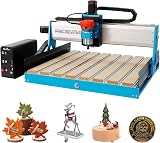 6050 CNC Router Machine9.6/10View on Amazon
- 3
 FoxAlien Masuter 3S CNC Router Machine with Closed-Loop9.6/10View on Amazon
- 4
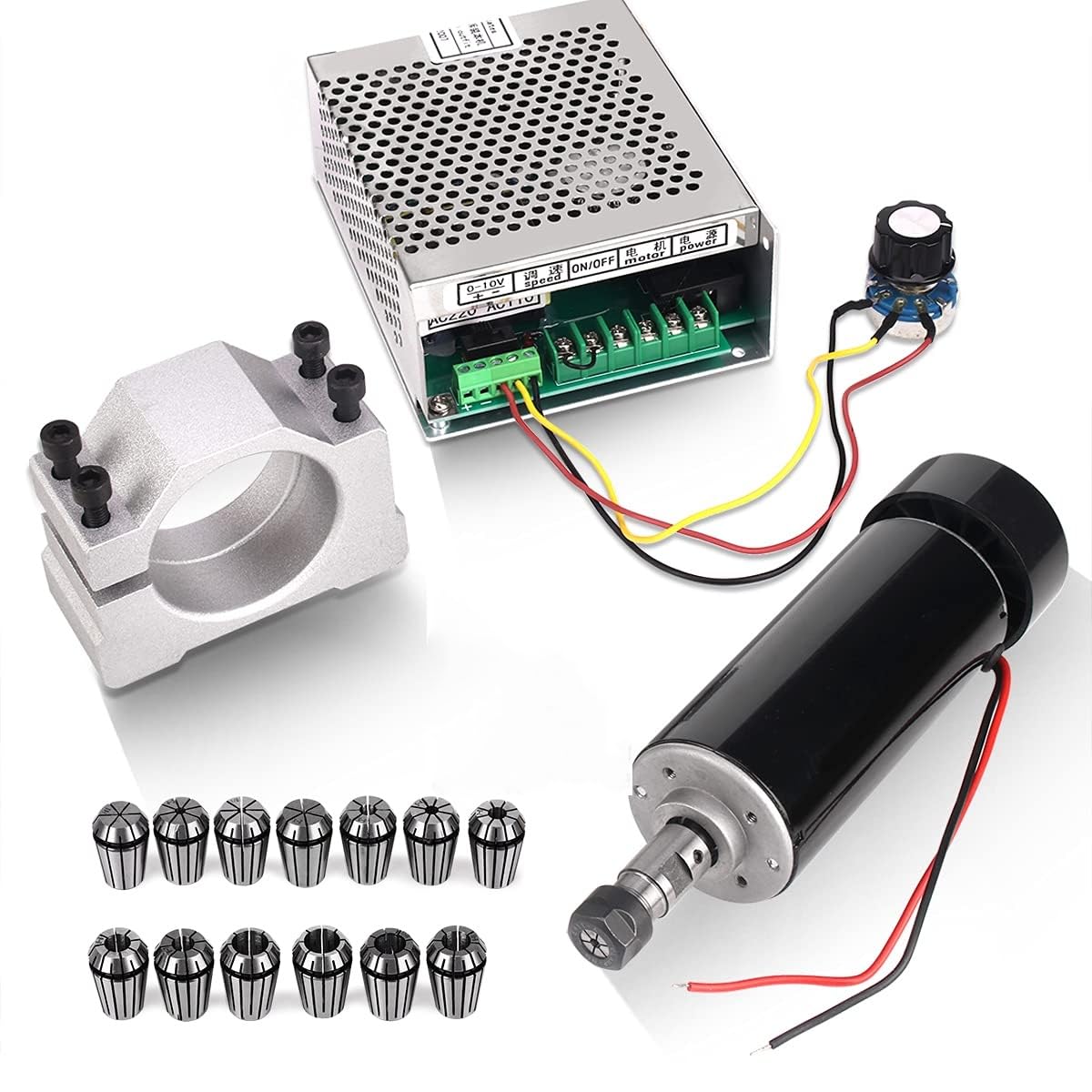 CNC SpindleView on Amazon
- 5
 RATTMMOTOR 500W CNC Air Cooled Spindle Motor ER11 12000RPMView on Amazon
- 6
 CNC Spindle CNC Motor 110V 1.5KW Air Cooled Spindle MotorView on Amazon
- 7
 Huanyang Water Cooled CNC Spindle Milling Motor 110V 2.2KWView on Amazon
- 8
 ER20 Water Cooled CNC Spindle Motor 220v 2.2KW Φ80mm 4View on Amazon
When configuring a CNC router to carve hardwood signs, mill aluminum brackets, or batch cut parts, choosing between an air cooled vs water cooled spindle determines your workshop noise level, maintenance routine, and installation complexity. An air cooled spindle is simpler and faster to deploy because an integrated fan handles heat dissipation without external plumbing, making it ideal for makers who want low maintenance. A water cooled spindle runs substantially quieter and keeps operating temperatures steady through long production runs, making it the better choice for home garages and continuous cutting where you can manage a coolant reservoir, pump, and fluid lines.
Other machines to compare
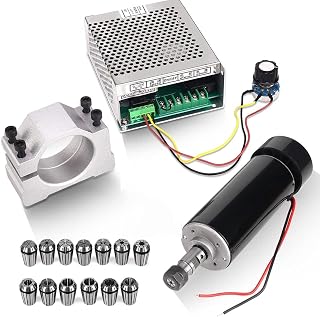 CNC SpindleCheck price on Amazon
 RATTMMOTOR 500W CNC Air Cooled Spindle Motor ER11 12000RPMCheck price on Amazon
 CNC Spindle CNC Motor 110V 1.5KW Air Cooled Spindle MotorCheck price on Amazon
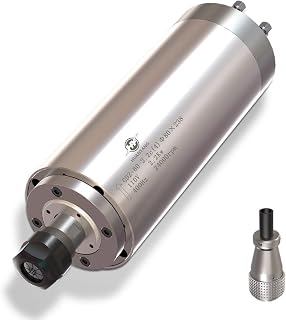 Huanyang Water Cooled CNC Spindle Milling Motor 110V 2.2KWCheck price on Amazon
 ER20 Water Cooled CNC Spindle Motor 220v 2.2KW Φ80mm 4Check price on Amazon
LaserEngraveHQ earns a commission from purchases made through these links, at no extra cost to you. Read our affiliate disclosure.
Spindle cooling performance depends on ambient shop temperature, enclosure airflow, and continuous cutting loads. We only cite verified manufacturer figures from published listings, so where cooling metrics or fluid capacities are not published, we explain the mechanics without inventing numbers.
Step 1: Understand how air cooled spindles manage heat
Most compact air cooled spindles rely on a shaft-driven fan mounted inside the motor housing. As the motor spins, the fan draws ambient air across the internal windings before venting it outward. This design is fully self-contained because cooling begins automatically when the spindle turns. Because there are no fluid lines, external reservoirs, or pumps, an air cooled spindle is straightforward to install on a desktop gantry.
However, on shaft-driven models, fan speed is tied directly to rotor RPM. When operating in the lower portion of the spindle’s recommended speed range, airflow drops, which can allow heat to build up faster during prolonged cutting cycles. In addition, cylindrical models typically vent cooling exhaust downward past the collet, which can blow fine dust and chips across your work area unless captured by a dust boot.
Step 2: Understand how water cooled spindles manage heat
A water cooled spindle circulates liquid coolant through an internal jacket surrounding the motor windings. An external submersible pump pushes fluid through flexible tubing into the spindle body, carrying heat away to an external reservoir or a dedicated radiator chiller before returning to the loop.
This liquid loop decouples motor cooling from spindle rotational speed. Whether the spindle is running at moderate RPM for larger tooling or spinning at maximum rated speed for detailed engraving, coolant flow remains constant. Heat transfers into the fluid and leaves the cutting area. Because there is no internal fan blowing through the housing, the spindle body remains sealed against airborne sawdust and aluminum shavings, extending bearing life and keeping the cutting zone free from unwanted air turbulence.
Step 3: Compare noise levels and workshop environment
Noise level is often the deciding factor for makers operating in home garages, basements, or shared spaces. In an air cooled spindle, fan blades generate a high-pitched siren sound as they chop through ambient air at elevated speeds. While noticeably quieter than a brushed trim router, fan noise remains prominent throughout the cutting cycle.
A water cooled spindle eliminates fan whine entirely. When running without cutting resistance, a water cooled unit produces only a gentle hum from the internal bearings and a quiet trickle of coolant through the reservoir. During cutting, the primary sound is the bit engaging the workpiece rather than motor whine. If your workshop borders living quarters, water cooling significantly improves working comfort. Adding a dust collector shoe for CNC router setups ensures clean dust extraction at the workpiece regardless of which cooling style you choose.
Step 4: Evaluate plumbing, coolant, and maintenance requirements
Maintenance routines differ substantially between the two cooling styles. An air cooled spindle requires minimal ongoing attention: blow out accumulated dust from intake vents periodically, inspect cabling, and keep the collet taper clean. Because there are no fluids involved, there is zero risk of leaks dripping onto your spoilboard or stepper drivers.
Water cooling demands consistent diligence. A maker must monitor coolant levels in the reservoir, check tubing for kinks along the drag chain, and periodically flush the system to prevent bacterial growth or mineral buildup. Using distilled water with an anti-algae additive and corrosion inhibitor protects internal channels from deposits and corrosion. You must also verify that the water pump is circulating before starting a cut; running without coolant flow can overheat windings in moments. For complete machine care, consult our CNC router maintenance guide.
Step 5: Check spindle power, speed ratings, and collet sizes
Spindle selection depends on machine frame rigidity, available power supply, and target materials. Air cooled spindles cover standard hobby and light production tiers. For compact desktop machines, MYSWEETY lists a 500W air-cooled motor with a 52mm clamp mount bracket and idle speeds up to 12000 rpm with an ER11 collet. RATTMMOTOR also lists a 500W air-cooled motor with a 52mm diameter, an idling speed range of 2000-12000r/min, and an item weight of 1.67 kg.
For mid-range routing in hardwood and aluminum, FoxAlien lists a 1.5KW air-cooled spindle kit with a 65mm diameter, a rated speed of 24000 RPM, and an item weight of 16.72 pounds for the complete package. AnoleX lists a 1.5KW air-cooled spindle kit with a 65mm diameter, a speed range of 0-24000 rpm, 4 steel bearings, and an item weight of 11 pounds. Zhong Hua Jiang publishes a 1.5KW air-cooled model with a 65mm diameter, 4 steel bearings, and a weight of 2.7kg, operating on 110V with a 400Hz frequency rating and speeds from 5000-24000 RPM.
For heavier cutting, Zhong Hua Jiang lists a 2.2KW air-cooled spindle motor with an 80mm clamp mount, an ER20 collet, and 4 steel bearings running on 110V. RATTMMOTOR offers a 2.2KW air-cooled unit with an 80mm mount diameter, an ER20 collet, a speed of 24000RPM, and an item weight of 9.1 pounds, operating on 220V with a 400Hz frequency. RATTMMOTOR also lists a square 2.2KW air-cooled motor with an ER20 collet, a speed of 24000RPM, 220V voltage, an item weight of 7.45 kg, and a 1 year warranty.
ER20 collets accept bits with shanks up to 1/2 inch, which Zhong Hua Jiang includes alongside 1/4 inch and 1/8 inch collets, allowing stiffer tooling than ER11 chucks. For collet comparisons, read our ER vs TG collets guide, and see how to choose a desktop CNC router for machine sizing. For tooling selection, see our best CNC bit set for beginners guide.
Step 6: Review climate and freezing risks in unheated shops
Shop environment plays an overlooked role in spindle longevity. If your CNC router sits in an unheated garage, shed, or barn that experiences freezing winter temperatures, water cooling introduces substantial risk. Plain water inside the cooling jacket will freeze, expand, and crack the metal casting, permanently ruining the spindle.
Makers working in unheated spaces must either drain coolant lines after every session, maintain constant heating, or use specialized non-conductive anti-freeze coolant formulated for CNC chillers. Air cooled spindles have no fluid to freeze, making them immune to winter temperature drops. An air cooled spindle can sit in freezing temperatures overnight and run safely once bearings are brought up to temperature with a gentle warm-up cycle.
Step 7: Calculate total setup complexity and controller integration
Installation highlights the practical distinction between these two systems. An air cooled spindle setup is compact and self-contained: mount the motor in the bracket, connect the shielded aviation cable to your variable frequency drive, wire ground and power, and configure drive parameters. If you are setting up a starter machine, our desktop CNC machine for beginners guide details electrical wiring principles.
A water cooled spindle requires routing flexible coolant lines through cable drag chains alongside motor power and signal lines. You must place an external reservoir and pump near the machine base, ensure tubing cannot snag on moving gantry axes, and wire an interlock so the spindle never runs without coolant flow. While plumbing takes extra assembly time, the result is an ultra-quiet cutting station that runs cool through long batch jobs. To compare complete spindle configurations against handheld routers, read our spindle vs router for CNC comparison.
Common mistakes to avoid
- Starting a water-cooled spindle without turning on the coolant circulation pump.
- Using tap water in a water cooling loop, which causes mineral deposits and corrosion.
- Running a high-speed spindle below its rated minimum operating speed during heavy cutting.
- Allowing water-cooling lines to freeze inside an unheated garage workshop during winter.
- Overlooking downward fan airflow on cylindrical air-cooled spindles that scatters fine dust across the shop.
- Routing unshielded spindle cables alongside stepper wiring, causing electrical interference.
Air cooled vs water cooled spindle: the short version
- Choose air cooled if you prioritize easy installation, zero plumbing maintenance, and operate in an unheated shop.
- Choose water cooled if workshop noise reduction is critical and you routinely run long cutting jobs in enclosed spaces.
- Verify your CNC gantry and Z-axis carriage can support the spindle diameter and overall motor weight.
- Equip air-cooled spindles with a dedicated dust boot to prevent cooling exhaust from scattering fine shavings.
- Use distilled water and anti-corrosion additives in water-cooled systems, and verify pump operation before cutting.
- Match the spindle power rating and electrical phase requirements to a properly calibrated variable frequency drive.
The right decision comes down to your workspace tolerance for noise versus your willingness to manage liquid plumbing. Air cooling gets you cutting faster with less fuss, while water cooling gives you a quieter, thermally stable production environment.
FAQ: lasers and CNC
Is a water cooled spindle quieter than an air cooled spindle?
Yes. An air cooled spindle relies on an integrated shaft fan whose spinning blades create aerodynamic noise that increases with rotational speed. A water cooled spindle has no internal fan, producing only a gentle hum from the bearings during operation. When cutting, you primarily hear the tool bit engaging the workpiece rather than motor whine.
Can an air cooled spindle run continuously for long jobs?
An air cooled spindle can run long jobs provided it operates within its recommended rotational speed range so the fan circulates sufficient air. Operating below the motor’s rated minimum speed under load reduces airflow and can cause heat buildup. Water cooled spindles maintain constant liquid circulation regardless of spindle speed, making them better suited for multi-hour production cycles.
What liquid coolant should be used in a water cooled spindle?
Use distilled water combined with an anti-algae additive and corrosion inhibitor, or dedicated machine coolant formulated for closed loops. Never use tap water because mineral deposits can clog internal cooling jackets. In unheated shops subject to winter freezes, an approved propylene glycol anti-freeze mixture protects the internal jacket from cracking.
Do air cooled spindles blow dust across the workpiece?
Many cylindrical air cooled spindles vent exhaust downward toward the collet and workpiece. This downward airflow can scatter fine sawdust, MDF particles, or aluminum chips into your workshop unless you install a sealed dust boot connected to a vacuum. Water cooled spindles produce no downward exhaust blast.
Can a water cooled spindle freeze in an unheated garage?
Yes. A water cooled spindle filled with pure water will freeze if left in an unheated garage during freezing weather. Expanding ice can rupture the internal metal jacket and ruin the spindle. In freezing conditions, drain the coolant lines after cutting or use an approved non-corrosive anti-freeze mixture.
Do air cooled and water cooled spindles use different VFD controllers?
Both styles run on standard variable frequency drives that regulate rotational speed, frequency, and motor voltage. Drive requirements depend on motor wattage, frequency rating, and input voltage rather than cooling method. However, water cooled setups often include an electrical relay to halt the spindle if the coolant pump loses power.
Related: the CNC router hub, best desktop CNC for beginners and best CNC router for small business. Also see our spindle vs router for CNC guide. Also see our CNC router maintenance guide.