Laser Safety Curtains: Workshop Setup and Optical Barrier Guide
A practical guide to laser safety curtains: understand optical barrier protection, select shielding materials, set up screens and keep your workshop safe.

On this page
Makers producing wooden signs, personalized tumblers, leather patches and cut acrylic gifts frequently operate open-frame machines that emit intense optical radiation. Laser safety curtains are protective optical barriers and workshop screens that enclose an engraver, contain diffuse scatter and block stray beam reflections from reaching unprotected eyes. Proper barrier shielding isolates the hazardous zone from visitors and nearby workstations. The guide below explains laser safety curtains step by step, covering optical shielding, material choices, perimeter framing, sensor interlocks and exhaust setup.
As an Amazon Associate I earn from qualifying purchases. LaserEngraveHQ earns a commission from purchases made through these links, at no extra cost to you. Read our affiliate disclosure.
Not all workshop screens serve the same purpose. Standard welding screens block ultraviolet arc flash and flying debris, but vinyl curtains lack certified optical density values for laser beams. True laser barriers absorb specific beam wavelengths, while optoelectronic safety light curtains act as interlock trip sensors rather than physical shields.
Step 1: Identify your laser wavelength and beam hazards
Operating an open-frame laser engraver presents optical hazards beyond the direct cutting spot. Specular reflections occur when a concentrated beam bounces off glossy acrylic or polished metal at an angle with high intensity. Matte surfaces like wood and slate produce diffuse scatter, dispersing radiation in multiple directions across the room.
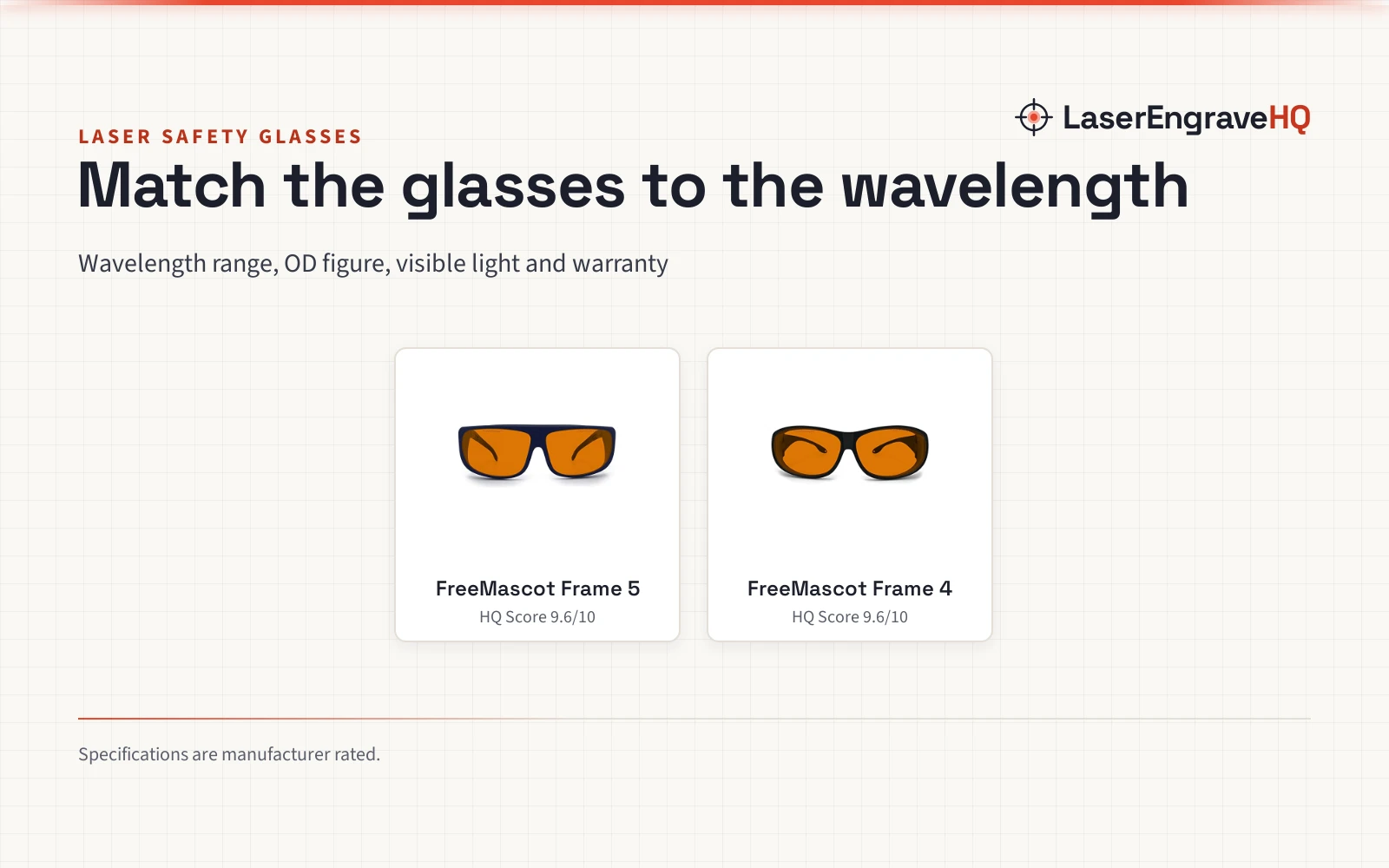
Protecting a shop requires matching the barrier to the machine’s emission spectrum. Shielding designed for visible blue diode light does not protect against an infrared fiber laser unless specifically certified for those infrared wavelengths. For infrared equipment, optical absorption must match stated wavelengths. LP-LaserPair lists laser safety window shields covering 740nm to 1100nm, including 755nm, 808nm, 980nm, 1064nm, 1070nm and 1080nm. Kingdder also lists protection sheets designed for fiber laser infrared light from 800nm to 1100nm.
Optical Density, abbreviated as OD, measures how effectively a barrier diminishes radiation. Kingdder lists its sheet at OD6+, while LP-LaserPair lists optical density 7+ with CE EN207 compliance. Pair your machine with verified gear from our laser safety glasses guide and our laser safety hub.
Step 2: Distinguish laser barriers from welding curtains
Makers often encounter commercial welding curtains and wonder if they provide laser protection. Welding screens shield workers from ultraviolet radiation and visible flash generated by arc welding. For example, Jackson lists transparent welding curtains made of 14 mil PVC vinyl meeting NFPA 701 and ANSI/FM 4960 standards for flame resistance, sized at 6′ x 8′ and 6′ x 10′. VEVOR also lists 6′ x 8′ vinyl screens offering 6-level UV protection.
While vinyl screens contain sparks and welding flash, they are not certified laser stops. The listing for Jackson explicitly notes that the curtain is not intended for use in lieu of visors, goggles, eyewear or welding helmets. A focused laser beam will quickly scorch, burn or penetrate vinyl.
Furthermore, vinyl is polyvinyl chloride. Heating PVC burns the material and produces hazardous hydrogen chloride fumes that damage lungs and corrode equipment. Never place PVC vinyl where a beam can strike it, and see our guide on materials you should never laser cut.
Step 3: Understand safety light curtains and interlock sensors
Another common source of confusion involves optoelectronic devices sold as safety light curtains. These units are electro-sensitive sensor systems rather than physical sheets of fabric. CGOLDENWALL lists safety light curtains with a 40mm beam pitch, 10 beams (with 6 beams also listed in specifications), a 10ms response speed, and compliance with the IEC61496-1/2 standard. Antstone lists safety light curtain sensors featuring a 40mm beam pitch, 6 beams or 10 beams, an IP65 protection grade, a 0.01 seconds response speed, and a 5m sensing distance.
These screens project modulated infrared beams between a transmitter and a receiver. When an operator breaks any beam across the detection height, the controller sends an electrical signal to halt machinery. In a laser shop, safety light curtains serve as perimeter trips around open tables to shut off beam power before someone contacts the hazard zone. Compare these controls with physical barriers in our open frame vs enclosed laser engravers guide and our laser engraver safety checklist.
Step 4: Select barrier materials and viewing panels
True optical containment requires certified optical sheets mounted in rigid frames or enclosures. Specialized acrylic panels blended with absorbing dyes let makers observe an engraver while blocking hazardous radiation. Kingdder lists 12″ x 12″ x 0.2″ protective sheets made of PMMA acrylic with OD6+ protection for infrared wavelengths from 800nm to 1100nm. LP-LaserPair lists 12″ x 12″ x 0.2″ acrylic panels delivering optical density 7+ across 740nm to 1100nm with 40 percent visible light transmission.
A 40 percent visible light transmission permits clear viewing of alignment marks while blocking 1064nm scatter. Avoid ordinary craft acrylic, as generic tinted plastic lacks verified optical attenuation. For desktop machines, mounting a certified panel into a protective cover creates reliable containment. See our recommendations in the best laser engraver enclosure guide and our walkthrough on how to build a laser engraver enclosure.
Step 5: Assemble stable frames and eliminate beam gaps
Perimeter shielding must stand on rigid framing to prevent gaps and tipping hazards. Commercial screen kits provide practical hardware configurations for workshop floor layouts. Jackson lists a 6′ x 8′ frame kit constructed with 19 gauge steel, featuring grommets spaced 8 inches apart along one width side and 16 inches apart along both height sides. VEVOR lists mobile frames with 4 swivel wheels including 2 lockable casters, as well as a 3-panel system supported by 12 rolling wheels.
Pay careful attention to line of sight when arranging screens. Reflected beams travel along straight optical paths. If a curtain leaves an opening near the floor or between adjoining panels, scatter can escape into adjacent work areas. Overlap adjacent screen edges, fasten grommets firmly to frame uprights, and engage caster brakes once panels are positioned.
Step 6: Integrate fume extraction and fire containment
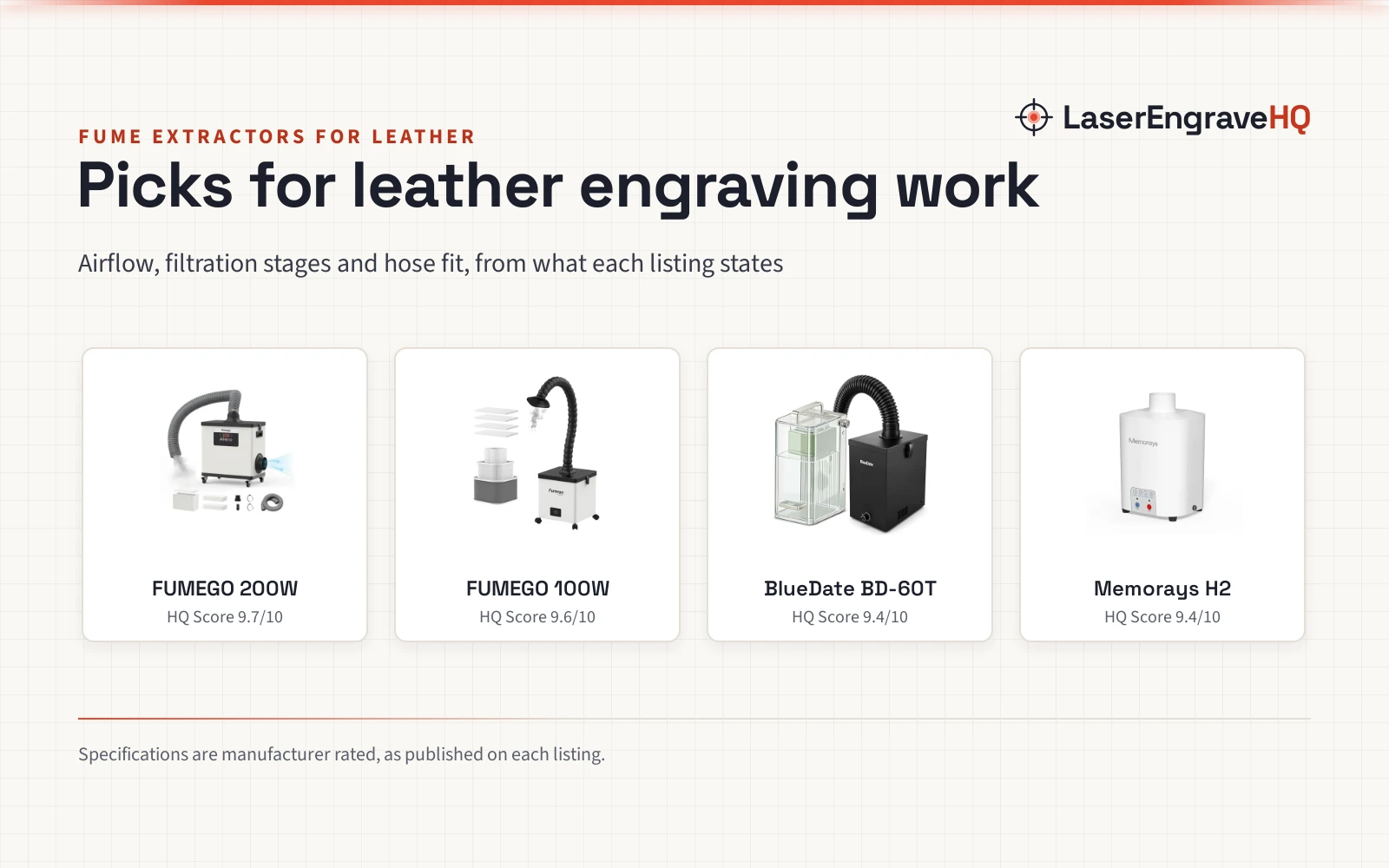
Enclosing a laser engraver with curtains concentrates smoke and fumes in the workspace. Processing wood, cast acrylic, leather and coated metal generates airborne soot and volatile compounds. Every enclosed laser space requires an active exhaust system that draws fumes away from the workpiece. Consult our guides on do laser engravers need ventilation and the best fume extractor for laser engraver to size an appropriate exhaust fan.
Fire safety is equally critical inside an enclosed perimeter. High-power optical energy can ignite combustible materials if air assist fails or cut blanks jam. Never leave a running laser unattended, and position an extinguisher outside the curtain entrance. Review our selections in the best fire extinguisher for laser engraver guide to keep extinguishing gear within reach.
Step 7: Establish workshop protocols and maintenance
Physical barriers provide reliable protection only when supported by consistent operational habits. Post standardized warning signage at every curtain entrance, clearly stating that laser equipment is operating inside. Enforce mandatory eye protection: anyone stepping inside the curtain perimeter while the machine is powered must wear wavelength-matched protective glasses.
Perform regular visual checks on all barrier hardware. Inspect fabric screens for pinholes or burns, and clean optical acrylic panels with soft microfiber cloths and mild soapy water to prevent surface scratches. Verify that interlocks and light curtain sensors reliably halt beam firing before starting production runs. If you are choosing workshop equipment, review our advice on how to choose a laser engraver and examine the best laser engraver for small business options.
Common mistakes to avoid
- Using uncertified PVC welding curtains as laser beam stops without verified optical density values.
- Placing vinyl materials where laser energy can strike them, releasing corrosive hydrogen chloride fumes.
- Relying on generic tinted plastic from craft suppliers that lacks documented optical density and wavelength coverage.
- Leaving sightline gaps between curtain panels or near the floor where stray beam scatter can escape.
- Surrounding an engraver with curtains without providing dedicated exhaust ventilation for smoke.
- Allowing visitors inside the curtained perimeter without wavelength-matched protective glasses.
- Failing to lock caster wheels on mobile frames, allowing barriers to shift out of alignment during operation.
Laser safety curtains: the short version
- Identify your machine’s operational laser wavelength and potential scatter hazards.
- Select certified optical barrier panels with verified optical density values matching your wavelength.
- Use flame-resistant welding screens solely for spark containment, never as direct optical laser stops.
- Mount curtains on stable frames with overlapping seams to prevent optical gaps.
- Integrate safety light curtain sensors or interlock switches to halt laser firing if the perimeter is breached.
- Provide active exhaust ventilation and position a fire extinguisher outside the barrier perimeter.
Layering certified optical shielding, active exhaust ventilation and reliable interlock sensors creates a dependable workspace where makers can produce high-quality engraving work with complete confidence.
FAQ: lasers and CNC
Are welding curtains the same as laser safety curtains?
No. Welding curtains, such as Jackson’s 14 mil PVC screens meeting NFPA 701, filter welding arc glare, sparks and spatter. They lack certified optical density values for laser wavelengths. True laser curtains use specialized optical absorbers that block specific laser radiation.
Can a laser beam burn through a safety curtain?
Yes. Laser safety curtains and optical panels are designed to contain diffuse scatter and stray reflections, not continuous direct beam strikes. A focused laser beam will scorch fabric or melt plastic if held in place, which is why laser jobs must never run unattended.
What does optical density mean for laser safety barriers?
Optical density, abbreviated as OD, measures a material’s capacity to block radiation at a specific wavelength. For example, Kingdder and LP-LaserPair publish specifications of OD6+ and 7+ across 800nm to 1100nm, indicating that transmission through the barrier is reduced to a minute fraction of the incoming beam.
How does a safety light curtain differ from a barrier curtain?
A barrier curtain is a physical sheet that absorbs or blocks light rays. A safety light curtain, such as the optoelectronic units listed by CGOLDENWALL and Antstone with a 40mm beam pitch and response speeds of 10ms or 0.01 seconds, is an electronic presence-sensing system that projects infrared beams across an access point and triggers an electrical shutoff when someone crosses the line.
Do I still need safety glasses if I use laser safety curtains?
Curtains protect individuals standing outside the barrier perimeter. Anyone stepping inside the curtain enclosure while the laser operates must wear certified protective glasses matched to the machine’s exact wavelength.
Can I laser cut or engrave vinyl welding curtains?
No. Vinyl contains polyvinyl chloride. Heating or cutting PVC with a laser generates toxic hydrogen chloride gas and corrosive fumes that ruin machine components and contaminate workshop air. Never cut or engrave vinyl materials.
Related: the laser safety hub, laser safety glasses guide, and best laser engraver enclosure. Also see our laser engraver safety checklist, open frame vs enclosed laser engraver guide, and how to choose a laser engraver.