What Is a Stitch Regulator on a Sewing Machine
A stitch regulator is a presser foot that senses fabric movement and adjusts machine speed so free-motion stitches stay the same length.

On this page
This guide covers what is a stitch regulator. Free-motion quilting asks the hands to do the work of feed dogs: the quilter moves the fabric under the needle while the machine sews, and the stitch length changes with every change in hand speed. A stitch regulator for free-motion quilting is a presser foot with a sensor that watches how fast the fabric moves and adjusts the machine speed to match, so each stitch stays the same length even when the hands speed up or slow down. The sections below explain how the foot works, which machines it fits, and when it earns its place on the machine.
As an Amazon Associate I earn from qualifying purchases. LaserEngraveHQ earns a commission from purchases made through these links, at no extra cost to you. Read our affiliate disclosure.
What is a stitch regulator
A stitch regulator is a presser foot built for free-motion sewing. Under the foot sits a sensor that reads the movement of the fabric and tells the machine to sew faster or slower, so the stitch length stays even while the hands guide the fabric in any direction. The maker of the BSR #42 describes it as a foot that reacts to fabric movement and adjusts machine speed as the quilter works, producing neat, consistent stitches of the same length. The same foot sews a straight stitch and a zigzag stitch, which makes it suited to ambitious free-motion quilting on many fabrics. Beginners gain confidence from the even stitching, and experienced quilters use the added control for challenging designs.
The idea is simple: in free-motion work the hands set the pace, and the regulator keeps the machine in step with them. Without a regulator, a fast hand makes long stitches and a slow hand makes short ones. With a regulator, the machine compensates, and the quilter can concentrate on the design instead of on keeping a steady hand speed.
How a stitch regulator works
The foot mounts on the machine like any presser foot, with the sensor facing the fabric. As the quilter moves the quilt, the sensor measures the direction and speed of the fabric and the machine changes its sewing speed to match. Move the fabric slowly and the machine sews slowly; move it quickly and the machine speeds up. The result is a row of stitches that hold the same length from the beginning of a curve to the end of a straight run.
The stitch length is set on the machine, and the regulator keeps stitches at that set length while the hands move the fabric. The regulator does not steer the fabric; the hands still guide every curve and corner. What it removes is the need to hold a constant hand speed, which is one of the harder parts of free-motion quilting to learn.
Stitch regulators and free-motion quilting
Free-motion quilting is where a stitch regulator earns its keep. The quilter lowers the feed dogs and moves the quilt sandwich by hand, drawing curves, loops and feathers with the needle. A regulator keeps the stitching even across those shapes, so a design looks planned rather than hurried in the fast stretches and crowded in the slow ones. For a closer look at needle choice for this work, see the needle size for machine quilting guide.
The foot suits quilters who are learning free-motion techniques and quilters who want even stitches on demanding designs. It also suits anyone quilting on a machine that already supports the BSR foot, since the foot is an add-on rather than a new machine. Larger quilting setups are covered in the long arm quilting machines for beginners guide.
Fit and part numbers
Fit is model-specific, so the part number matters more than the brand name on the box. The HONEYSEW BSR (on Amazon) #42 is made for Bernina machines, and the maker lists models including the Artista 200, the Aurora 430 and the B790. Its alternate part number is 031472.74.01. The maker lists the foot at 3.0 inches x 2.0 inches x 0.1 inches, with a weight of 0.06 pounds.
For the Singer 29K, the regulator is part 82188, sold with an adjusting screw. That part is a mechanical regulator, not a sensor foot, so it does a different job from the BSR foot. The maker lists a warranty term of 30 days for the Fbshicung version of this part. Another listing for the same Singer 29K part gives dimensions of 3.5 inches x 3.5 inches x 1.0 inches. Check the part number against the machine model before ordering, since fit is brand-specific.
When a stitch regulator helps
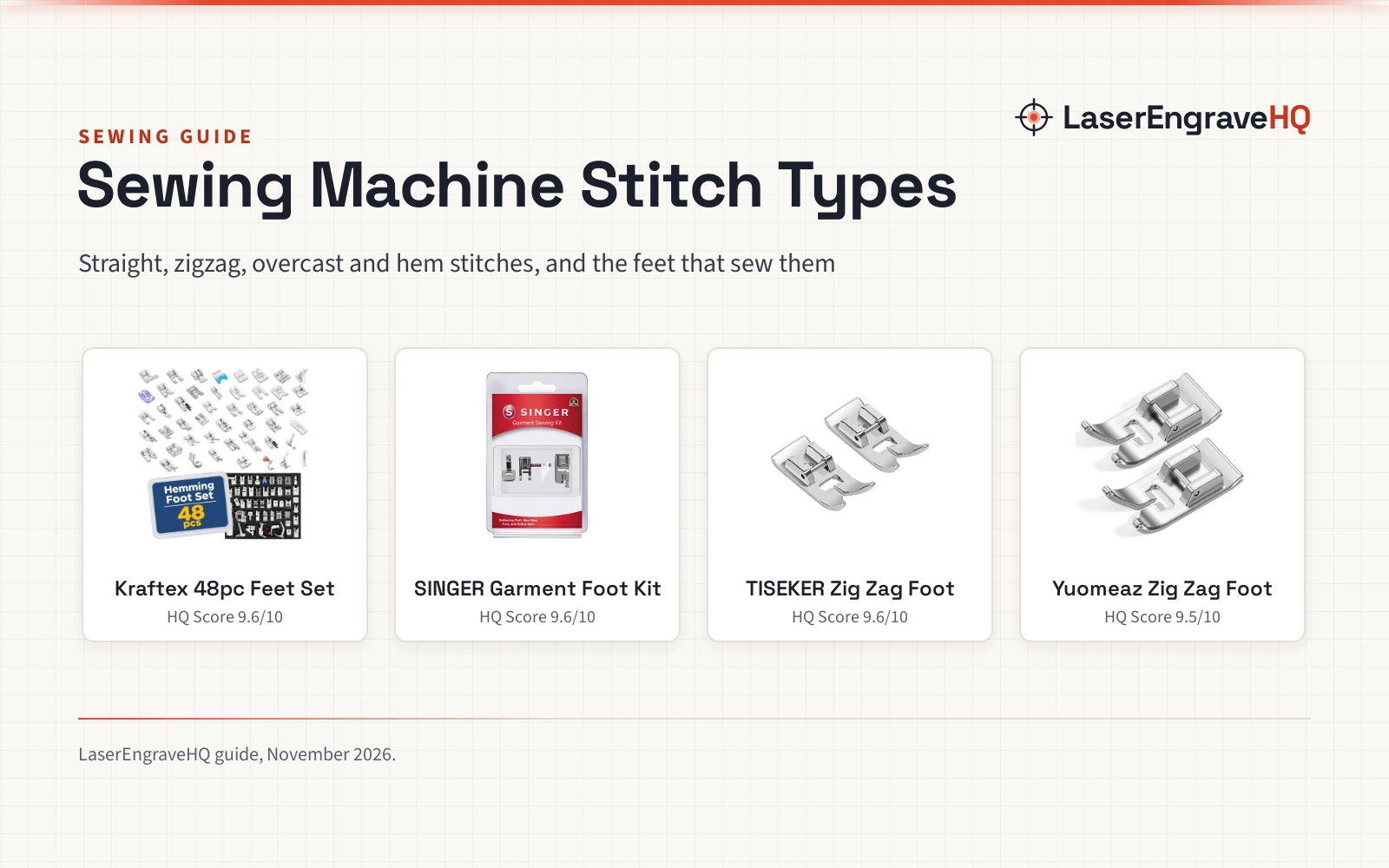
A stitch regulator helps most when the hands set the pace: free-motion quilting, stippling, and free-motion embroidery where the fabric moves in every direction. It helps a quilter learning the craft, and it helps on designs with tight turns where hand speed naturally varies. The sewing machine stitch types guide explains the straight stitch and zigzag the regulator uses.
For ordinary seaming, where the feed dogs move the fabric and the stitch length is set on the machine, a standard foot does the job and a regulator adds little. The regulator is a free-motion tool, not a replacement for the regular presser foot. If the machine itself is the question, the best sewing machine for beginners to make clothes guide covers machines built for garment work.
How to use a stitch regulator
Fit the foot made for the machine model and lower the feed dogs, following the machine manual for both steps. Select a straight stitch or a zigzag stitch, then move the fabric smoothly and let the regulator match the machine speed to the movement. Begin on scrap fabric and sew some curves and loops to feel how the machine responds before moving to the quilt.
Keep the hands relaxed and the fabric flat under the foot, and let the sensor do the timing work. If stitches begin to vary, slow the hands rather than forcing the fabric, and check that the foot is seated correctly. Short practice sessions on scrap fabric build the feel faster than a long session on a finished quilt.
When the quilting is done, remove the foot and raise the feed dogs again before returning to ordinary seaming.
FAQ: lasers and CNC
Does a stitch regulator fit any sewing machine?
No. Fit is model-specific. The BSR #42 is made for Bernina machines, and the Singer 29K uses part 82188. Match the part number to the machine brand and model before ordering, since fit is brand-specific.
Can a stitch regulator sew a zigzag stitch?
Yes, at least for the BSR #42, which the maker lists for straight stitch and zigzag sewing. That makes it suited to free-motion quilting that mixes straight runs with zigzag detail. Check the listing for the foot made for the machine in question, since features vary by part.
Does a stitch regulator control stitch length?
Yes. The stitch length is set on the machine, and the regulator keeps stitches at that set length. The sensor reads fabric movement and the machine adjusts speed to match, so stitches stay at the set length while hand speed changes. The hands still guide the fabric and set the direction of every stitch.
Do I need a stitch regulator for free-motion quilting?
Not strictly. Free-motion quilting works with a standard darning foot, and stitch length then depends on holding a steady hand speed. A regulator removes that demand, which helps beginners gain confidence and helps experienced quilters keep demanding designs even.
What is the difference between a stitch regulator and a walking foot?
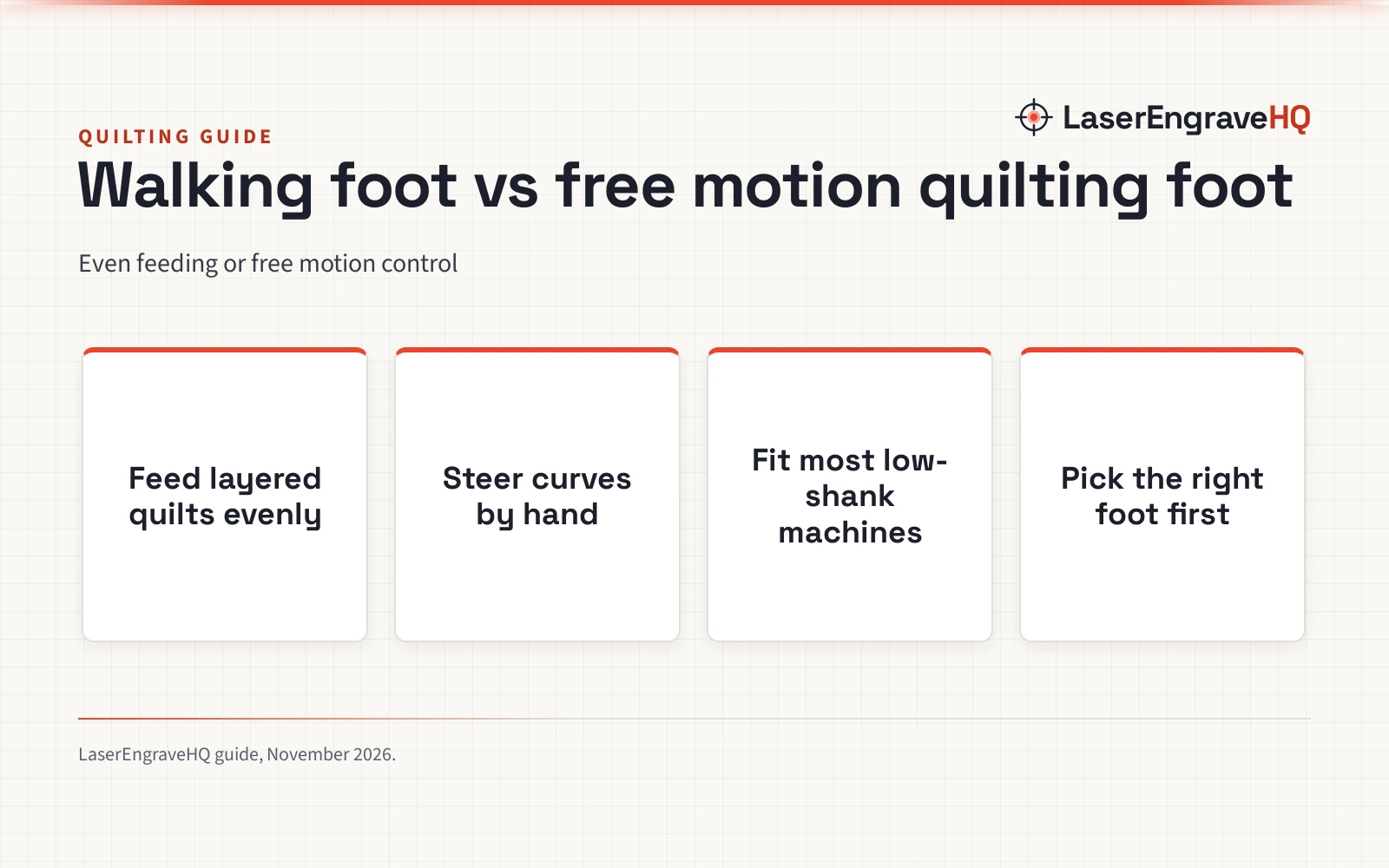
A walking foot feeds the top and bottom layers of fabric together for even seams on thick or slippery layers. A stitch regulator is a free-motion foot: it senses fabric movement and adjusts machine speed so stitches stay even while the hands move the fabric in any direction. These feet solve different problems, so a quilter may keep each foot for a different job.
Related: the sewing machine stitch types and best rotary blades for quilting and sewing.