What Is a Sleeve Board and When to Use One
A sleeve board is a narrow tabletop ironing board that slides inside sleeves, collars and hems so each layer presses flat without creasing the other side.

On this page
Top picks at a glance
As an Amazon Associate I earn from qualifying purchases.
- 1
 JELIMATE Padded Pants & Sleeve Ironing Boards with UltraView on Amazon
- 2
 Jacobson Products Padded Chest & Sleeve Ironing BoardsView on Amazon
- 3
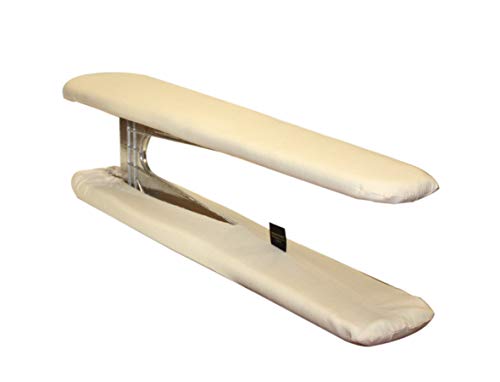 Newhouse Specialty Padded Sleeve Ironing BoardView on Amazon
What is a sleeve board? It is a small, narrow ironing board that slides inside a sleeve, collar or hem so the iron presses a single layer of fabric at a time. It sits on a tabletop beside a full-size ironing board and handles the narrow parts a wide board cannot reach.
Other machines to compare
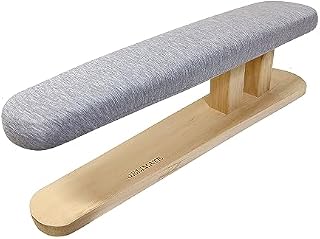 JELIMATE Padded Pants & Sleeve Ironing Boards with UltraCheck price on Amazon
 Jacobson Products Padded Chest & Sleeve Ironing BoardsCheck price on Amazon
 Newhouse Specialty Padded Sleeve Ironing BoardCheck price on Amazon
LaserEngraveHQ earns a commission from purchases made through these links, at no extra cost to you. Read our affiliate disclosure.
Sizes vary by maker. This guide quotes the sizes each listing states, so check the size before ordering.
Step 1: What a sleeve board does
A sleeve board solves a shape problem. A shirt sleeve is a tube, and a full-size ironing board is too wide to fit inside it. Pressing a sleeve flat on a wide board presses the front and back layers together, which creases the folded edges. A sleeve board slides inside the tube, so the iron works on the layer on top while the board supports it from below.
The same narrow shape suits collars, cuffs, hems and other small garment parts. Household Essentials describes its Basic sleeve board as a board for pressing sleeves, collars, hems and small garments. The board is a detail tool, not a replacement for a full-size board: the full-size board takes large flat pieces, and the sleeve board takes the parts that need a narrow surface.
Step 2: Pick the shape that fits the garment
Most sleeve boards are long and narrow, but the exact shape varies. The Household Essentials Basic lists a 4.5 by 20 inch ironing surface. The DE-LIANG board (on Amazon) is tapered, with a length of 22.2 inches, a front width of 4.3 inches, a rear width of 2.7 inches and a height of 6.1 inches, so the narrow end fits a cuff while the wide end fits a sleeve. The JELIMATE dual-purpose board measures 24 by 6 inches and lists padded sleeve and pants pressing surfaces, so the board covers sleeves and trouser legs.
Some boards cover more than sleeves. Jacobson Products lists a chest and sleeve board at 10.0 by 5.0 inches, a compact shape for chests, backs and sleeves. Newhouse Specialty lists a board at 23 by 5 inches with a standard side and a narrow side, so the sewer flips it to match the part being pressed. Novabright lists a shoulder board at about 10.4 by 6.6 by 11.4 inches with a right-angle shape made for shoulders, sleeves, cuffs and collars. Match the board to the garment: a long narrow board for shirt sleeves, a wider dual-purpose board for pants, and a shoulder board for jackets. For the rest of the pressing kit, the pressing tools for sewing guide covers the tools that pair with a sleeve board.
Step 3: Check the build before you buy
A sleeve board has a top, padding and a base. Household Essentials builds its boards with a perforated plastic top, a foam pad and a cotton cover, and the Accessory board adds that the cotton cover is scorch- and stain-resistant. The plastic top spreads heat and steam evenly, while the foam pad gives the surface some give under the iron.
Several boards in this guide list wooden bases. DE-LIANG uses ash wood, sanded smooth so it does not catch on a shirt, with a non-slip bottom that keeps the board steady. JELIMATE lists a handmade wooden base with a non-slip design, and Novabright lists a pine wood base with a non-slip surface. Jacobson Products and Newhouse Specialty use a heavy-duty aluminum frame instead. The Jacobson chest and sleeve board is listed at 3.15 pounds, and the JELIMATE dual-purpose board at 4.5 pounds.
Covers matter as much as the base. JELIMATE lists removable cotton covers, some with an elastic band and some with a side button that adjusts the cover tightness, and covers that can be hand washed or machine washed. A removable cover is worth having, since a sleeve board cover picks up starch and scorch marks over time. The Household Essentials Basic lists a 1 year manufacturer warranty. Novabright states no warranty, and the other listings in this guide do not state a warranty term.
Step 4: Set it up and press a sleeve
Set the board on a tabletop or counter, on a steady surface at a comfortable height. Household Essentials notes that its boards work on tabletops or counters, or alongside a full-size ironing board, and JELIMATE lists tabletops, dressers, desktops and washer or dryer tops as places to set the board.
Slide the sleeve onto the board with the seam at the edge, smooth the fabric flat with a hand, and press with the iron, moving the board rather than dragging the iron across the fabric. Turn the sleeve to press the next section, and repeat until the whole sleeve is done. For a cuff, use the narrow end of a tapered board; for a collar, spread the collar flat on the board and press from the points toward the center. A garment steamer can relax a stubborn wrinkle before pressing, and the fabric steamer for sewing guide covers steamers made for sewing rooms.
Work in short passes and let the fabric cool for a moment before moving it, so the press sets. Keep the board still while pressing: a non-slip base keeps the board from sliding on the table. When the sleeve is done, slip it off the board and hang the garment so the fresh press holds its shape.
Step 5: Store it and keep the cover clean
A sleeve board earns its place by storing small. The Household Essentials Accessory board folds to 1.5 inches high and 22.25 inches long when folded, so it slips onto a shelf or behind a door. JELIMATE lists holes for hanging garments during ironing.
Keep the cover clean, since a dirty cover can mark light fabric. Where the cover is removable, take it off and wash it as the maker directs, and let it dry fully before fitting it again. Store the board somewhere dry, with the cover on, so dust stays off the pressing surface.
Common mistakes to avoid
- Pressing a sleeve flat on a wide board, which creases the folded edges.
- Forcing a wide board into a narrow sleeve instead of switching to the narrow end or a smaller board.
- Pressing over a seam without moving the board, which leaves a hard line in the fabric.
- Ironing on a wobbly table, so the board shifts mid-press.
- Putting the board away with a damp cover, which can mark the next garment pressed on it.
What is a sleeve board: the short version
- A sleeve board is a small, narrow ironing board that slides inside sleeves, collars and hems.
- It presses a single layer of fabric at a time, so the far side stays crease-free.
- Pick the shape by the garment: long and narrow for sleeves, wider for pants, shoulder-shaped for jackets.
- Check the build: a padded top, a cotton cover and a steady base, wood or aluminum.
- Set it on a tabletop, slide the sleeve on, press in short passes and hang the garment after.
FAQ: lasers and CNC
What is a sleeve board used for?
Pressing sleeves, collars, cuffs, hems and other small garment parts that do not fit on a full-size ironing board. The narrow board slides inside the garment so the iron presses a single layer at a time.
Can a sleeve board press pants and collars too?
Yes. Dual-purpose boards list padded sleeve and pants surfaces, and the narrow end of a tapered board suits a collar or cuff. The JELIMATE dual-purpose board measures 24 by 6 inches and lists both sleeve and pants pressing surfaces.
How to pick the right sleeve board size?
Match the board to the garment. A 4.5 by 20 inch surface suits shirt sleeves, a 24 by 6 inch board suits sleeves and trouser legs, and a 10.0 by 5.0 inch chest and sleeve board suits small areas. Measure the cuff or sleeve opening before ordering, and pick a board narrower than the opening.
Is a sleeve board the same as a regular ironing board?
No. A regular ironing board is a full-size board for large flat pieces, while a sleeve board is a small tabletop board for narrow parts. Sewing rooms use the sleeve board alongside the full-size board, not instead of it.
How to store a sleeve board?
The Household Essentials Accessory board folds to 1.5 inches high, so it fits on a shelf. Any board stores well on a shelf or beside the sewing machine, as long as it stays dry.
Do sleeve boards come with a warranty?
Some do, and most listings state no warranty term. The Household Essentials Basic lists a 1 year manufacturer warranty. Novabright states no warranty, and the other listings in this guide do not state a warranty term.
Related: the sewing and embroidery machines hub, pressing tools for sewing, tailor’s pressing ham and sewing machines for garment sewing.