Silicone Molds vs Plastic Molds for Resin: Which One Should You Buy?
Silicone and plastic molds compared for resin casting, with 2 silicone molds featured: a 6-cavity coaster mold and a mold-making kit.

On this page
Top picks at a glance
As an Amazon Associate I earn from qualifying purchases.
- 1
 HeyClear Silicone Molds for Resin Coasters 6-Cavity RoundView on Amazon
- 2
 RESINWORLD 6-Cavity Deep Round Coaster MoldsView on Amazon
- 3
 LET'S RESIN Christmas Resin MoldsView on Amazon
- 4
 LET'S RESIN Extra Deep Resin Coaster Molds SiliconeView on Amazon
- 5
 WIKIMO Resin Molds for BowlView on Amazon
- 6
 LET'S RESIN Deep Resin MoldsView on Amazon
Silicone molds vs plastic molds for resin comes down to flexibility and release: silicone molds flex to release a cured piece and survive repeated use. Both featured products here are silicone molds, and no plastic mold is featured here, so the comparison below rests on what the silicone products state. The pick is simple: choose a ready-made silicone mold for casting coasters and small pieces, and a mold-making kit when the shape does not exist yet.
Other machines to compare
 HeyClear Silicone Molds for Resin Coasters 6-Cavity RoundCheck price on Amazon
 RESINWORLD 6-Cavity Deep Round Coaster MoldsCheck price on Amazon
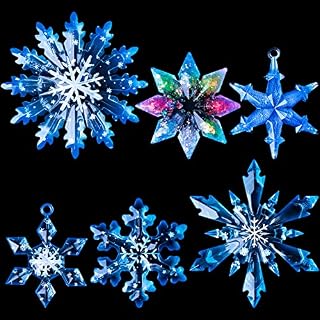 LET'S RESIN Christmas Resin MoldsCheck price on Amazon
 LET'S RESIN Extra Deep Resin Coaster Molds SiliconeCheck price on Amazon
 WIKIMO Resin Molds for BowlCheck price on Amazon
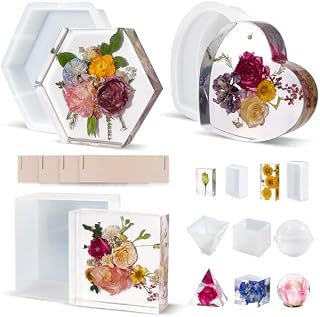 LET'S RESIN Deep Resin MoldsCheck price on Amazon
LaserEngraveHQ earns a commission from purchases made through these links, at no extra cost to you. Read our affiliate disclosure.
Silicone molds vs plastic molds for resin: which one to choose
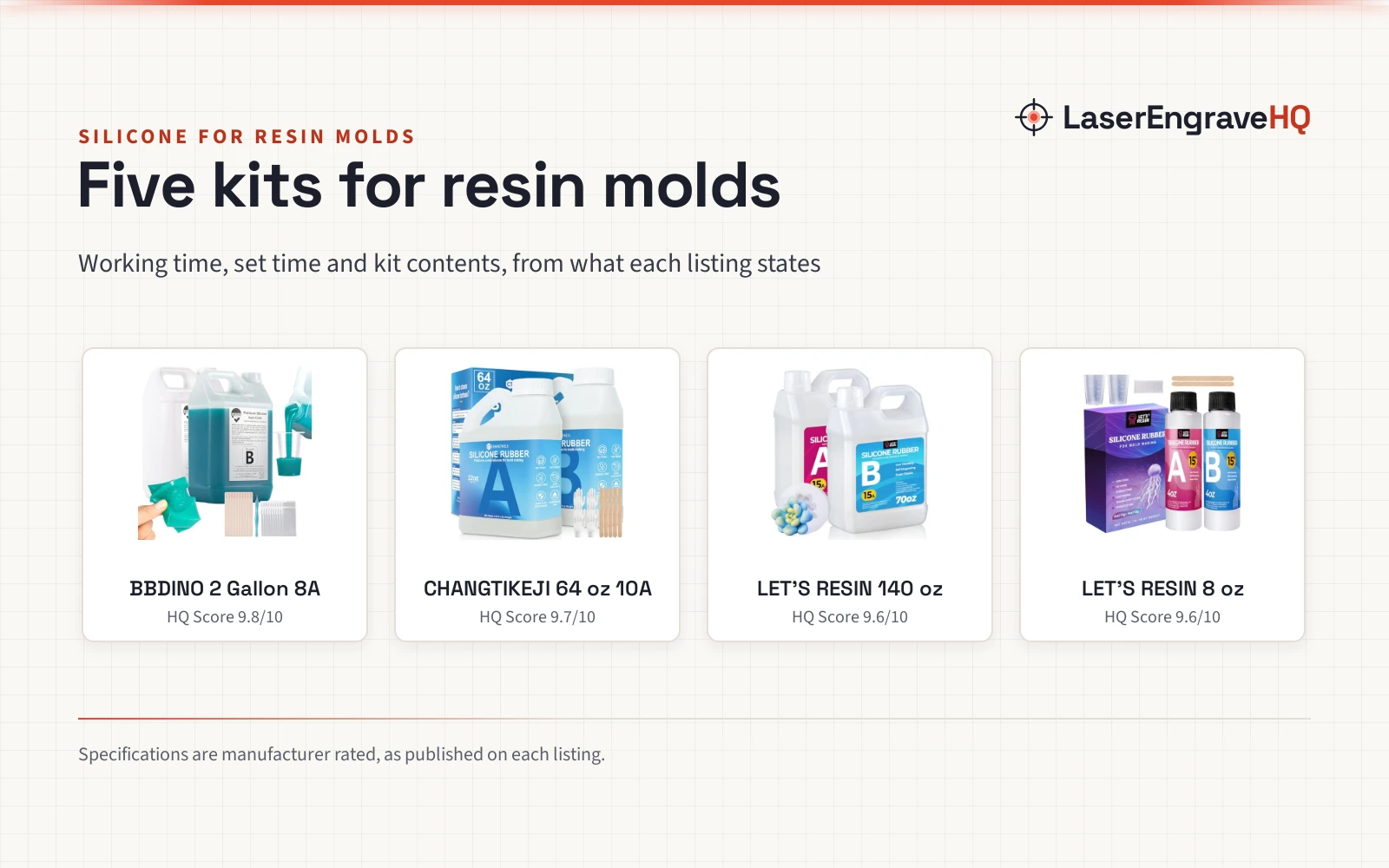
In this guide, the silicone products state the traits that matter for release: flexibility, tear resistance and easy demolding. The HeyClear mold is a ready-made silicone mold with 6 round cavities for coasters, while the LET’S RESIN kit is liquid silicone for making molds in a shape of your own. No plastic mold is featured, so there is no plastic pick to rank against them; the choice is between a finished mold and a kit for making molds.
What silicone molds do well
The HeyClear mold lists a shiny surface and a smooth interior, so finished pieces come out bright and smooth without polishing. It also lists good flexibility, strong tear resistance and a shape that is not easily deformed, plus easy demolding, cleaning and reuse. The LET’S RESIN kit lists platinum-cured silicone that is non-toxic and has no odor, with 15A hardness, good flexibility and elasticity, and a finish that captures complex details well and releases easily. The kit suits resin, wax, candle and soap molds, and the HeyClear mold suits resin coasters, candle holders and small trinket trays. The kit also mixes with mica powder for new colors.
The gear: 2 silicone molds for resin
HeyClear Silicone Molds for Resin Coasters: a 6-cavity round mold, about 13 by 8.8 inches overall, with each coaster 3.9 inches across and 0.6 inches deep. It casts 6 coasters at one time with uniform specifications. The mold is silicone with a shiny surface and smooth interior, and it is flexible, tear resistant, easy to demold and reusable. The maker states a 1-year warranty. Use it for resin geode coasters, candle holders, small trinket trays and flower bouquet preservation, and to encapsulate larger fillers such as wood, flowers and insect specimens.
LET’S RESIN Silicone Mold Making Kit: translucent platinum-cured liquid silicone, 20 ounces, in part A and part B with a 1:1 mix ratio by weight. Pour part A and part B together and stir for 5 minutes; the working time is stated as 30 minutes and as 40 minutes at room temperature, bubbles disappear within 2 hours with no vacuum degassing necessary, and the full set takes at least 4 hours at room temperature. The set mold has 15A hardness and captures complex details well. Clean spills with soapy water or rubbing alcohol. The kit is not for making food molds, and it cannot be used to create squishies.
Working with silicone molds
Mix the LET’S RESIN kit at a 1:1 ratio by weight and stir for 5 minutes. Bubbles disappear within 2 hours with no vacuum degassing necessary, and the set takes at least 4 hours at room temperature; if the surface is a little sticky, extend the setting time. For the HeyClear mold, avoid a lighter or blowtorch for bubbles, since the maker says that may damage the mold and cause adhesion; use a vacuum machine, a wooden stick or alcohol sprayed on the surface instead. Clean spills with soapy water or rubbing alcohol.
FAQ: lasers and CNC
Can silicone molds be reused for resin?
Yes. The HeyClear mold is reusable and easy to clean, and the LET’S RESIN kit produces molds with good flexibility and elasticity that release easily. Neither product states a number of uses.
How long does silicone mold rubber take to set?
The LET’S RESIN kit takes at least 4 hours to set fully at room temperature, with bubbles disappearing within 2 hours. Working time is stated as 30 minutes and as 40 minutes at room temperature.
What can you cast in a silicone resin mold?
The HeyClear mold casts resin coasters, and it can also create candle holders, small trinket trays and flower bouquet preservation pieces. The LET’S RESIN kit suits resin molds, wax molds, candle molds and soap molds.
Can you use a lighter to remove bubbles from a silicone mold?
Not on the HeyClear mold: the maker says a lighter or blowtorch may damage the mold and cause adhesion. Use a vacuum machine, a wooden stick or alcohol sprayed on the surface instead.
Do silicone molds need a vacuum chamber?
Not necessarily. The LET’S RESIN kit states that bubbles disappear within 2 hours and no vacuum degassing is necessary. For the HeyClear mold, the maker suggests a vacuum machine as one option for bubbles, with a wooden stick or alcohol spray as the others.
Related: the epoxy vs acrylic resin guide, the hard vs flexible UV resin guide, the resin vacuum chamber vs pressure pot guide and isopropyl alcohol vs resin cleaner.