Serger Machine for Beginners: A Step-by-Step Guide to Clean, Professional Seams
A plain-language guide to choosing, threading, and sewing with a new serger, using only what the listings state.

On this page
Top picks at a glance
As an Amazon Associate I earn from qualifying purchases.
- 1
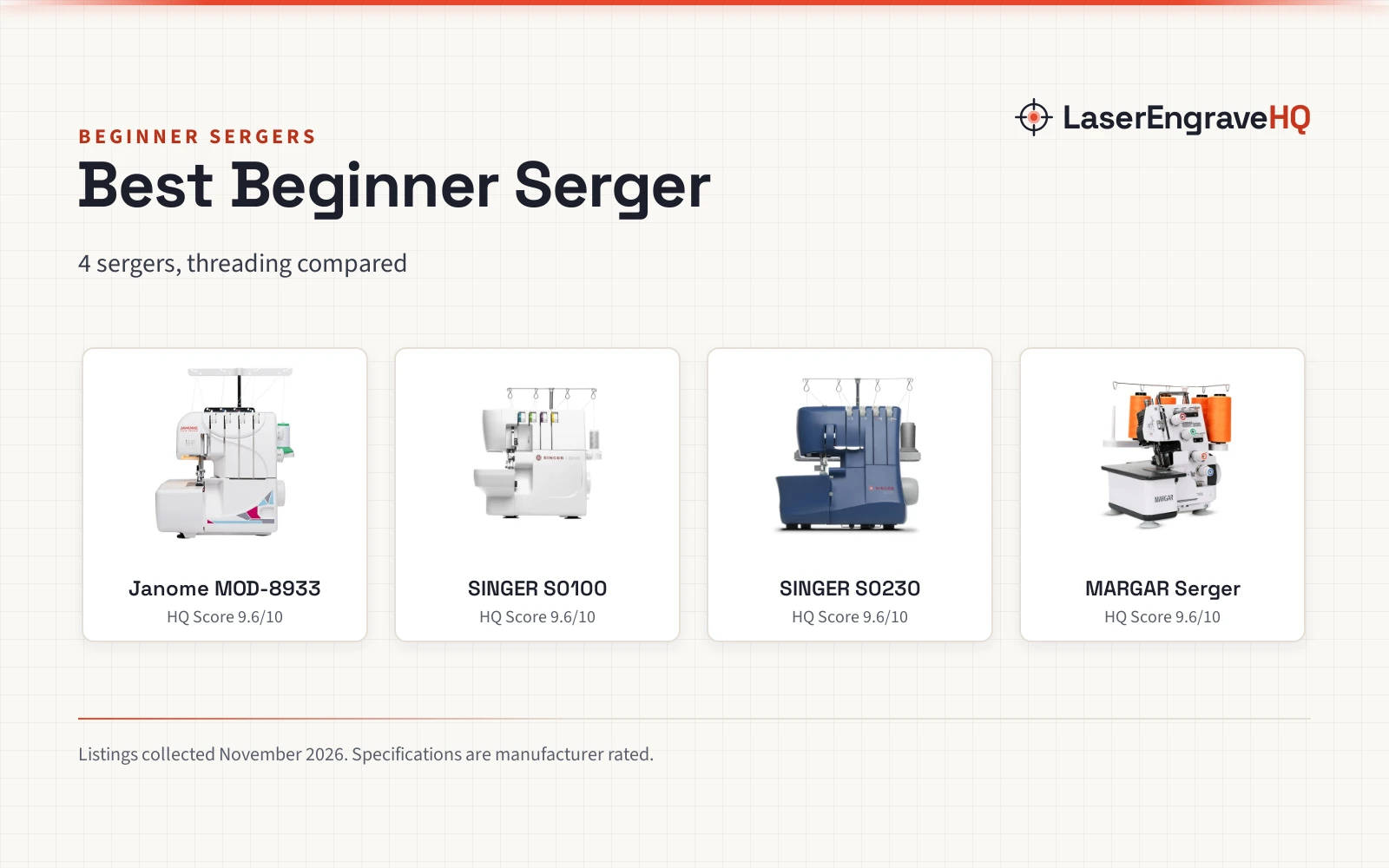
 Brother Serger 1034D Heavy-Duty Metal Frame Overlock Machine9.6/10View on Amazon
- 2
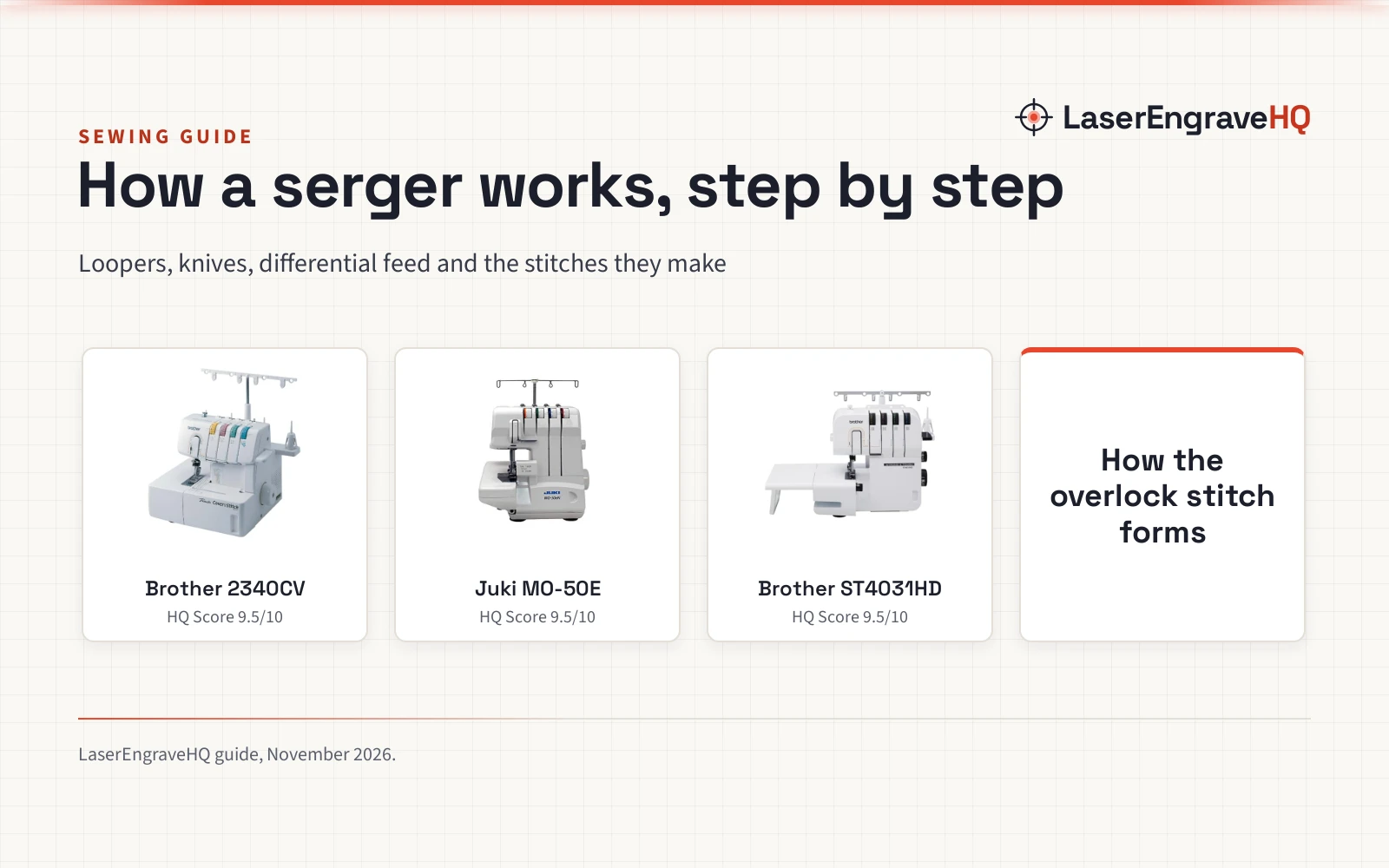
 Brother ST4031HD Serger9.5/10View on Amazon
A serger machine for beginners turns raw fabric edges into clean seams that do not fray, and it trims and stitches the edge as it sews. If a home sewing machine leaves wavy hems on knits or frayed edges on woven cloth, a serger fills that gap. This guide explains what a serger does, how to choose a simple model, how to thread it, and how to sew a clean seam on scrap fabric.
LaserEngraveHQ earns a commission from purchases made through these links, at no extra cost to you. Read our affiliate disclosure.
This guide draws on what the listings state about each machine, and it gives no claims from use.
What a serger machine for beginners does
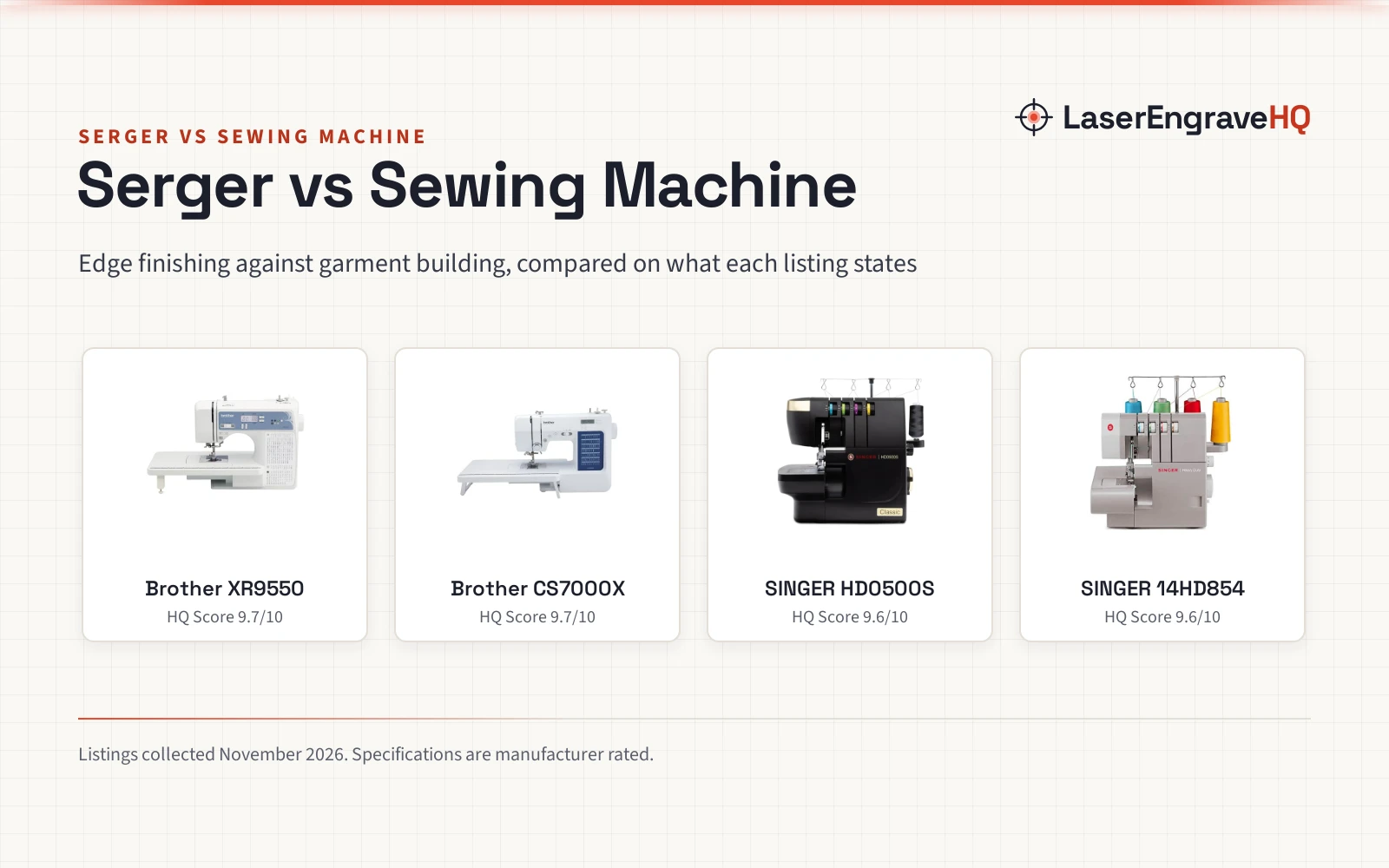
A serger, also called an overlock machine, sews a seam, trims the fabric edge with a built-in blade, and wraps thread around the cut edge as it sews. That wrapped edge keeps woven fabric from fraying and lets knit fabric stretch. A regular sewing machine cannot trim and wrap the edge at the same time. The comparison in our serger vs sewing machine guide shows where each machine earns its place.
Several listings state speeds up to 1,300 stitches per minute: the Brother 1034D and ST4031HD, the Bernette B68 (on Amazon) and the Janome MyLock 454D (on Amazon). The VEVOR listing states up to 1,250 stitches per minute with a 112W motor, and the Purptarol listing states up to 1200 stitches per minute with a 100W motor. Speed matters less than control when learning, so use the foot pedal to sew slowly while the stitch forms.
Step 1: Pick a simple thread setup
Start with the thread count. A 3 or 4 thread serger covers the seams a beginner sews most: overlock seams, narrow hems, and edge finishing. The Brother 1034D (on Amazon) listing states a 3 or 4 thread setup that can handle multiple layers of denim and other heavy materials, and the Janome 8002D (on Amazon) listing states a 2, 3, and 4 thread convertible setup. The Bernette B68 offers 2, 3, 4, and 5 thread overlock plus coverstitch for later growth.
For a new machine, a color-coded threading path matters more than extra stitch types. If a model with an air threader fits the plan, the Bernette B68 listing states an automatic air threader for quick looper threading. Our sewing machine recommendations for beginners guide makes the same point for standard machines.
Step 2: Check the threading path
Threading is the skill that decides whether a beginner keeps using a serger. Look for color-coded thread guides, numbered loopers, and a threading chart that is easy to read. The Brother ST4031HD (on Amazon) listing states color-coded thread guides with numbered upper and lower thread loopers. The JUKI MO-80CB listing states a lower looper threader worked by a lever.
Presser feet shape what the machine can do without extra tools. The Brother ST4031HD listing states 3 accessory feet included: standard, blind stitch, and gathering feet, along with a large extension table. Our best sewing machine presser feet guide explains what each foot does on a standard machine.
Step 3: Learn the feed and the cutting width
Differential feed keeps knit fabric from stretching out of shape and woven fabric from puckering. The Janome MyLock 454D listing states a differential feed ratio of 0.5mm to 2.25mm, and the Janome MyLock 554D listing states an upgraded 8-piece feed dog system for improved control when sewing lightweight, medium, or thicker fabrics.
Cutting width sets how much fabric the blade trims beside the stitch. The Janome 8002D and Janome MyLock 454D listings state an adjustable cutting width from 3.1mm to 7.3mm, and the 454D listing states a stitch length of 1mm to 4mm. Set the width narrow for light fabric and wide for heavy fabric, then check the edge on scrap fabric.
Step 4: Set up a steady workspace
A serger vibrates as it sews, so it needs a flat, steady table with room for fabric to feed through. The Brother ST4031HD listing states a weight of 17.64 pounds and dimensions of 12.99 inches x 14.37 inches x 17.01 inches, and the VEVOR listing states a weight of 17.97 pounds. Our best sewing machine table guide covers tables that suit a serger.
Light helps when threading and when watching the blade. The VEVOR listing states a bright LED light, and the Bernette B68 listing states 5 built-in LED lights that illuminate the sewing area.
Step 5: Thread the machine in order
Follow the threading order in the manual for the model in hand. As a rule, thread the upper looper, then the lower looper, then the needles, and keep the presser foot up so the tension discs stay open while threading. The Janome MyLock 654D listing states a color-coded threading guide with easy lower looper threading.
Thread choice matters as much as threading order. The Brother 1034D bundle listing states a serger thread pack with 4 spools in white, pearl grey, hi taupe, and black, with 1750 yards per spool. Match the thread weight to the fabric for a balanced stitch. Our best thread for embroidery machine guide explains thread types that also suit serger work.
Step 6: Sew a sample seam on scrap fabric
Before cutting project fabric, sew on scrap fabric of the same type. Start with a plain overlock seam, then try a rolled hem. The Janome 8002D listing states easy rolled hem changeover, and the VEVOR listing states stitch styles that include overlock, rolled hem, edging, and lettuce hem for fabrics from sheer fabrics to heavy denim. Watch the edge: loops hanging off the edge mean the looper tension needs adjusting.
When the sample seam looks clean, sew the project seam the same way. Our best dress form for beginners guide covers forms that help when fitting garments sewn on a serger.
Step 7: Care for the machine
Brush lint from the loopers and feed dogs after sewing, and oil only where the manual says. Our best sewing machine oil with extended spout guide covers oil that reaches tight spots on sewing machines. Replace needles from the 5-pack included with the Brother 1034D bundle when stitches skip, and keep the blade clean so it cuts rather than chews the edge.
Warranty terms differ by brand. The JUKI MO-80CB listing states a Manufacturer 5 Year Limited Warranty, and the Janome MyLock 654D listing states a 25 year limited warranty on mechanical parts, a 2 year limited warranty on electrical parts, and a 1 year limited labor warranty.
Common mistakes to avoid
- Threading the needles before the loopers, which tangles the stitch from the start.
- Skipping the scrap seam and cutting into project fabric before checking the settings on scrap.
- Forcing heavy fabric under the foot instead of adjusting the presser foot pressure.
- Using the wrong thread in the loopers, which leaves the stitch unbalanced.
- Leaving lint packed around the loopers until stitches start to skip.
Serger machine for beginners: the short version
- Choose a 3 or 4 thread serger with color-coded threading.
- Set it on a steady table with good light.
- Thread the loopers, then the needles, with the foot up.
- Set the cutting width and stitch length for the fabric.
- Sew a sample seam on scrap fabric and adjust the tension.
- Care for the machine: brush out lint, oil where the manual says, and replace needles.
FAQ: lasers and CNC
Do I need a serger if I already own a sewing machine?
A sewing machine builds seams and a serger finishes edges, so the machines complement each other. A serger trims and wraps the edge in the same pass, which a sewing machine cannot do. The serger vs sewing machine guide compares them in detail.
What thread does a serger use?
A serger uses overlock thread, usually on large cones. The Brother 1034D bundle listing states a thread pack with 4 spools and 1750 yards per spool, and the Janome MyLock 554D listing states it comes pre-threaded with 4 cones of white overlock thread.
How fast does a beginner serger sew?
Listings in this guide state speeds up to 1,300 stitches per minute for the Brother, Bernette, and Janome models named above, up to 1,250 stitches per minute for the VEVOR serger, and up to 1200 stitches per minute for the Purptarol serger. Speed is a maximum, not a target: sew slowly while learning.
What is differential feed?
Differential feed moves the front and back feed dogs at different rates so knit fabric does not stretch and woven fabric does not pucker. The Janome MyLock 454D listing states a differential feed ratio of 0.5mm to 2.25mm.
Can a serger sew denim?
Yes, when the listing states the machine handles heavy materials. The Brother 1034D listing states it can handle multiple layers of denim and other heavy materials, and the VEVOR listing states stitch styles suited to fabrics from sheer fabrics to heavy denim. Our best sewing machine for denim guide covers standard machines that pair well with a serger.
Related: the sewing and embroidery machine hub, sewing machine recommendations for beginners and best sewing and embroidery machine. Also see our best beginner sewing machine for quilting. Also see our best sewing machine oil.