Nylon vs Tpu Filament: Which One Should You Buy?
Nylon and TPU filaments compared through three listed spools, for rigid load-bearing parts on one side and flexible parts on the other.

On this page
A rigid bracket that must hold its shape, or a flexible part that must bend and return, calls for a different spool. This comparison covers nylon vs tpu filament through listed spools, and the short verdict is simple: pick nylon for rigid, load-bearing parts and TPU filament for flexible parts.
As an Amazon Associate I earn from qualifying purchases. LaserEngraveHQ earns a commission from purchases made through these links, at no extra cost to you. Read our affiliate disclosure.
Verdict: pick nylon for rigid functional parts, tooling, fixtures, brackets and housings, and pick TPU for flexible applications, robotics and fashion projects. The nylon listings state heat figures, and the PA6-CF20 listing states stiffness figures, that the TPU listing does not state, so neither side wins on a shared spec here.
Machines on the list

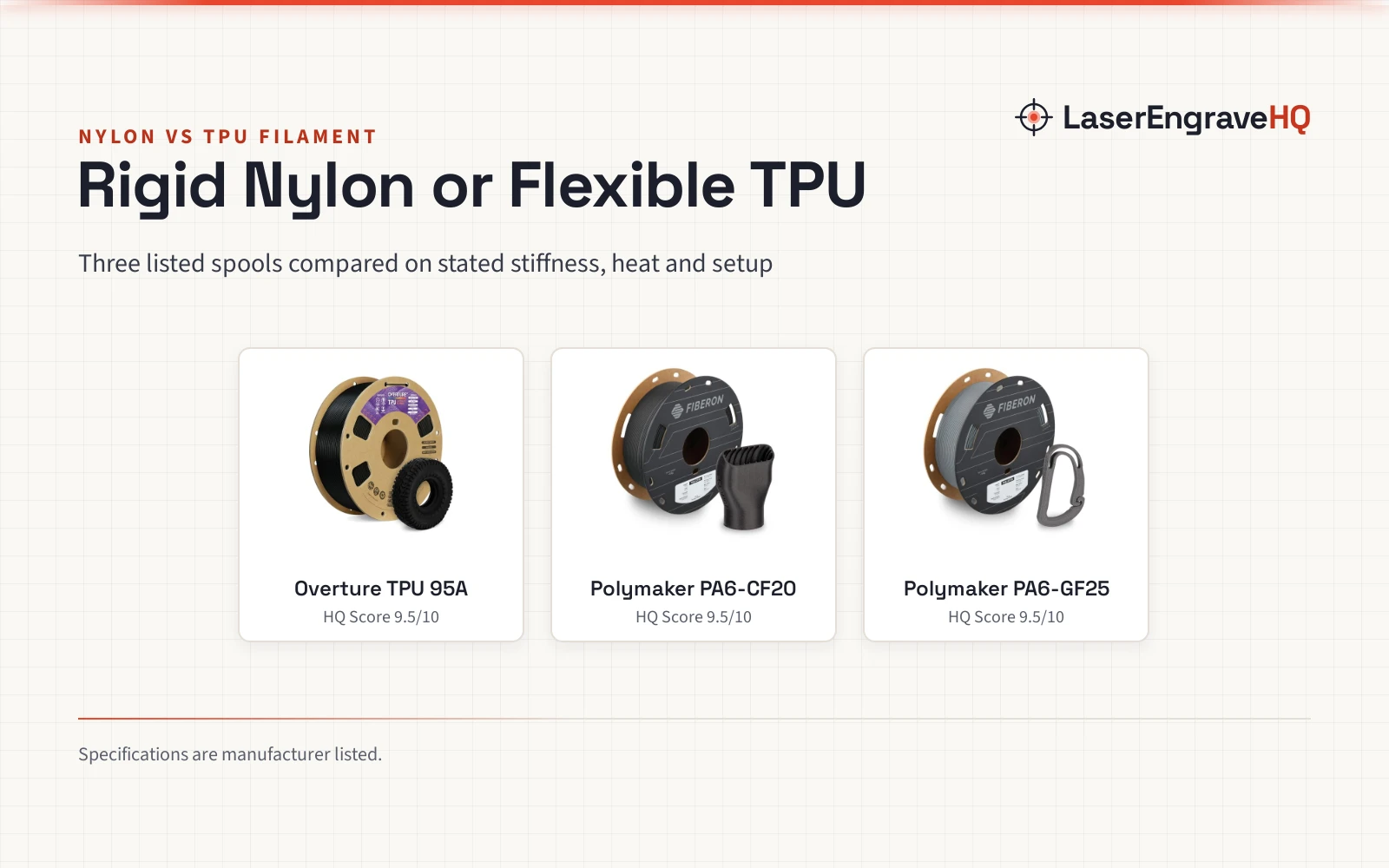
OVERTURE TPU 95A Flexible 3D Printer Filament
A 1kg spool of TPU 95A flexible filament in 1.75mm, built for flexible applications, robotics and fashion projects.
Pros
- Shore 95A hardness, described as a balance of softness and resilience
- Layer adhesion and a smooth finish, per the listing
- Spools dried for 24 hours before packaging, vacuum-sealed in foil
- Fit for most FDM printers, per the listing
Cons
- No nozzle temperature stated
- No tensile or heat deflection figure stated
- No print speed stated
- 1-year shelf life for unopened spools, with proper storage required
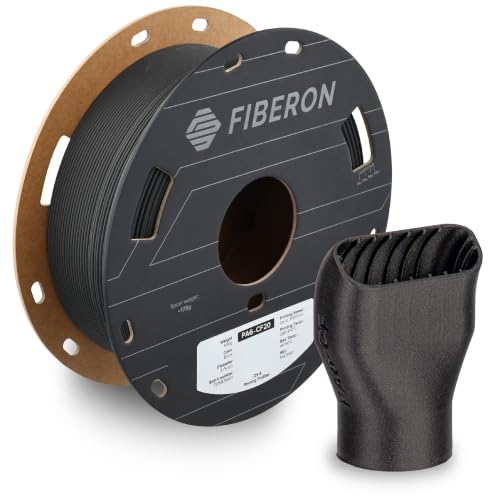
Polymaker Fiberon PA6-CF20 Carbon Fiber Nylon
A 0.5kg spool of PA6 nylon with 20% carbon fiber in 1.75mm, for rigid functional parts, tooling, fixtures and prototypes.
Pros
- 20% carbon fiber for high stiffness, strength and dimensional stability
- 109.3 MPa dry X-Y tensile strength and 8.64 GPa modulus, per the listing
- Heat deflection of 215°C at 0.45 MPa after annealing, per the listing
- Speeds up to 300 mm/s possible with a tuned profile, per the listing
Cons
- No warranty term is stated
- Hardened steel or ruby nozzle required instead of standard brass
- Drying at 100°C for 10 hours and storage below 20% relative humidity needed
- 0.5kg spool, smaller than the 1kg TPU spool here
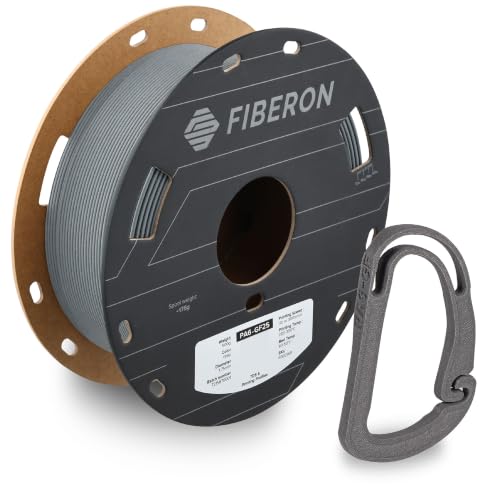
Polymaker Fiberon PA6-GF25 Glass Fiber Nylon
A 0.5kg spool of PA6 nylon with 25% glass fiber in 1.75mm, for load-bearing brackets, housings and heat-exposed parts.
Pros
- 25% glass fiber for high strength, stiffness and impact durability
- Heat deflection of 191°C at 0.45 MPa and 157°C at 1.8 MPa after annealing
- Speeds up to 300 mm/s possible after calibration, per the listing
- All-metal hotend and hardened nozzle setup stated
Cons
- No warranty term is stated
- Heat deflection figures are not continuous-use temperature limits, per the listing
- Absorbs moisture, with storage below 20% relative humidity and drying needed
- 0.5kg spool, smaller than the 1kg TPU spool here
Side by side
| Spec | Overture TPU 95A | Polymaker PA6-CF20 | Polymaker PA6-GF25 |
|---|---|---|---|
| HQ Score | 64 | 61 | 59 |
| Side | TPU filament | Nylon | Nylon |
| Diameter | 1.75mm | 1.75mm | 1.75mm |
| Spool | 1kg | 0.5kg | 0.5kg |
| Reinforcement | Not stated | 20% carbon fiber | 25% glass fiber |
| Tensile strength | Not stated | 109.3 MPa dry X-Y | Not stated |
| Stiffness | Not stated | 8.64 GPa | Not stated |
| Heat deflection | Not stated | 215°C at 0.45 MPa | 191°C at 0.45 MPa; 157°C at 1.8 MPa |
| Nozzle | Not stated | 280-300°C | 280-300°C |
| Build plate | Not stated | 40-50°C | 40-50°C |
| Print speed | Not stated | Up to 300 mm/s | Up to 300 mm/s |
| Drying | More than 8 hours at 65°C | 100°C for 10 hours | 100°C for 10 hours |
| Warranty | 1-year Warranty | Not stated | Not stated |
Specifications are manufacturer listed, as published on each listing and collected 4 November 2026.
How nylon vs tpu filament differ
The split is stiffness against flexibility. The PA6-CF20 listing states high stiffness, strength and dimensional stability from Nylon 6 with 20% carbon fiber, and the PA6-GF25 listing states high strength, stiffness and impact durability from Nylon 6 with 25% glass fiber. The Overture TPU listing states Shore hardness of 95A and a balance of softness and resilience for flexible applications. The TPU listing states no tensile or stiffness figure comparable to the nylon figures, so a direct strength comparison stays unclear.
All three listings state a 1.75mm diameter, so diameter does not separate the sides. Spool size differs: the two nylon spools are 0.5kg each, while the TPU spool is 1kg.
Heat and annealing
Heat figures come only from the nylon listings. The PA6-CF20 listing states a heat deflection temperature of 215°C at 0.45 MPa after annealing at 100°C for 16 hours, with typical values of 109.3 MPa dry X-Y tensile strength and an 8.64 GPa modulus. The PA6-GF25 listing states 191°C at 0.45 MPa and 157°C at 1.8 MPa after annealing at 100°C for 16 hours, and states that these results are not continuous-use temperature limits. The TPU listing states no heat deflection figure, so no heat comparison between the sides can be drawn from these listings.
Printing setup
Setup demands are also stated only on the nylon side. Both nylon listings state a 280-300°C nozzle, a 40-50°C build plate, an all-metal hotend and the cooling fan off, with speeds up to 300 mm/s possible. The PA6-CF20 listing states that a hardened steel or ruby nozzle is required instead of a standard brass nozzle, since carbon fiber is abrasive. The TPU listing states no nozzle, plate or speed settings, so those settings are left unclear for the TPU spool here.
Moisture handling is stated on both sides, with different routines. The PA6-CF20 listing states drying at 100°C for 10 hours before printing, then storing and printing below 20% relative humidity, ideally from a dry box. The PA6-GF25 listing states storing and printing below 20% relative humidity, with drying at 100°C for 10 hours if the filament is exposed to moisture. The TPU listing states spools dried for 24 hours before packaging, sealed storage with desiccants, and drying for more than 8 hours at 65°C when needed.
Choose nylon if
- You want rigid functional parts, tooling, fixtures, brackets or housings, as the nylon listings describe.
- You can run an all-metal hotend at 280-300°C with a hardened nozzle and a dry box.
- You plan to anneal parts at 100°C for 16 hours for heat resistance and dimensional stability.
Choose TPU filament if
- You want flexible parts, robotics parts or fashion projects, as the TPU listing describes.
- Shore 95A flexibility with layer adhesion and a smooth finish suits the part.
- You want a 1kg spool with a stated 1-year warranty and sealed storage with desiccants.
Keep both sides dry: the nylon listings call for drying at 100°C for 10 hours and storage below 20% relative humidity, while the TPU listing calls for sealed storage with desiccants and drying for more than 8 hours at 65°C when needed.
Project Match
- Rigid brackets, housings and load-bearing parts: the Polymaker PA6-GF25 listing names brackets, housings, jigs, fixtures and automotive components.
- Rigid tooling, fixtures and prototypes: the Polymaker PA6-CF20 listing names rigid functional parts, tooling, fixtures and automotive or industrial prototypes.
- Flexible applications, robotics and fashion projects: the Overture TPU listing names those uses for its 95A filament.
- Heat-exposed parts: the Polymaker PA6-GF25 listing names heat-exposed parts, with heat deflection figures after annealing.
FAQ: lasers and CNC
Which side suits flexible parts?
The TPU side, as listed here. The Overture listing states Shore hardness of 95A with a balance of softness and resilience, and names flexible applications, robotics and fashion projects. The nylon listings describe rigid parts instead.
Which side suits load-bearing brackets?
The nylon side, as listed here. The PA6-GF25 listing names load-bearing brackets, housings and heat-exposed parts, and the PA6-CF20 listing names rigid functional parts, tooling and fixtures.
Do both sides need drying?
Yes, both sides state moisture routines. The nylon listings state storage below 20% relative humidity, ideally from a dry box, with drying at 100°C for 10 hours. The TPU listing states sealed storage with desiccants and drying for more than 8 hours at 65°C.
What nozzle does fiber nylon need?
A hardened nozzle. The PA6-CF20 listing states a hardened steel or ruby nozzle is required instead of a standard brass nozzle, since carbon fiber is abrasive. The TPU listing states no nozzle requirement.
Can the TPU spool print on most FDM printers?
The Overture listing states fit for most FDM printers. The nylon listings state an all-metal hotend and a hardened nozzle, so printer setup matters more on the nylon side.
Related: how to choose a filament, glass fiber vs carbon fiber filament and filament dryer vs dry box.