Integrated Laser Enclosure vs Standalone Tent: Which One Should You Buy?
A practical guide comparing integrated laser enclosures and standalone fabric tents for fume containment, workshop space, optical safety and machine clearance.

On this page
Top picks at a glance
As an Amazon Associate I earn from qualifying purchases.
- 1
 xTool S1 40W Laser Cutter and Laser Engraver for Tumblers9.7/10View on Amazon
- 2
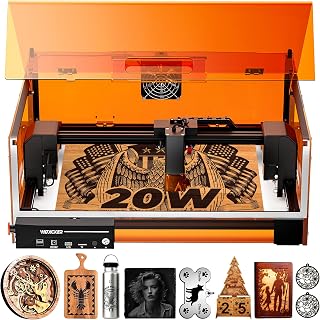
 Laser Engraver 20W Enclosure Laser Cutter 300x300mm LargeView on Amazon
- 3
 Laser Engraving MachineView on Amazon
When making wooden signs, acrylic keychains, leather patches, or powder-coated tumblers, a laser engraver generates smoke, fine debris, and odors. Choosing an integrated laser enclosure vs standalone tent determines how cleanly your workspace handles exhaust airflow, how much room the machine occupies, and how conveniently you can access your workpiece. An integrated enclosure provides a rigid cabinet structure with solid walls and dedicated exhaust mounting for a permanent workshop setup. A standalone tent provides a flexible, lightweight fabric cover supported by structural rods that fits over an open-frame machine and folds flat when you need tabletop space. This guide compares both styles across structural rigidity, exhaust airflow, optical filtering, and machine clearance.
Other machines to compare
 Laser Engraver 20W Enclosure Laser Cutter 300x300mm LargeCheck price on Amazon
 Laser Engraving MachineCheck price on Amazon
LaserEngraveHQ earns a commission from purchases made through these links, at no extra cost to you. Read our affiliate disclosure.
No enclosure eliminates the requirement for dedicated ventilation. Both rigid cabinets and fabric tents contain fumes and debris so an exhaust system can move them outdoors or through specialized filtration. An enclosure without active exhaust will still leak odors into your workshop when opened.
Integrated Laser Enclosure vs Standalone Tent
The choice between an integrated laser enclosure and a standalone tent comes down to workshop permanence and daily workflow habits. Makers running production batches on a dedicated bench often prefer an integrated enclosure because the rigid structure remains stationary, maintains consistent internal airflow, and protects surrounding tools from stray dust. Open-frame engraver users who share their worktables often lean toward standalone tents because they assemble quickly over the engraver during cutting jobs and fold away when bench space is required for finishing or packing orders. Rigid cabinets feature hard side panels, solid doors, and fixed duct ports, whereas standalone tents rely on woven fabric shells, support frames, zipper access, and flexible duct sleeves.
Cabinet Construction, Materials, and Workshop Footprint
Cabinet construction directly influences noise containment, dust isolation, and overall durability. An integrated cabinet uses rigid structural materials designed for permanent placement. For instance, the Crafit enclosure cabinet is built as a freestanding craft table featuring a metal frame, heat-resistant wood panels, and magnetic doors, with a stated weight of 25 kg and exterior dimensions of 29.3 by 40.2 by 42.9 inches (alongside listed measurements of 26.4 by 29.3 by 42.9 inches). It includes a bottom storage rack and 4 cable management holes, providing an all-in-one station that occupies dedicated floor space.
Standalone tents prioritize low weight and modular storage. Skouphy lists an oxford cloth tent with iron rods weighing 2.5 kg (and 2.91 kg on a related listing). Lutyr lists a tent weighing 4.97 pounds, while LONGER publishes weights of 5.89 pounds for its compact model and 9.38 pounds for its large model. Cregrant3D lists tent weights of 2.49 kg and 7.3 pounds. These fabric covers sit directly over your machine on an existing bench and pack away flat after use. For full machine comparisons, see our open frame vs enclosed laser engraver guide.
Ventilation, Airflow, and Fume Extraction Performance
Effective smoke containment is the main reason to install an enclosure. Both rigid cabinets and fabric tents rely on negative air pressure, drawing ambient air inward while an exhaust fan expels contaminated air through ducting.
Sealing around the base prevents smoke from leaking along work surfaces. Manufacturers such as Skouphy and Cregrant3D incorporate integrated bottom stitching that completely seals the tent base, stopping smoke from escaping along table seams while collecting cutting debris. However, bottom stitching only seals the floor: active extraction is still required to create negative pressure so smoke does not seep through zipper teeth or cable ports. For active extraction, Skouphy and Cregrant3D list ventilation fans operating at 4000 RPM (with upgraded listings stating 4500 RPM) paired with composite exhaust piping. In rigid cabinets, Crafit includes a 20W ventilation fan and a 2m flexible exhaust hose.
Exhaust ducting must lead outdoors or connect to a dedicated filter. Explore our guides to the best fume extractor for laser engraver units, exhaust fan for laser enclosure options, and do laser engravers need ventilation. Always check our list of materials you should never laser cut to avoid hazardous airborne byproducts.
Viewing Panels, Internal Lighting, and Optical Safety
Observing your engraving progress without inhaling smoke requires transparent viewing windows and adequate internal lighting. Standalone tents use flexible colored windows. Cregrant3D lists a 5-watt LED light strip to illuminate the work area, while Skouphy also includes an internal LED light strip paired with a thickened PVC visual window designed to filter blue light. Crafit features multi-sided semi-transparent panels on its wooden and metal cabinet to monitor jobs from multiple angles.
However, colored viewing panels do not replace certified eye protection. Plastic windows on consumer enclosures generally lack verified optical density specifications across specific wavelengths. Regulatory standards from the Center for Devices and Radiological Health emphasize certified optical density matching the beam source. Always wear certified safety glasses suited to your laser wavelength, as detailed in our laser safety glasses guide and our breakdown on laser classes explained class 1 vs class 4.
Internal Dimensions and Machine Compatibility
Before purchasing, confirm that your laser engraver clears the enclosure internal dimensions during full axis travel, including motor protrusions and cable chains.
Vertical and horizontal clearance varies significantly between models. LONGER lists a large enclosure measuring 31 by 28.7 by 20.8 inches (790 by 730 by 530 mm), as well as a compact version measuring 27.5 by 27.5 by 13 inches (700 by 700 by 330 mm). Skouphy, Cregrant3D, and Lutyr list tent dimensions of 28.3 by 28.3 by 15.7 inches (720 by 720 by 400 mm), with Lutyr also listing 27.5 by 28.3 by 15.7 inches (700 by 720 by 400 mm). Cregrant3D and Lutyr state that their 15.7-inch vertical clearance accommodates rotary rollers for cylindrical items.
Rigid cabinets provide a fixed internal envelope. Crafit lists an interior space of 24.8 by 27.1 by 12.6 inches. While suitable for standard desktop engravers, the 12.6-inch height provides less overhead clearance compared to taller enclosures when a machine is raised on riser feet. If you prefer custom sizing, see how to build a laser engraver enclosure, or read how to choose a laser engraver.
How to Choose Between an Integrated Enclosure and a Standalone Tent
Your choice depends on available workshop space, project volume, and equipment setup. Makers running frequent production jobs benefit from a rigid cabinet. The solid structure isolates noise, contains sparks, and keeps the machine permanently housed. For example, Crafit includes a switch-controlled power strip with 3 AC outlets to power the engraver, exhaust fan, laptop, and air assist pump from one central switch.
Hobby makers and craft fair sellers often prefer standalone fabric tents. Tents provide essential fume containment without monopolizing permanent shop space, assemble quickly with push-fit rods, and fold flat when you need a clear table. To compare current options, check our guide to the best laser engraver enclosure models and our review of complete laser engraver with enclosure machines.
Integrated laser enclosure vs standalone tent: the short version
- Choose an integrated enclosure if you have dedicated floor or bench space, want a rigid cabinet that isolates noise, and prefer a permanent station.
- Choose a standalone tent if you share your work surface, need a lightweight cover that stores flat, or require a portable enclosure.
- Maintain negative airflow by routing exhaust ducting outdoors or connecting to a dedicated fume extraction filter.
- Wear certified eyewear matching your laser beam wavelength rather than relying solely on unrated enclosure viewing windows.
FAQ: lasers and CNC
Can a standalone fabric tent contain laser smoke as effectively as a rigid cabinet?
A standalone fabric tent with integrated bottom stitching contains smoke effectively when an active exhaust fan maintains negative pressure inside. While the stitched base prevents leaks at table level, active exhaust airflow is necessary to stop smoke from seeping through zipper seams and cable openings. Both styles require active ventilation to keep shop air clean.
Do I still need laser safety glasses if my enclosure has a colored viewing window?
Yes. Colored PVC or acrylic viewing panels filter ambient glare and improve contrast, but they lack certified optical density specifications across specific wavelengths. Always wear certified laser safety glasses suited to your laser beam wavelength while operating the machine.
Will a rotary attachment fit inside a standalone enclosure tent?
Whether a rotary attachment fits depends on internal vertical clearance and machine frame height. Cregrant3D and Lutyr state that their 15.7-inch (400 mm) tent height accommodates a rotary roller, while LONGER offers an enclosure height of 20.8 inches (530 mm). However, lower models such as the compact 13-inch (330 mm) LONGER tent or the Crafit cabinet with 12.6 inches of internal height provide less vertical headroom. Check your machine and rotary dimensions before purchasing.
Can I vent an enclosure indoors without exhausting out a window?
You can vent indoors only by connecting the exhaust hose to a dedicated multi-stage fume extractor containing a pre-filter, HEPA filter, and activated carbon bed. A standard exhaust fan simply discharges untreated smoke into the room.
What materials should never be processed inside any laser enclosure?
Never process polyvinyl chloride (PVC), vinyl, PVC faux leather, polycarbonate, or ABS plastic. Laser cutting these materials releases toxic and corrosive fumes such as hydrogen chloride, which damage machine optics, corrode metal parts, and create severe respiratory hazards.
Related: the laser accessories hub, laser engraver guide, best laser engraver enclosure comparison, and laser engraver with enclosure guide. Also see our guides on do laser engravers need ventilation and how to build a laser engraver enclosure.