Enclosed vs Open Frame CNC Router: Which One Should You Buy?
A practical comparison of enclosed versus open frame CNC routers: compare dust containment, work envelope, spindle power, and noise to find the right setup for your workshop.

On this page
Top picks at a glance
As an Amazon Associate I earn from qualifying purchases.
- 1
 SpeTool Carbide Single Flute CNC Router Bits 1/8" Cutting9.7/10View on Amazon
- 2
 SainSmart Genmitsu 3020-PRO Ultra CNC Router Machine9.7/10View on Amazon
- 3
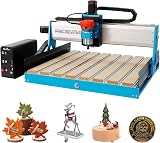 6050 CNC Router Machine9.6/10View on Amazon
- 4
 Genmitsu Cubiko Desktop CNC Router Machine with Enclosure forView on Amazon
- 5
 CNC Router Machine 4030-Evo Ultra 2View on Amazon
- 6
 FoxAlien XE-Ultra 8080 CNC Router Machine with NEMA 23View on Amazon
- 7
 LUNYEE 3020 Nova CNC Router MachineView on Amazon
- 8
 CNC Spoilboard Surfacing Router Bit 1/4 Inch ShankView on Amazon
- 9
 CNC Spoilboard Surfacing Router BitsView on Amazon
When you plan to mill wooden signs, custom acrylic parts, or carved plaques, deciding between an enclosed vs open frame cnc router comes down to balancing dust containment and noise dampening against bed access and machine expandability. Choose an enclosed CNC router if you work in a living area, classroom, or clean space where containing chips and lowering noise take priority. Choose an open frame CNC router if you need unrestricted bed access for clamping, modular upgrades, or larger work envelopes. The sections below compare both designs step by step.
Other machines to compare
 Genmitsu Cubiko Desktop CNC Router Machine with Enclosure forCheck price on Amazon
 CNC Router Machine 4030-Evo Ultra 2Check price on Amazon
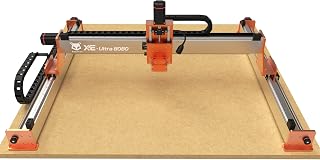 FoxAlien XE-Ultra 8080 CNC Router Machine with NEMA 23Check price on Amazon
 LUNYEE 3020 Nova CNC Router MachineCheck price on Amazon
 CNC Spoilboard Surfacing Router Bit 1/4 Inch ShankCheck price on Amazon
 CNC Spoilboard Surfacing Router BitsCheck price on Amazon
LaserEngraveHQ earns a commission from purchases made through these links, at no extra cost to you. Read our affiliate disclosure.
An integrated enclosure contains flying debris and softens high-frequency noise, but confines workpiece dimensions and complicates clamping taller stock. Decide whether chip containment or physical bed access matters more before choosing a machine style.
Step 1: Assess your workshop space and dust containment needs
CNC routing generates substantial chips and fine dust as the end mill shears material. Where you locate your machine dictates which design fits your shop.
An enclosed CNC router surrounds the milling area with rigid panels. The Genmitsu Cubiko listing states that its integrated enclosure helps contain chips and debris while reducing operating noise, making it suited for home workshops and maker spaces. Flying chips remain inside the cabinet, keeping surrounding surfaces clean.
An open frame machine leaves the bed exposed. To operate cleanly indoors, you must mount a dust collector shoe for CNC router setups over the spindle and connect a dedicated dust collector for desktop CNC machines. In a garage or dedicated shop, open-frame chips are simple to sweep up. For more layout guidance, see our guide on how to choose a desktop CNC router.
Step 2: Compare work envelope and material access
Work envelope sets the maximum dimensions of parts you can machine. An enclosure defines a fixed boundary for stock size.
For example, the Genmitsu Cubiko listing states overall item dimensions of 13″W x 12.48″H with a machine weight of 11.06 kg. Because cabinet walls surround the bed, stock must fit fully inside the chamber for the door to shut. You cannot slide long boards through the sides or overhang the bed.
An open frame router provides perimeter access across varied sizes. The compact CNCTOPBAOS 1610 PRO provides a work area of 7.08×3.93×1.77 inches (18x10x4.5cm) on a 11.81×10.23×9.84 inches frame, while the Genmitsu 3020-PRO Ultra provides 11.8″ x 8.1″ x 3.1″ on a 15.3 kg frame. The Twotrees TTC450 Ultra offers a 465x465mm work area on a 19kg frame. Large units like the FoxAlien XE-Ultra 8080 feature a 33″x33″x4.72″ workspace with a 5.3″ pass height on a 46×80mm aluminum frame weighing 40 kg. Open beds allow stock overhang and indexed tiling along the Y-axis for extra-long workpieces. Compare starter options in our best desktop CNC for beginners roundup.
Step 3: Evaluate spindle power and cutting capability
Spindle wattage, speed range, and frame rigidity determine cutting capability across different materials.
Compact enclosed units typically mount low-wattage motors suited for fine detailing. The Genmitsu Cubiko listing states a 96 watts motor, 9000 rpm maximum speed, and ±0.1 mm positioning accuracy, noting it cuts wood, acrylic, PCB, plastics, and suitable soft metals with light passes.
Open frame routers accommodate a wider variety of spindle classes. Entry-level models like the CNCTOPBAOS 3018-PRO-MAX use a 120W motor at 10000r/min for engraving wood, acrylic, and soft metals. Sturdier open-frame platforms support full trim routers. The Genmitsu 3020-PRO Ultra features a 710W spindle spanning 6500-30000 RPM across 6-speed settings, achieving cuts in aluminum up to 1.5mm in one pass. The LUNYEE 3020 Nova listing states an 800W spindle (6,000–30,000 RPM), 1204 ball screws, and HG-15 linear guides reaching 5000mm/min with ±0.05mm accuracy. The AnoleX 4030-Evo Ultra 2 includes an 800W trim router with an Er11-1/8″ collet, and the FoxAlien XE-Ultra 8080 supports a 1.5kW VFD spindle. Check stated motor wattage rather than assuming frame style alone decides power. See our comparison of spindle vs router for CNC machines.
Step 4: Weigh operating noise and workshop safety
Spindles running at high RPM and cutters carving hard stock produce substantial noise. Frame design directly influences workshop sound levels.
An enclosed router muffles operating noise. The Genmitsu Cubiko listing notes that its integrated enclosure reduces operating noise, making it better suited for home workshops and maker spaces. While cutting remains audible, the cabinet softens high-frequency whine. Enclosures also enhance physical safety; the Cubiko listing notes opening the cover automatically pauses operation for added protection during use.
An open frame machine operates with exposed mechanics. Cutting sounds radiate unimpeded, making hearing protection advisable during long runs. Moving gantries and spinning cutters also require operators to wear safety glasses and keep hands clear. For more operational trade-offs, consult our guide on the pros and cons of CNC router machinery.
Step 5: Factor in workholding and clamping flexibility
Every CNC job requires securing stock firmly to the wasteboard to prevent movement and tool breakage.
Clamping inside an enclosed CNC router requires working within cabinet walls. Door openings limit hand clearance and sightlines, making tall clamps or edge vises awkward to position. Fixtures and stock must stay low enough to clear both the gantry and the ceiling of the enclosure.
Open frame machines provide unrestricted overhead access. You can position hold-down clamps, toe clamps, or vises from any angle. The LUNYEE 3020 Nova listing states compatibility with a 20×10 cm CNC vise for desktop projects. Open beds also feature integrated fixturing channels; the Genmitsu 4040-PRO MAX highlights an upgraded spoilboard with a central aluminum support bar that functions as an integrated T-slot. Learn workholding techniques in our guide on clamping ideas on a CNC router, and prep your bed with our tutorial on how to set up a spoilboard on a CNC.
Step 6: Plan for maintenance, cleaning, and upgrades
Routine maintenance keeps mechanical axes aligned and cutting accurately.
Enclosed routers keep shop air cleaner, but chips settle inside the cabinet. You must vacuum the interior regularly so debris does not pack into lead screws. Turnkey convenience is common on desktop units; the Genmitsu Cubiko listing states a pre-assembled build with auto Z-probing and smart surface mapping for PCB milling, simplifying setup.
Open frame routers scatter dust outward onto your workbench, but offer open access to clean and grease rails. Assembly varies: the Twotrees TTC450 Ultra arrives 90% pre-assembled (19kg net weight), while the LUNYEE 3020 Nova arrives fully assembled with wiring pre-connected, needing only Z-axis mounting. Open designs also facilitate hardware upgrades. The Genmitsu 4040-PRO MAX supports a Y-axis extension kit, rotary module kit, and dust shoe. The Twotrees TTC450 Ultra reserves ports for WiFi, Bluetooth, and fourth-axis expansion with dual limit switches and a 3.5-inch touchscreen. The CNCTOPBAOS 3018-PRO-MAX provides an upgraded control board with emergency stop, probe, and axis limit ports. Review maintenance steps in our CNC router maintenance guide.
Common mistakes to avoid
- Operating an open frame router indoors without a dedicated dust shoe and vacuum system.
- Expecting a compact enclosed machine with a 96 watts spindle to take aggressive cuts in dense stock.
- Ignoring clamp and stock clearances inside an enclosure, risking collisions with cabinet walls.
- Running an open frame machine without eye and hearing protection.
- Assuming all open frame routers include large spindles, overlooking that entry models use 120W motors.
Enclosed vs open frame cnc router: the short version
- Assess your space: choose enclosed for clean indoor rooms; choose open frame for garages and workshops.
- Determine part size: choose open frame for larger signs, sheet goods, and tiling; choose enclosed for small crafts and circuit boards.
- Check spindle power: select a machine matching your cutting depth, noting whether it mounts a 96W or 120W motor or a 710W or 800W router.
- Review noise limits: choose enclosed to dampen high-pitch whine; choose open frame where sound is not an issue.
- Verify clamping needs: choose open frame for easy access with clamps and vises; choose enclosed if compact fixtures fit your chamber.
Once you select between debris containment and open access, preparing toolpaths and feeds follows identical machining principles.
FAQ: lasers and CNC
Can you add an enclosure to an open frame CNC router later?
Yes. Makers often build DIY enclosures or buy modular tent covers for open frame routers. An external enclosure contains dust and softens noise, though it increases machine footprint and requires space for cable tracks and vacuum hoses.
Are enclosed CNC routers quieter than open frame models?
Yes. Cabinet panels form an acoustic barrier that dampens spindle whine and cutting vibration. Open frame routers radiate motor noise directly into the room, making hearing protection advisable during long runs.
Can an enclosed desktop CNC router cut aluminum?
It depends on stated motor power and rigidity. Compact enclosed units like the Genmitsu Cubiko (96 watts motor, ±0.1 mm positioning accuracy) handle soft metals with light passes. Stiffer open frame machines with 710W or 800W spindles, such as the Genmitsu 3020-PRO Ultra, cut aluminum up to 1.5mm in one pass.
How do you collect dust on an open frame CNC router?
Install a dust collector shoe over the spindle collet connected to a workshop vacuum via flexible hose. The shoe brushes surround the bit to capture chips directly at the material surface.
Which CNC router style is better for a beginner?
An enclosed router suits beginners in living spaces who need immediate chip containment and safety interlocks. An open frame router suits beginners wanting full bed access, larger work areas, and room to upgrade components over time.
Related: the CNC router hub, best desktop CNC for beginners and best CNC router for sign making. Also see our how to choose a desktop CNC router. Also see our best CNC router for small business.