Do Hot Glue Guns Work on Fabric?
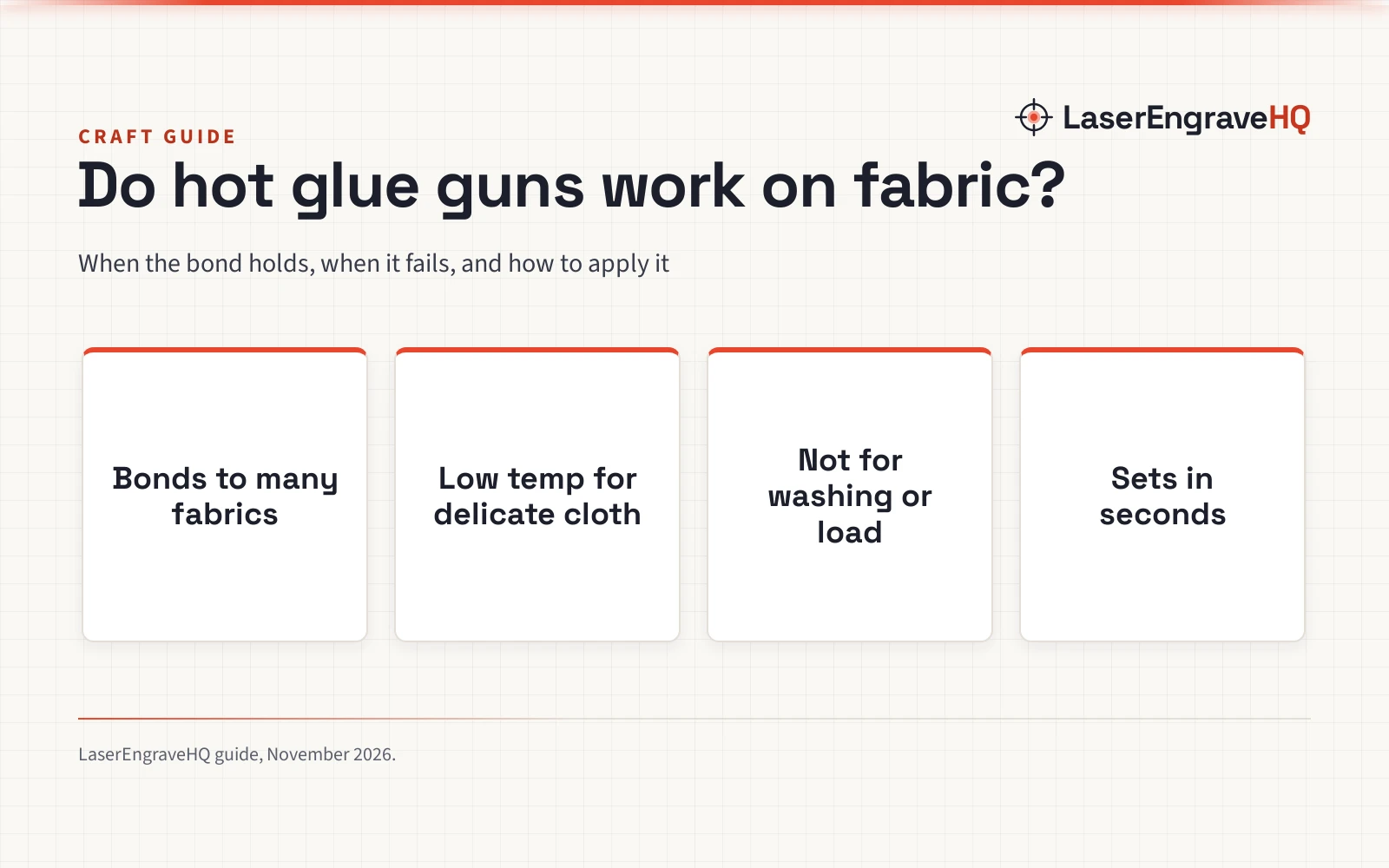
Hot glue bonds to many fabrics for light craft work and quick repairs, but heat, washing and load break the joint. Here is when it holds and how to apply it.

On this page
Yes, do hot glue guns work on fabric is a fair question with a simple answer: hot glue bonds to many fabrics and holds well for light craft work, costume details, patches and quick repairs, but it is not a replacement for stitching on anything that carries weight or goes through the wash again and again. The glue melts, flows around the yarns of the weave as you press the pieces together, and hardens into a rubbery bead that grips the cloth. Whether that grip lasts depends on the fabric, the temperature of the gun and how the finished piece will be used.
As an Amazon Associate I earn from qualifying purchases. LaserEngraveHQ earns a commission from purchases made through these links, at no extra cost to you. Read our affiliate disclosure.
Hot glue is a surface bond. It sits on and between the fibers rather than locking them together the way thread does, so treat it as a fastening for decoration and light duty, and reach for a needle or a sewing machine when the joint has to carry a load.
How hot glue bonds to fabric
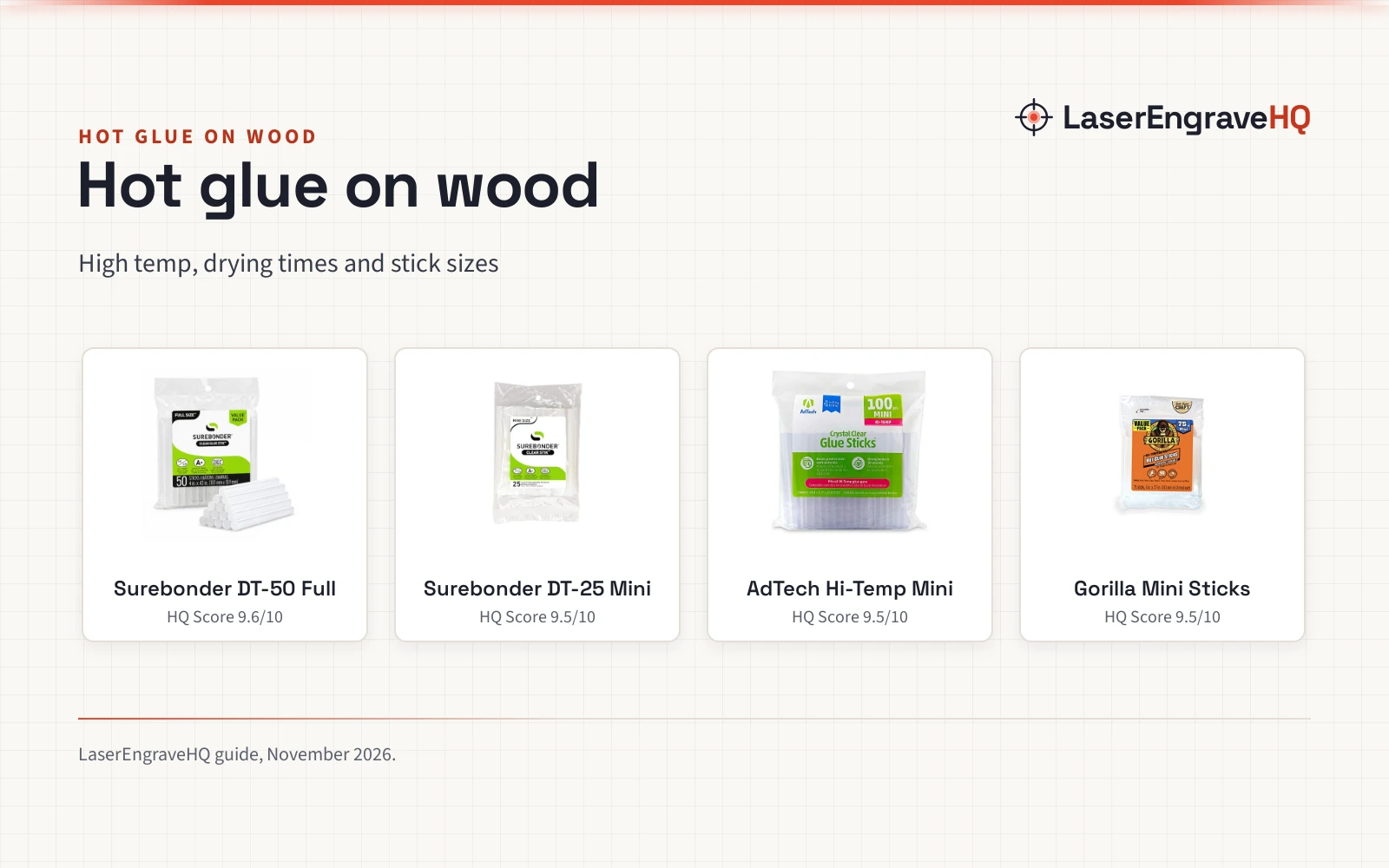
A hot glue gun melts a solid glue stick and pushes the liquid adhesive out of the nozzle. Pressed onto cloth, the hot glue flows around the yarns of the weave before it cools. As it sets, it forms a rubbery layer that holds the two surfaces together. Glue stick makers list fabric among the materials their sticks bond to, alongside paper, wood, plastic, foam and metal, and the bond sets fast: AdTech states its mini sticks set in as little as 30 seconds, and YOTOM states its mini sticks bond fabric in 20 seconds. YesBes states its full size sticks set in 40-50 seconds. That short working time is the main thing to plan around, because the glue skins over fast and a piece placed late will not bond well.
Because the glue grips the surface fibers, open weaves and textured cloths such as felt, canvas and burlap give it plenty to hold on to. Smooth, tightly woven or coated fabrics give it less. The glue can also leave a stiff spot where it sets into the weave, which matters on thin cloth that needs to drape.
Do hot glue guns work on fabric: where the bond holds and where it fails
Hot glue holds best on fabric projects where the joint stays dry, cool and unstressed. Costume trim, applique on tote bags, felt crafts, ribbon work, hemming a curtain for a photo backdrop and attaching patches to a jacket that will not be washed often are all good fits. The bond also suits mixed materials, such as gluing fabric to cardboard, foam or wood for craft builds.
It fails where heat, water or repeated flexing attack the joint. A hot wash or a tumble dryer can soften the glue and let the pieces creep apart. Clothing that bends at the same crease all day works the bead until it cracks or peels. Heavy items, such as a loaded bag strap or a cushion cover under tension, pull harder than a surface bond can hold. For those jobs, stitching or a fabric adhesive made for laundry is the safer route, and our craft machines hub covers the sewing side of the bench.
High temp or low temp for fabric
Glue sticks come in multi-temperature formulas that run in high temp, low temp, dual temp and multi temp guns, so the gun’s temperature setting decides how hot the glue runs. AdTech advises low temp guns for delicate materials such as paper, lace and fabric, and high temp guns for porous and heavier materials such as glass and metal. On fabric, a low temp gun is gentler on thin or synthetic cloth and less likely to scorch or melt delicate fibers, while a high temp gun pushes glue deeper into thick, open weaves such as canvas and felt. If you work with both kinds of cloth, a gun with temperature control covers both ends; see hot glue gun with temperature control for how the settings differ.
Stick size matters for fit, not for the fabric itself. Mini sticks measure 0.27 inch across and suit mini guns. AdTech lists its full size sticks at 0.44 inch across for full size guns, while YesBes lists its full size sticks at 8 inches long by 0.43 inch in diameter. Match the stick to the gun, then match the temperature to the cloth.
How to glue fabric with a hot glue gun
Work on a heat-proof surface and keep the fabric flat and clean. WORKPRO advises making sure the surface is water-free, dust-free and oil-free before gluing, and that advice holds for cloth: a dusty or damp weave gives the glue nothing solid to grip. Lay out every piece before you start, because the working time is short.
- Mark the line: chalk or pin the placement first so you are not guessing with hot glue on the cloth.
- Run a thin bead: a thin line of glue settles into the weave; a thick blob sits on top and stiffens the fabric.
- Press and hold: press the pieces together straight away and hold them still until the glue sets. AdTech states a set time of as little as 30 seconds for its sticks.
- Work in short runs: glue a short section, press it, then move on, so the glue never cools before the pieces meet.
- Protect the table: put scrap cardboard under thin fabric, because hot glue can strike through an open weave.
For a fuller walkthrough of gun handling, grip and trigger control, see how to use a hot glue gun for crafts. If a cord gets in the way at the craft table, our cordless hot glue gun picks cover the battery powered options.
Removing hot glue from fabric
Hot glue can usually come off fabric without cutting the cloth. Let the glue cool fully, then peel it away slowly; the bead often lifts off in one piece from smooth fabrics. Chilling the spot makes the glue brittle and easier to pick off. Gentle warmth from an iron over a scrap cloth can soften a stubborn patch so it transfers to the scrap, but keep the iron moving and check that the fabric tolerates heat. Work slowly on delicate cloth, because pulling hard can tear fibers out with the glue. If a repair goes wrong and the gun itself stops feeding, how to fix a hot glue gun covers the common jams.
FAQ: lasers and CNC
Does hot glue hold on cotton fabric?
Yes, when the cotton weave is open and textured. Hot glue grips the surface fibers, and glue stick makers list fabric among the materials their sticks bond to. The bond suits craft work and light repairs; it is not a substitute for stitching on seams that carry weight.
Can hot glue be used on synthetic fabric?
Yes, with care. YesBes lists synthetic fabric, lace and ribbon among the materials its sticks bond to. Use a low temp gun on thin synthetics, because high heat can damage delicate fibers, and run a small hidden patch first to check the cloth tolerates the heat.
Does hot glue survive washing?
Not reliably. Hot water and dryer heat can soften the glue and let the joint creep or peel, and repeated flexing works the bead loose. For anything that will be washed often, stitch the pieces or use an adhesive made for laundry.
How long does hot glue take to set on fabric?
Seconds. AdTech states its sticks set in as little as 30 seconds, YOTOM states 20 seconds for its mini sticks, and YesBes states 40-50 seconds for its full size sticks. Press the pieces together as soon as the glue goes on and hold them still until it sets.
Will hot glue damage delicate fabric?
It can. High temp glue can scorch or melt thin and synthetic fibers, and the set glue leaves a stiff spot. AdTech advises low temp guns for delicate materials such as lace and fabric, so choose the low setting and keep the bead thin on fine cloth.
Related: the craft machines hub, how to use a hot glue gun for crafts and what is the best cordless hot glue gun. Also see hot glue gun with temperature control.