Baltic Birch vs Basswood for Laser Cutting: Complete Workshop Guide
A direct comparison of Baltic birch plywood and basswood for laser cutting, covering core construction, cut speed, edge char, rigidity and project choice.

On this page
Top picks at a glance
As an Amazon Associate I earn from qualifying purchases.
- 1
 Baltic Birch Plywood9.6/10View on Amazon
- 2
 Basswood Sheets 12 x 12 x 1/8 Inch9.7/10View on Amazon
- 3
 Baltic Birch Plywood Sheets Box of 459.6/10View on Amazon
- 4
 3 mm Baltic Birch Plywood 1/8 x 12 x 20 InchView on Amazon
- 5
 Baltic Birch PlywoodView on Amazon
- 6
 3 mm Baltic Birch Plywood 1/8 x 12 x 12 InchView on Amazon
- 7
 3MM 1/8" x 12" x 12" Baltic Birch PlywoodView on Amazon
- 8
 6MM 1/4" x 12 x 12 Baltic Birch Plywood B/BB GradeView on Amazon
- 9
 6 mm Baltic Birch Plywood 1/4 x 12 x 16 InchView on Amazon
When comparing Baltic birch vs basswood for laser cutting, the choice depends on whether your project needs structural rigidity or fast cutting with minimal edge char. Baltic birch plywood features multiple cross-banded plies bonded with adhesive, providing high stiffness, screw retention and flat stability for boxes and functional joints. Basswood is a soft, low-density craft wood with a fine, uniform grain that vaporizes quickly with modest laser power, leaves pale edges and suits architectural models, ornaments and miniature carvings. The sections below compare both materials across construction, cutting speed, edge char, rigidity and project fit.
Other machines to compare
 3 mm Baltic Birch Plywood 1/8 x 12 x 20 InchCheck price on Amazon
 Baltic Birch PlywoodCheck price on Amazon
 3 mm Baltic Birch Plywood 1/8 x 12 x 12 InchCheck price on Amazon
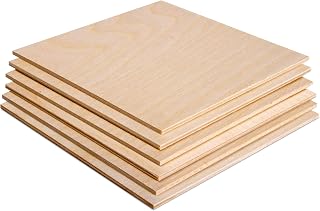 3MM 1/8" x 12" x 12" Baltic Birch PlywoodCheck price on Amazon
 6MM 1/4" x 12 x 12 Baltic Birch Plywood B/BB GradeCheck price on Amazon
 6 mm Baltic Birch Plywood 1/4 x 12 x 16 InchCheck price on Amazon
LaserEngraveHQ earns a commission from purchases made through these links, at no extra cost to you. Read our affiliate disclosure.
Laser cutting results vary with beam spot focus, moisture content and internal glue formulation. We compare published manufacturer specifications and wood properties so you can select the right material for your design without guessing.
Step 1: Understand the difference in wood structure
The primary distinction between Baltic birch and basswood lies in sheet construction. Baltic birch is a multi-ply hardwood plywood. Makers like Woodpeckers, Frylr and TX liteart produce Baltic birch sheets from alternating cross-laminated birch veneers. For example, Frylr publishes that its 3 mm (1/8 inch) sheets feature a 0.6 mm surface veneer over cross-belt lamination bonded with marine grade adhesive, noting that temperature and humidity affect sheet warping. This alternating grain construction provides uniform structural strength in all directions and prevents splitting along a grain line, though thin sheets can still bow with ambient moisture.
Basswood is sold for craft cutting either as thin solid boards or as multi-ply craft sheets. Brand listings such as Thiecoc highlight basswood for model airplanes and wood carving because of its smooth, burr-free surface and uniform density. However, listing details can confuse buyers; Thiecoc lists basswood in its product bullets while titling the package as Baltic birch plywood, showing why buyers must verify whether they are purchasing true multi-ply birch or basswood craft sheets.
Step 2: Compare cutting speed and laser beam penetration
Cutting speed differs noticeably because a laser reacts differently to natural wood fibers than to synthetic adhesives. Basswood contains low-density fibers with low resin content. A focused laser beam vaporizes basswood quickly and cleanly, allowing even modest diode lasers to cut thin craft sheets in a single pass without slow travel speeds.
Baltic birch demands greater beam intensity. While birch is denser than basswood, cutting resistance also stems from internal glue lines between plies. These resin layers absorb laser energy, requiring slower speeds or multiple passes. Using air assist makes a substantial difference on Baltic birch by clearing vaporized glue and char out of the kerf before it re-hardens. For machine setup tips, see our guide on air assist on a laser engraver.
Step 3: Evaluate edge char and surface smoke marks
Edge appearance is a major factor if you leave cut edges bare. When cutting basswood, edges turn a pale golden-tan shade. Because basswood has low resin and cuts rapidly, soot accumulation along the cut line remains minimal, making basswood ideal for intricate scrollwork and ornaments where dark edges distract from delicate details.
Baltic birch leaves darker brown or black edges because adhesive between plies carbonizes during cutting. In thicker sheets, such as the 6 mm (1/4 inch) Baltic birch boards offered by Woodpeckers, Anderson Plywood and LISHINE, edge char becomes more pronounced due to repeated passes. Applying paper transfer tape across the sheet prevents surface staining. Learn additional workshop strategies in our guide on how to prevent burn marks when laser cutting wood.
Step 4: Assess structural strength and joint rigidity
Structural demands determine which material fits your assembly. Baltic birch is engineered for mechanical stability. Because alternating veneers run perpendicular to one another, the sheet resists splitting along a grain line. This makes Baltic birch standard for interlocking finger joints, mortise-and-tenon connections, living hinges and storage organizers. TX liteart specifically highlights its 3 mm (1/8 inch) Baltic birch sheets for load-bearing and sturdy craft projects where rigidity is essential.
Basswood, whether in solid sheet or thin craft ply form, lacks the density and stiffness of Baltic birch. As a soft hardwood with low shear strength, thin basswood tabs can crush or snap along the grain when pressed into tight slots. While basswood is unsuited for load-bearing boxes, its lightweight nature suits model aircraft and decorative wall art.
Step 5: Match the wood to your specific project
Selecting between basswood or Baltic birch comes down to your application. Review our breakdown of common projects to match the proper material to your work:
- Boxes, drawers and organizers: Choose Baltic birch. Cross-banded veneers provide rigid walls and strong corner joints that withstand handling. Explore top options in our roundup of the best plywood for laser cutting.
- Architectural models and framing: Choose basswood. Its fine grain looks proportional on miniature structures, and soft fibers cut cleanly without splintering small parts.
- Layered art and signs: Both woods excel here. Basswood provides clean top layers that take paint smoothly, while Baltic birch provides rigid backing boards.
- Intricate fretwork and ornaments: Basswood cuts fine geometric details with minimal edge scorching.
- Puzzles and mechanical toys: Choose Baltic birch. Interlocking tabs cut from basswood can snap under friction, whereas birch veneers withstand repeated handling.
Step 6: Prepare your sheets and laser setup
Proper material preparation ensures consistent cutting on either wood. Because thin sheets of both materials can bow from ambient humidity, inspect each sheet before cutting. Suppliers like Woodpeckers offer 3 mm Baltic birch sheets in true dimensions of 11-7/8 inches by 19-7/8 inches, while Frylr lists 11.8 inches square. Use honeycomb hold-down pins to flatten bowed sheets against the bed.
When establishing cut settings, run a material calibration grid rather than guessing values. Ensure your exhaust system vents fumes outdoors or through an appropriate filter. For machine selection guidance, consult our overview of the best laser engraver for wood.
Step 7: Sand, finish and assemble your parts
Finishing transforms laser-cut components into durable finished products. Basswood has a fine texture that takes paint, dye and wood burning well, making it popular for painted models and detailed miniatures. Applying a primer or sanding sealer before painting ensures an even finish across soft fibers.
Baltic birch takes stain and clear finishes well, as Woodpeckers notes regarding its lengthwise birch grain. High-grade face veneers, including B/BB grade from Woodpeckers and A/A grade from Frylr, provide smooth surfaces requiring minimal sanding. For joined assemblies, standard PVA wood glue creates a strong bond along birch edges, supporting rigid boxes and functional joints.
Common mistakes to avoid
- Using basswood for tight press-fit finger joints, which causes tabs to snap along the grain.
- Purchasing standard construction plywood instead of craft-grade Baltic birch, resulting in interior voids and uncut glue pockets.
- Cutting bowed sheets without hold-down pins, throwing the beam out of focus.
- Skipping air assist on Baltic birch, leading to excess char and re-solidified glue in the kerf.
- Cutting prohibited synthetic materials: never cut PVC, vinyl, polycarbonate or ABS in a laser. Review our safety overview of materials you should never laser cut.
Baltic birch vs basswood for laser cutting: the short version
- Choose Baltic birch when your project demands structural strength, interlocking joints, flat rigidity or load-bearing durability.
- Choose basswood when you need fast cutting speeds, light golden edges, minimal smoke residue and detailed miniature work.
- Account for adhesive: Baltic birch requires higher laser power and air assist to slice through glue lines.
- Verify sheet quality: select craft-grade Baltic birch with smooth B/BB or A/A face veneers and void-free cores.
- Avoid substituting basswood for functional mechanical parts or stress-bearing puzzles.
- Maintain proper ventilation and keep a fire extinguisher near your laser workspace.
Matching the material to your project demands ensures clean cuts, strong joints and less wasted wood.
FAQ: lasers and CNC
Which is better for laser cutting: Baltic birch or basswood?
Neither wood is universally superior. Baltic birch is better for structural projects, boxes and interlocking assemblies because cross-laminated plies resist snapping. Basswood is better for architectural models, fretwork and craft ornaments requiring rapid cutting and pale edges without dark char.
Why does Baltic birch take more laser power to cut than basswood?
Baltic birch is denser and constructed with internal glue layers. The adhesive between veneers absorbs beam energy and requires higher power or slower speeds, whereas basswood has lower density and vaporizes quickly with modest power.
Does basswood produce less smoke and edge char than Baltic birch?
Yes. Basswood has low resin content and requires less beam energy, leaving light tan edges. Baltic birch produces darker edges because interior adhesive carbonizes during cutting.
Can I use basswood for structural boxes and interlocking finger joints?
Basswood is unsuited for structural boxes or tight joinery. Because its fibers are soft with low shear strength, thin interlocking tabs can crush or snap along the grain when pressed into tight slots.
What should I look for when buying Baltic birch sheets for laser work?
Look for craft-grade sheets with smooth face veneers (such as B/BB or A/A grade) and void-free inner plies. In B/BB grade sheets, Woodpeckers notes a single-piece face veneer with one to two color-matched patches on the back.
How do I reduce dark scorch marks on Baltic birch and basswood?
Apply paper masking tape across both faces before cutting, ensure your air assist delivers steady airflow into the kerf, and verify that your exhaust clears fumes from the enclosure.
Related: our engraving materials hub, best plywood for laser cutting and best wood to laser engrave. Also see our workshop guides on how to prevent burn marks when laser cutting wood and how to choose a laser engraver.