Roughing vs Finishing End Mill: Which One Should You Buy?
A roughing cutter clears stock and a finishing cutter leaves the surface and size a part keeps, so plan the job as roughing first and finishing last.

On this page
Top picks at a glance
As an Amazon Associate I earn from qualifying purchases.
- 1
 SPEED TIGER Carbide Square End Mill9.7/10View on Amazon
- 2
 Deburring Tool with 12 HSS Blades for Metal Resin PVC 3D Print9.6/10View on Amazon
- 3
 SPEED TIGER INTA Carbide Roughing End Mill9.7/10View on Amazon
- 4
 Accusize M42 Roughing End MillView on Amazon
- 5
 sisona 1/4" Carbide Roughing End MillView on Amazon
- 6sisona 1/2" Carbide Roughing End MillView on Amazon
- 7sisona 3/8" Carbide Roughing End MillView on Amazon
- 8
 SPEED TIGER INTA Carbide Roughing End MillView on Amazon
- 9
 Accusize Cobalt Roughing End MillView on Amazon
A roughing cutter clears stock fast and leaves a rough surface behind, while a finishing cutter typically takes a lighter pass and leaves the size and surface the part needs to keep. That split is the whole answer to roughing vs finishing end mill choice: use a roughing cutter to remove material, then switch to a finishing cutter when surface finish or dimensional tolerance matters. The listings in this guide are all roughing cutters, so they show the roughing side of the pair in detail and explain where a finishing pass takes over.
Other machines to compare
 Accusize M42 Roughing End MillCheck price on Amazon
 sisona 1/4" Carbide Roughing End MillCheck price on Amazon
- sisona 1/2" Carbide Roughing End MillCheck price on Amazon
- sisona 3/8" Carbide Roughing End MillCheck price on Amazon
 SPEED TIGER INTA Carbide Roughing End MillCheck price on Amazon
 Accusize Cobalt Roughing End MillCheck price on Amazon
LaserEngraveHQ earns a commission from purchases made through these links, at no extra cost to you. Read our affiliate disclosure.
What roughing vs finishing end mill means in the shop
Roughing and finishing are passes, not just cutter names. A roughing pass removes the bulk of the material, and a finishing pass cleans up what the roughing pass left. The Accusize listing for the coarse tooth cutter states the split plainly: it is designed for stock removal, and a separate finishing tool belongs in the plan when the required surface finish or dimensional tolerance calls for it. Planning the job as roughing first and finishing last keeps each cutter doing the work its geometry suits.
The difference shows up in the cut itself. A roughing pass takes the bulk of the material, and the finishing pass is the pass that sets the surface and size the part keeps.
What a roughing cutter does
A roughing cutter is built to take material away. Its coarse tooth form suits stock removal, and the sisona listing states its roughing cutter suits rough machining, with high machining efficiency, good chip removal performance and a large chip removal volume, and names slot machining and step surface machining among its uses.
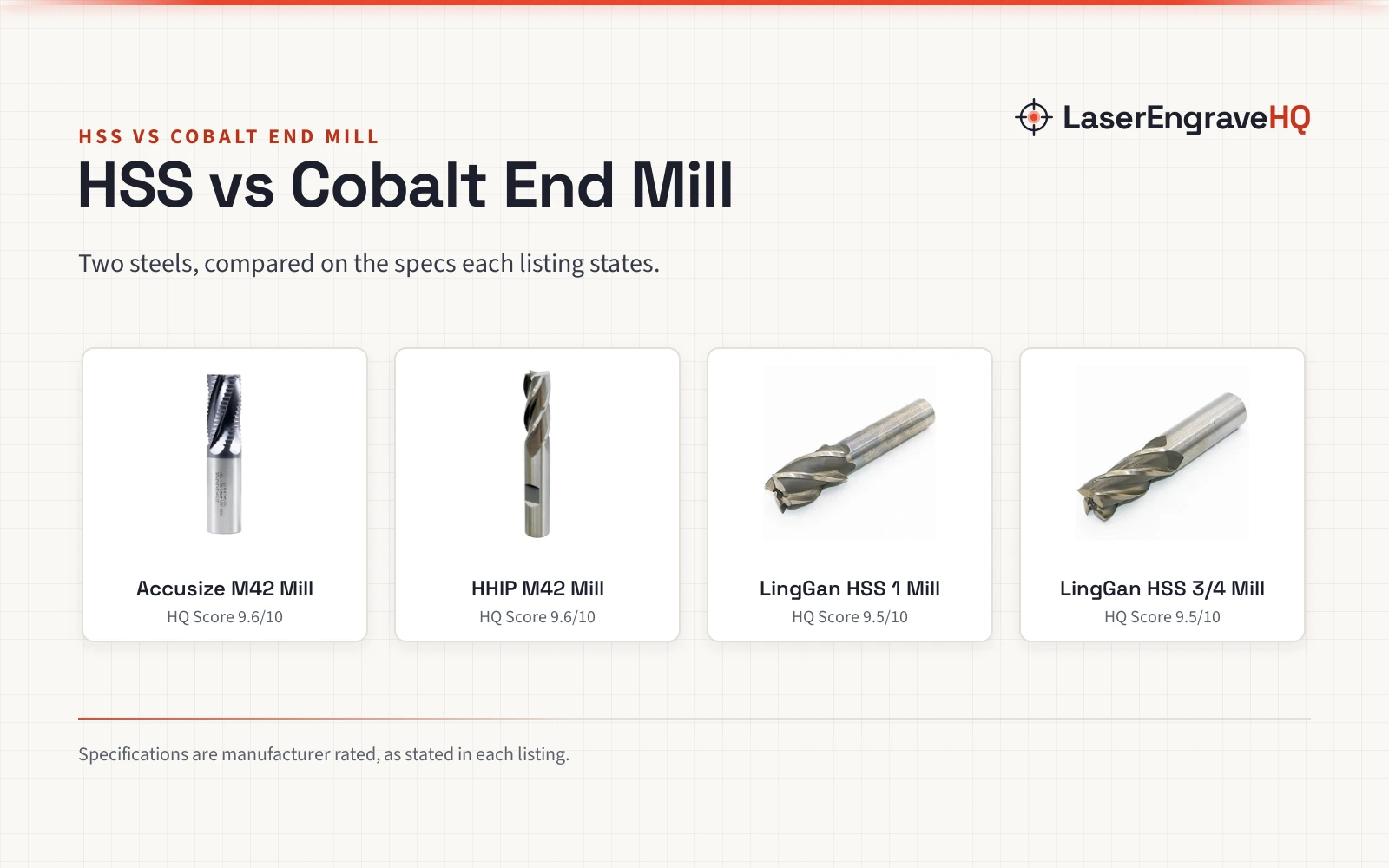
Coarse tooth and fine tooth roughing cutters sit at different ends of the roughing range. The Accusize coarse tooth cutter, with a 1in cutting diameter, 4in flute length and 6-1/2in overall length, is the largest-diameter stock removal shape in this guide. The Accusize fine tooth cutter, at 1/2in diameter with a 1-1/4in flute length and 3-1/4in overall length, still counts as a roughing cutter, but its listing states it produces a smooth finish that often eliminates the need for a finishing cut for profiling and shallow slots. Tooth form, together with diameter and cutting conditions, affects how close a roughing pass gets to a finished surface.
What a finishing cutter does
A finishing cutter takes over where roughing stops. It typically takes a lighter pass, leaves a smoother surface, and holds the size the drawing calls for. None of the listings in this guide is sold as a finishing cutter, so a buyer who needs a fine surface on a part that a coarse roughing cutter has just cleared still needs a separate finishing tool in the drawer.
Finishing work also changes how the cutter is chosen. Diameter and shank size still matter, but the finishing pass is the pass the eye and the caliper judge, so a cutter that cleared stock well can still leave a wall that needs a finishing pass.
Flutes, coatings and sizes from the listings
The gear in this guide covers the roughing side only. The Accusize coarse tooth cutter is a 5-flute, TiAlN-coated M42 high-speed steel cutter with 8% cobalt, sized at 1in cutting diameter by 4in flute length and 6-1/2in overall length, with center-cutting geometry for roughing work on compatible milling machines.
The Accusize fine tooth cutter is the smaller Accusize in the group: 1/2in diameter, 1/2in shank, 1-1/4in flute length, 3-1/4in overall length, 4 flute, TiAlN coated, M42 with 8% cobalt, center cutting and single end. Its listing recommends it for abrasive materials and for hard materials that are difficult to cut. For profiling and shallow slots, its listing states its smooth finish often eliminates the need for a finishing cut.
The sisona cutter is a solid tungsten carbide roughing cutter with a TiN surface, sized at 1/4in cutting diameter, 1/4in shank diameter, 3/4in cutting length and 2-1/2in overall length, with 4 flutes. Its listing states compatibility with most desktop CNC machines as well as other industrial CNC machines, provided the correct-sized collet is selected, and lists carbon steel, alloy steel, hardened steel and cast iron among its materials.
The SPEED TIGER cutter is a micrograin carbide roughing cutter at 1/4in, with 4 flutes and a ZrN plus AlTiBN coating. Its listing states stability at high temperatures and heat resistance, and gives material guidance in hardness terms: carbon steels around HB225, alloy steels HB225~325, pre-hardened steels up to HRC45, hardened steels HRC40~46, and cast iron. It also states high accuracy with an error of -0.02mm.
Read the listings side by side and the pattern is clear: the Accusize pair covers larger diameters in cobalt high-speed steel, while the sisona and SPEED TIGER pair covers 1/4in carbide cutters. Only the SPEED TIGER listing gives hardness limits for its steels; the sisona listing names steel types without hardness numbers. Coating differs too: TiAlN on the Accusize pair, TiN on the sisona cutter, and ZrN plus AlTiBN on the SPEED TIGER cutter.
Choosing between roughing and finishing passes
Start from the part, not the cutter drawer. If the part needs bulk material removed, a roughing cutter from the listings above is built for stock removal, and the sisona listing names slot machining and step surface machining among its uses, with the diameter matched to the slot and the shank matched to the collet on hand. If the part needs a smooth wall or a tight size after that stock is gone, plan a finishing pass with a separate finishing tool, as the Accusize coarse tooth listing directs.
| Pass | What it does | What to check in the listing |
|---|---|---|
| Roughing | Clears stock from slots and step surfaces | Tooth form, flute count, cutting diameter and coating |
| Finishing | Sets surface finish and size on the finished part | A finishing tool separate from the roughing cutter |
| Bridge case | Fine tooth roughing that often needs no finishing cut | The smooth finish statement for profiling and shallow slots |
Machine setup matters as much as cutter choice. The Accusize coarse tooth listing states that speed, feed and depth of cut should be selected for the workpiece material, cutter size and machine setup, and the sisona listing states that the correct-sized collet must be selected for the device.
Common mistakes to avoid
- Using a roughing cutter as the last pass on a visible surface, then finding the wall needs a finishing pass anyway.
- Picking a cutter by diameter alone while ignoring tooth form, flute count and coating for the material being cut.
- Buying a shank size the collet on hand cannot hold, instead of checking shank diameter in the listing before ordering.
- Running a roughing pass at a depth the setup cannot support, instead of selecting speed, feed and depth for the material, cutter size and machine setup.
- Assuming a carbide cutter suits every steel, instead of checking the listing’s material guidance, and any hardness limits it gives, for the steel on the bench.
FAQ: lasers and CNC
Do I need a roughing cutter and a finishing cutter?
It depends on the finish and size the part needs. A roughing cutter clears the bulk material, and a finishing cutter leaves the surface and size the part keeps. The Accusize coarse tooth listing states that a separate finishing tool belongs in the plan when surface finish or dimensional tolerance calls for it, while the Accusize fine tooth listing states its smooth finish often eliminates the need for a finishing cut for profiling and shallow slots.
Which roughing cutter suits hardened steel?
Match the listing to the steel. The SPEED TIGER listing gives hardness guidance for carbon steels, alloy steels, pre-hardened steels, hardened steels and cast iron, while the sisona listing states carbon steel, alloy steel, hardened steel and cast iron among its materials.
What does flute count change on a roughing cutter?
Flute count affects chip clearing and the finish a pass leaves, together with tooth form and cutting conditions. The listings here show a 5-flute coarse tooth Accusize cutter and 4-flute cutters from Accusize, sisona and SPEED TIGER, with the Accusize listings pairing coarse tooth form with stock removal and fine tooth form with a smoother finish.
Can a 1/4in roughing cutter handle slot work?
The sisona and SPEED TIGER listings both describe 1/4in roughing cutters, and the sisona listing states slot machining and step surface machining among its uses. Diameter still needs to fit the slot, and the shank diameter needs to fit the collet on hand.
How do coatings differ across these roughing cutters?
The Accusize pair uses a TiAlN coating on M42 high-speed steel with 8% cobalt, the sisona cutter uses a TiN surface on solid tungsten carbide, and the SPEED TIGER cutter uses a ZrN plus AlTiBN coating on micrograin carbide. Coatings differ by listing, so match the coating line in the listing to the steel being cut rather than assuming one coating suits every steel.
Related: the cobalt vs carbide end mill, flat end mill vs roughing end mill and end mill vs drill bit for CNC guides, plus the CNC tooling hub.