Best Bowl and Tray Router Bit (2026): 5 Picks
Five bowl and tray router bits for CNC and routers compared: diameters, shanks, bearings and carbide, from what each listing states.

On this page
Top picks at a glance
As an Amazon Associate I earn from qualifying purchases.
- 1
 Best OverallYakamoz Bowl Bit Set9.7/10View on Amazon
- 2
 Best Large BitWhiteside 1376B Bit9.6/10View on Amazon
- 3
 Best 1/4 in Shank SingleWhiteside 1372B Bit9.6/10View on Amazon
- 4
 Best Value SetTotowood Bowl Bit Set9.6/10View on Amazon
- 5
 Best for Daily UseSpeTool Bowl Tray Bit9.6/10View on Amazon
- 6
 Newdeli 3Pcs Bowl and Tray Template Router Bit Set 1/4 InchView on Amazon
- 7
 3Pcs 1/4" Shank Bowl and Tray Router BitView on Amazon
- 8
 SpeTool Bowl and Tray Router Bit 1/4" ShankView on Amazon
- 9
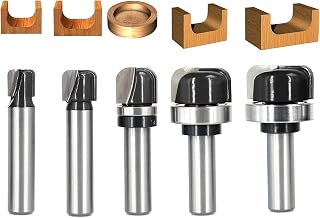
 5PCS Bowl & Tray Template Router Bit Set 1/2 Inch ShankView on Amazon
- 10
 YONICO Router Bits Pattern Bit Bowl & Tray TemplateView on Amazon
A bowl and tray bit is the tool for carving dishes into wood: small bowls, coin trays, jewelry boxes and juice grooves. The rounded profile with a flat bottom cuts a smooth interior that a round nose bit cannot match. This guide to the best bowl and tray router bit compares five bits and sets for CNC machines, router tables and hand-held routers, on the numbers that decide what they can cut: diameter, shank, bearing and carbide.
LaserEngraveHQ earns a commission from purchases made through these links, at no extra cost to you. Read our affiliate disclosure.
Quick picks
- Best Overall Yakamoz Bowl Bit Set: Three sizes, ball bearing, C3 carbide and Teflon coating in one buy. Check price on Amazon
- Best Large Bit Whiteside 1376B Bit: 1-1/4 in diameter with a 1/2 in shank for bigger bowls. Check price on Amazon
- Best 1/4 in Shank Single Whiteside 1372B Bit: 3/4 in diameter, bearing guide and carbide-tipped edges. Check price on Amazon
- Best Value Set Totowood Bowl Bit Set: Three sizes with ball bearing and heat-treated blades. Check price on Amazon
- Best for Daily Use SpeTool Bowl Tray Bit: Heat-treated tungsten carbide pitched for daily use. Check price on Amazon
Machines on the list
Yakamoz 3Pcs 1/4" Shank Bowl Tray Template Router
A 3-piece bowl and tray bit set with ball bearing, C3 micro-grain tungsten carbide and 1/4 in shank.
Pros
- Three diameters: 1/2, 3/4 and 1-1/8 in
- C3 micro-grain tungsten carbide with Teflon coating
- Anti-kickback design and ball bearing
- For CNC, table routers, hardwoods, softwoods, plywood and MDF
Cons
- No warranty stated
- 1/4 in shank only: no 1/2 in option
- No RPM or feed guidance
- Teflon coating wear is not addressed

Whiteside Router Bits 1376B Bowl and Tray Bit
A 1-1/4 in bowl and tray bit with 1/2 in shank, bearing guide and carbide-tipped edges.
Pros
- 1-1/4 in cutting diameter: the largest here
- 1/2 in shank with bearing mounted on the shank
- Carbide-tipped with a rigid steel body
- Stated for natural woods, composite woods and hard plastics
Cons
- 1/2 in shank needs a 1/2 in collet
- Single bit: the dearest per-bit buy here
- No warranty stated
- 1/2 in cutting length limits depth

Whiteside Router Bits 1372B Bowl and Tray Bit
A 3/4 in bowl and tray bit with 1/4 in shank, bearing guide and carbide-tipped edges.
Pros
- 3/4 in diameter with 5/8 in cutting length
- 1/4 in shank: fits most compact routers and CNC spindles
- Bearing guide for template work
- Carbide-tipped with a rigid steel body
Cons
- Single bit
- No warranty stated
- 3/4 in diameter: small for larger bowls
- No RPM or feed guidance
TOTOWOOD Dish Carving Router Bits,3Pcs 1/4 Inch
A 3-piece bowl and tray bit set with ball bearing, 1/4 in shank and heat-treated alloy blades.
Pros
- Three diameters: 1/2, 3/4 and 1-1/8 in
- Ball bearing with a universal 1/4 in shank
- Heat-treated alloy blades, precision balanced
- For CNC and table routers across hardwoods, softwoods and plywood
Cons
- Alloy steel, not full carbide
- No warranty stated
- Table lists a 0.63 cm cutting length that does not fit
- No RPM or feed guidance
SpeTool 1/4" Shank Bowl & Tray Router Bit 3/4
A 3/4 in bowl and tray bit with 1/4 in shank, double flute and heat-treated tungsten carbide.
Pros
- Heat-treated industrial grade tungsten carbide
- Double flute for a clean finish
- For hand held, table-mounted and CNC routers
- Stated for laminate, MDF, plywood, hardwoods and softwoods
Cons
- No bearing stated
- Bullets say 5/8 in depth, table says 1/2 in: take the shallower figure
- No warranty stated
- Single 3/4 in diameter only
Other machines to compare
 Newdeli 3Pcs Bowl and Tray Template Router Bit Set 1/4 InchCheck price on Amazon
 3Pcs 1/4" Shank Bowl and Tray Router BitCheck price on Amazon
 SpeTool Bowl and Tray Router Bit 1/4" ShankCheck price on Amazon
 5PCS Bowl & Tray Template Router Bit Set 1/2 Inch ShankCheck price on Amazon
 YONICO Router Bits Pattern Bit Bowl & Tray TemplateCheck price on Amazon
Specs compared
| Bit | HQ Score | Diameters (listed) | Shank (listed) | Bearing (listed) | Carbide (listed) |
|---|---|---|---|---|---|
| Yakamoz Bowl Bit Set | 9.7/10 | 1/2, 3/4, 1-1/8 in | 1/4 in | Yes | C3 tungsten carbide |
| Whiteside 1376B Bit | 9.6/10 | 1-1/4 in | 1/2 in | Yes | Carbide-tipped |
| Whiteside 1372B Bit | 9.6/10 | 3/4 in | 1/4 in | Yes | Carbide-tipped |
| Totowood Bowl Bit Set | 9.6/10 | 1/2, 3/4, 1-1/8 in | 1/4 in | Yes | Alloy blade, heat treated |
| SpeTool Bowl Tray Bit | 9.6/10 | 3/4 in | 1/4 in | Not stated | Tungsten carbide, heat treated |
Specifications are manufacturer rated, as published on each listing and collected 19 October 2026.
What the listings tell you, and what they leave out
The listings are generous with diameters and shanks and thin on everything else. None states a maximum RPM, a feed rate or a depth-of-cut limit, so the numbers you need for a CNC toolpath are on you. The Whiteside listings are the most complete: cutting diameter, cutting length, shank, radius and overall length are all spelled out. The SpeTool table contradicts its bullets on cutting depth (5/8 in in the bullets, 1/2 in in the table), so treat the shallower figure as the working number. The Yakamoz and Totowood listings say the bits cut hardwoods, softwoods, plywood and MDF; only Whiteside adds composite woods and hard plastics.
Buying guide: the best bowl and tray router bit for your shop
Diameter decides the bowl. The two sets cover 1/2, 3/4 and 1-1/8 in, which handles small bowls and trays; the Whiteside 1376B at 1-1/4 in is the only bit here for bigger work. Shank decides the machine: 1/4 in fits most compact routers and CNC spindles, while the 1376B’s 1/2 in shank needs a 1/2 in collet. The bearing, mounted on the shank, lets the bit follow a template, which is how you repeat the same tray shape; the SpeTool is the only bit here without a bearing stated. For materials, every bit here is carbide or carbide-tipped; the Yakamoz adds C3 micro-grain carbide with a Teflon coating and anti-kickback design. See carbide vs HSS router bits and router bits for juice grooves.
Sets vs singles: the buying math
Two of the five are 3-bit sets and three are singles, and the right choice depends on whether you know your diameter. The Yakamoz and Totowood sets both cover 1/2, 3/4 and 1-1/8 in diameters with a 1/4 in shank and a ball bearing, which handles small bowls and trays in one buy. The differences are in the metal: the Yakamoz claims C3 micro-grain tungsten carbide with a Teflon coating and anti-kickback design, while the Totowood lists heat-treated alloy blades. If you carve multiple sizes, a set is the economical route; if you only cut one tray size, a single bit costs less and sharpens the choice.
The singles split by shank and size. The Whiteside 1376B is the big one: 1-1/4 in cutting diameter on a 1/2 in shank, the only bit here that needs a 1/2 in collet. The Whiteside 1372B and the SpeTool are both 3/4 in on a 1/4 in shank, but the 1372B carries a shank-mounted bearing for template work while the SpeTool listing states no bearing. Match the single to the collet you own and the diameter you cut.
Reading the fine print: contradictions and gaps
Two listings disagree with themselves, and the honest move is to name it. The SpeTool bullets state a 5/8 in cutting depth while the table says 1/2 in; treat the shallower figure as the working number. The Totowood table lists a 0.63 cm cutting length, which is plainly a unit error next to the 5/8 in cutting height in the same listing. The Whiteside listings are the most complete here: cutting diameter, cutting length, shank, radius and overall length are all spelled out, 2-1/4 in overall on the 1376B and 2-3/8 in on the 1372B.
The bigger gap is what no listing states: maximum RPM, feed rate or depth-of-cut limit. Those are the numbers a CNC toolpath needs, and they are on you. The listings do state the materials, hardwoods, softwoods, plywood and MDF across the board, with Whiteside adding composite woods and hard plastics and SpeTool adding laminate and veneered plywood. None states metal. Start conservative on speed and depth, and let the cut tell you what the bit wants.
Carbide grades and coatings, as listed
The listings name four different cutting edges. The Yakamoz claims C3 micro-grain tungsten carbide with a build-up and heat resistant Teflon coating. The Whiteside bits are carbide-tipped on a rigid steel body. The SpeTool is heat-treated industrial grade tungsten carbide, which the listing says survives daily use. The Totowood is heat-treated alloy steel rather than carbide. The listings do not rank these against each other, so do not read a hierarchy into them; compare the diameters, shanks and bearings you can verify instead. What is verifiable: four of the five include a bearing, all five are 1/4 in shank except the 1376B, and every diameter from 1/2 to 1-1/4 in is covered between them.
How the scores add up
Each bit is scored on performance, build, value, safety and warranty, using only what the listing publishes. None of the five listings states a safety certification or a warranty term, so every safety and warranty score here is 0. The weights are on the site’s how we pick page.
| Product | HQ Score | Perf. /35 | Build /25 | Value /25 | Safety /10 | Warranty /5 |
|---|---|---|---|---|---|---|
| Yakamoz Bowl Bit Set | 9.7 | 30 | 21 | 22 | n/a | 0 |
| Whiteside 1376B Bit | 9.6 | 32 | 22 | 18 | n/a | 0 |
| Whiteside 1372B Bit | 9.6 | 30 | 22 | 18 | n/a | 0 |
| Totowood Bowl Bit Set | 9.6 | 29 | 20 | 20 | n/a | 0 |
| SpeTool Bowl Tray Bit | 9.6 | 29 | 21 | 19 | n/a | 0 |
Scores run from 9.2 to 9.8: each product’s point total is placed on that range, so more points always means a higher score. Safety counts only for powered gear or where the listing states safety features; where it does not apply, the score is taken over the remaining 90 points.
FAQ: lasers and CNC
How do you use a bowl and tray router bit?
Mount it in a router or CNC spindle and carve the dish in shallow passes, letting the bearing follow a template for repeat shapes. None of the listings states a maximum RPM or feed rate, so start conservative.
What is the difference between a bowl bit and a round nose bit?
A bowl and tray bit has a flat bottom with rounded corners, which cuts a smooth dish bottom; a round nose bit leaves a curved bottom. The Whiteside listings call this out explicitly.
Can I use these bits in a CNC router?
Yes. The Yakamoz, Whiteside and SpeTool listings all state CNC compatibility, and the Totowood does too. Match the 1/4 in or 1/2 in shank to your collet.
What materials can bowl and tray bits cut?
The listings state hardwoods, softwoods, plywood and MDF; Whiteside adds composite woods and hard plastics. None states metal.
Do I need the bearing?
The bearing lets the bit follow a template for repeat shapes. Four of the five bits here include one; the SpeTool listing states no bearing.
Related: CNC router bits for hardwood and downcut vs compression router bits.