Aluminum T Track vs Mdf Spoilboard: Which One Should You Buy?
A practical comparison of aluminum T-track and MDF spoilboard setups for CNC routers, covering hold down clamping, rigidity, resurfacing and cutter protection.

On this page
Top picks at a glance
As an Amazon Associate I earn from qualifying purchases.
- 1
 Aluminum 48 Inch T-Track with Wood Screws9.7/10View on Amazon
- 2
 Genmitsu CNC MDF GRID Spoilboard for 3018 CNC Router Machine9.6/10View on Amazon
- 3
 SpeTool 2+2 Flute Slab Flattening Router Bit 1/4" Shank9.4/10View on Amazon
- 4
 Aluminum 48" T-Track for WoodworkingView on Amazon
- 5Aluminum 36" T-Track for WoodworkingView on Amazon
- 6
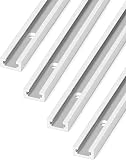 QWORK Aluminum T TrackView on Amazon
- 7
 QWORK 12" T-TrackView on Amazon
- 8
 T Tracks for Woodworking Aluminum 48 inch Black 4 Pack DoubleView on Amazon
- 9
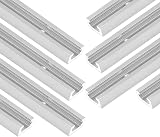 8Pack 12" T-Track for Woodworking Silver Double-Cut 12 inchView on Amazon
When routing wood signs, plaques or precision parts on a CNC machine, deciding between an aluminum t track vs mdf spoilboard comes down to how you secure stock and handle sacrificial cutting. An MDF spoilboard is the practical choice if you do through-cutting, profile cutouts and frequent surfacing, because cutting into MDF will not ruin an end mill. Aluminum T-tracks excel when you need rigid mechanical clamping for solid stock, non-through carving and fixture alignment. Many makers combine both systems into a hybrid wasteboard for maximum versatility. The sections below explain each option step by step to help you pick the right setup for your machine.
Other machines to compare
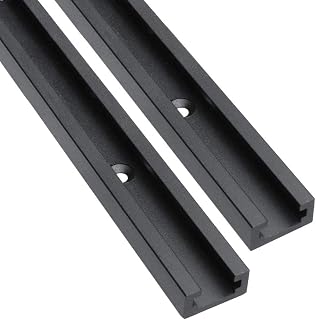 Aluminum 48" T-Track for WoodworkingCheck price on Amazon
- Aluminum 36" T-Track for WoodworkingCheck price on Amazon
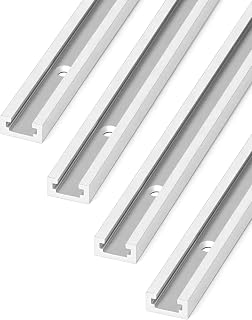 QWORK Aluminum T TrackCheck price on Amazon
 QWORK 12" T-TrackCheck price on Amazon
 T Tracks for Woodworking Aluminum 48 inch Black 4 Pack DoubleCheck price on Amazon
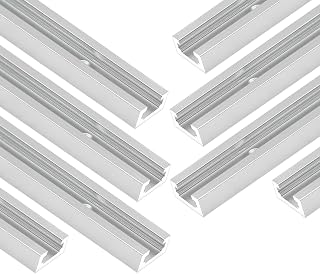 8Pack 12" T-Track for Woodworking Silver Double-Cut 12 inchCheck price on Amazon
LaserEngraveHQ earns a commission from purchases made through these links, at no extra cost to you. Read our affiliate disclosure.
A CNC table requires a sacrificial surface whenever your toolpaths cut completely through stock. Clamping tracks provide strong mechanical anchoring, but hitting aluminum with a spinning carbide bit will damage the cutter. Balance clamping security against through-cutting protection before building your bed.
Step 1: Understand how each workholding base functions
Every CNC router requires a solid base that holds material firmly in place while the spindle moves along toolpaths.
An aluminum T-track base uses metal channels with an inverted T profile bolted or recessed into the bed to guide sliding fasteners. For example, Hot Favorable lists universal double-cut profile tracks in extruded 6063 aluminum alloy measuring 3/4 inch wide by 3/8 inch deep in 36 inch and 48 inch lengths, stating compatibility with 1/4 inch and 5/16 inch T-bolts as well as 1/4 inch hex bolts. These extruded channels provide rigid anchor points for mechanical clamping. Explore standard tracks in our aluminum T-track for woodworking guide.
An MDF spoilboard serves as a sacrificial barrier over the machine frame. When a router bit profiles a part, the toolpath extends slightly past the workpiece into the MDF to ensure clean bottom edges without tearout. Learn more about selecting wasteboard materials in our best CNC spoilboard guide.
Step 2: Compare hold down clamping methods
Aluminum T-tracks give you flexible linear clamping. Because fasteners slide freely inside the channel until tightened, you can position clamps close to workpieces of varying widths. Listings from Hot Favorable note that their universal channels accommodate hold-down clamps sized at 6-3/8 inches by 1-1/4 inches, 5-1/2 inches by 1-1/8 inches, or 3-1/2 inches by 3/4 inches. If you use lever-action clamps, our toggle clamps for CNC overview shows how they mount to track hardware.
A plain MDF spoilboard uses threaded inserts installed across the board, wood screws driven directly into sacrificial areas, or double-sided tape and cyanoacrylate adhesive. To see workshop setups, read our guide to clamping ideas on a CNC router, or browse heavy-duty fixtures in our best CNC hold down clamps review.
Step 3: Evaluate table rigidity and spoilboard resurfacing
Accuracy on a CNC router requires a flat, rigid reference plane.
MDF expands and contracts with workshop humidity and collects cut marks from through-cutting. To restore a flat cutting plane, makers periodically surface the wasteboard using a wide spoilboard cutter, skimming a thin layer across the entire bed. For setup instructions, check how to set up a spoilboard on a CNC, and see recommended cutters in our best surfacing bit for CNC guide.
Aluminum T-tracks cannot be surfaced with a spoilboard bit without ruining your cutter. However, aluminum alloy resists humidity shifts and will not sag or swell. Listings from QWORK specify 6063 aluminum alloy construction treated with an anodized surface to resist rust and wear across workshop environments. While the tracks remain rigid, any underlying bed unevenness must be leveled mechanically rather than planed with a wasteboard cutter.
Step 4: Protect your router bits and cutting tools
Tool protection is the most significant operational difference between metal tracks and wood fiberboards.
When an end mill cuts into an MDF spoilboard, the soft wood fibers offer minimal resistance. The bit plunges harmlessly into the sacrificial core, preserving the sharp carbide flutes.
If a spinning carbide bit strikes an aluminum T-track, the impact will chip the cutting edge, snap small-diameter bits, and potentially pull the spindle out of alignment. When using aluminum tracks, toolpaths must be programmed with safe clearance boundaries, or dedicated fixture stops must be placed between the stock and the tracks. For safe fixturing practices, consult our CNC clamps for woodworking guide.
Step 5: Consider a hybrid T-track and MDF spoilboard table
Many makers resolve the trade-off by building a hybrid wasteboard that combines aluminum tracks with sacrificial MDF slats.
In a hybrid setup, aluminum T-tracks are bolted to the machine base in parallel rows. SeekLiny lists universal tracks in 36 inch (915 mm) and 48 inch (1220 mm) lengths with a 3/4 inch (20 mm) width and 3/8 inch (9.5 mm) height, packaged with matching mounting screws. QWORK supplies tracks with 6 pre-drilled mounting holes per rail on 36 inch and 48 inch rods, allowing firm attachment between MDF strips.
The key to a hybrid bed is making the MDF slats thicker than the aluminum track depth. Because the MDF surfaces sit higher than the metal channels, a spoilboard surfacing bit can plane the wood slats flat without contacting the aluminum tracks. When routing through-cuts, your bits cut safely into the MDF strips, and damaged slats can be replaced individually.
Step 6: Choose the right setup for your CNC projects
Matching your workholding base to your primary project types ensures smooth production and prevents tool damage.
Choose a dedicated MDF spoilboard if you frequently cut parts out of sheet goods where profiles pass completely through the bottom of the material. Signmakers and craft producers benefit from running through-cuts without worrying about toolpath clearance. MDF is also ideal if you rely on tape-and-glue workholding or want to surface your bed regularly for shallow carving.
Choose an aluminum T-track system if your work consists of surface engraving, non-through pocketing, joinery on thick timber, or metal machining where cutting tools never touch the bed.
Choose a hybrid layout if you want all-around shop capability. A hybrid bed accommodates hold-down clamps anywhere across the table while protecting your bits with sacrificial MDF slats.
Common mistakes to avoid
- Running through-cutting toolpaths over exposed aluminum T-tracks, which chips or shatters carbide bits.
- Installing aluminum tracks flush with or higher than MDF slats in a hybrid bed, making it impossible to surface the wood without striking metal.
- Over-tightening wood screws directly into bare MDF, which strips wood fibers and loosens hold-down fixtures.
- Neglecting workshop humidity, allowing an unsurfaced MDF board to swell and introduce uneven cut depths.
- Failing to verify clamp clearance along the spindle travel path before starting a job.
Aluminum t track vs mdf spoilboard: the short version
- An MDF spoilboard is sacrificial, allowing profile toolpaths to cut through stock without dulling or breaking carbide cutters.
- Aluminum T-tracks provide rigid, permanent channels that secure mechanical hold-down clamps across the table.
- MDF can be surfaced flat with a spoilboard surfacing cutter; aluminum tracks cannot serve as a sacrificial resurfacing layer.
- Accidental tool collisions with aluminum tracks ruin router bits and damage the sliding channels.
- A hybrid table alternates aluminum tracks with raised MDF slats to provide both sliding clamp channels and sacrificial zones.
- Use MDF for through-cutting and signs, aluminum tracks for non-through carving and heavy fixturing, or a hybrid layout for general versatility.
Base your decision on whether your cutter ever passes through the material: if you cut parts free, you need sacrificial MDF under the stock; if you need rigid mechanical fixturing, aluminum channels provide superior anchoring.
FAQ: lasers and CNC
Can a CNC router bit cut into an aluminum T-track?
Carbide router bits intended for woodworking should never cut into an aluminum track. An unintended collision during a cutting toolpath dulls the cutting edges, chips the carbide flutes, and damages the track extrusion. Always ensure through-cuts occur over sacrificial MDF.
Can you surface an MDF spoilboard with an aluminum T-track installed?
You can surface a spoilboard with tracks only if the table uses a hybrid design where the MDF slats sit higher than the aluminum channels. The surfacing bit skims the top of the wood slats while staying clear of the recessed tracks. Never run a surfacing cutter across a bed where aluminum sits flush with the wood.
What hardware fits standard aluminum woodworking T-tracks?
Hardware fit depends on the specific track extrusion. Listings from Hot Favorable, QWORK, and SeekLiny describe universal double-cut profiles designed to fit 1/4 inch and 5/16 inch T-bolts as well as 1/4 inch hex bolts. Always verify track slot dimensions before purchasing hardware, as some tracks accept only a single bolt size.
How do you hold down workpieces on a plain MDF spoilboard?
Makers secure work on MDF using threaded inserts embedded in the board, coarse wood screws driven directly into sacrificial areas, cam clamps, or double-sided tape. The painter’s tape and cyanoacrylate glue technique is especially effective for holding flat sheet goods without top clamps getting in the way of the spindle.
Which option is better for a beginner with a desktop CNC router?
An MDF spoilboard is generally better for beginners. When learning work coordinate systems and zeroing, beginners occasionally make depth errors. An MDF board absorbs those mistakes without harming the cutter. Once you master toolpath setup, adding aluminum tracks or upgrading to a hybrid bed expands your clamping choices.
Why do makers build hybrid spoilboard tables?
A hybrid table delivers the practical advantages of both systems. It provides sliding aluminum channels for rigid mechanical clamping while keeping raised, replaceable MDF slats under the workpiece for sacrificial through-cutting. When the MDF wears down, you replace only the damaged slats rather than the entire bed.
Related: the CNC tooling hub, clamping ideas on a CNC router and how to set up a spoilboard on a CNC. Also see our best CNC spoilboard guide. Also see our best CNC hold down clamps.