Heavy Duty Steel vs Aluminum Gantry CNC: Which One Should You Buy?
A direct comparison of heavy duty steel and aluminum gantry CNC routers covering rigidity, vibration damping, moving mass, and workshop cutting needs.

On this page
Top picks at a glance
As an Amazon Associate I earn from qualifying purchases.
- 1
 CNC Spoilboard Surfacing Router Bit9.6/10View on Amazon
- 2
 CNC Router Machine 4030-Evo Ultra 2View on Amazon
- 3
 CNC Router Machine 3030-Evo MaxView on Amazon
When cutting hardwood furniture parts, nested cabinet sheets, brass plaques, or deep relief carvings on a CNC router, machine frame stiffness determines edge quality and tool life. Choosing between a heavy duty steel vs aluminum gantry cnc comes down to a direct trade between rigidity and moving mass: steel provides maximum stiffness, suppresses vibration, and resists cutting flex under heavy chip loads, while aluminum offers a lighter moving bridge that accelerates quickly, puts less strain on drive motors, and handles everyday woodworking and signmaking with ease. If your workshop demands heavy profiling in dense timber or non-ferrous metals, steel is the superior choice; for rapid panel processing and general workshop carving, a well-engineered aluminum gantry delivers clean results without requiring massive drive hardware.
Other machines to compare
 CNC Router Machine 4030-Evo Ultra 2Check price on Amazon
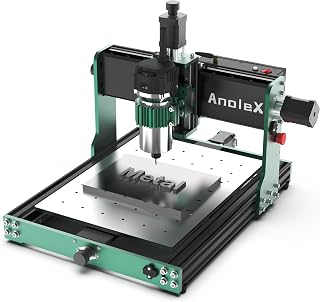 CNC Router Machine 3030-Evo MaxCheck price on Amazon
LaserEngraveHQ earns a commission from purchases made through these links, at no extra cost to you. Read our affiliate disclosure.
Material stiffness alone does not make a machine rigid if the joints, bearings, or drive components flex. A steel tube attached with undersized brackets will chatter, while a well-braced aluminum extrusion structure with matched linear rails can produce remarkably clean cuts.
Step 1: Evaluate structural rigidity and flex prevention
The primary duty of a CNC gantry is holding the cutting spindle perpendicular to the workpiece while resisting dynamic cutting forces. As an end mill plows through material, cutting resistance pushes back against the tool, inducing bending moments along the crossbeam and twisting forces on the gantry uprights. Steel possesses a significantly higher modulus of elasticity than aluminum, giving a steel crossbeam far greater inherent resistance to deflection under identical cross-sectional profiles. When pushing thick router bits through dense maple, white oak, or non-ferrous plates, this structural stiffness prevents the spindle from deflecting backward along the toolpath.
Aluminum gantries combat flex through profile geometry rather than raw material density. By utilizing thick-walled extruded box profiles with internal web bracing or thick machined aluminum side plates, an aluminum gantry achieves substantial beam stiffness at a fraction of the weight. However, under aggressive plunge cuts or deep cornering loads, aluminum beams exhibit measurable flex sooner than solid or hollow structural steel beams. For makers pairing their machine with precision linear guide rails, a rigid beam ensures the bearing blocks stay parallel and free from binding under load.
Step 2: Compare vibration damping and surface finish
Vibration is the enemy of clean CNC cuts, causing chatter marks across vertical wall surfaces, chipping delicate carbide edges, and reducing tool longevity. Machine rigidity dictates how much a structure deflects, but material damping dictates how rapidly the structure absorbs and dissipates harmonic vibrations caused by spindle rotation and interrupted chip formation. Structural steel tubing offers exceptional internal mass that acts as a natural dampener, absorbing resonance before it reaches the workpiece. Many makers take this further by filling tubular steel beams with dry sand or mineral epoxy casting mixtures to deaden chatter completely.
Aluminum has lower natural damping capacity and tends to ring when excited by specific cutting frequencies. When running an aggressive feed rate with an end mill for aluminum or cutting hard woods, an under-braced aluminum bridge can amplify spindle chatter, leaving scalloped facets on finished contours. Dampening aluminum requires rigid mechanical clamping, mass-loaded extrusion channels, or backing plates that disrupt resonance. If your production involves mirror-smooth perimeter profiles or delicate engraving where hand sanding is impractical, the deadening mass of steel provides a noticeable advantage.
Step 3: Balance moving mass against motor acceleration
While the extra mass of steel aids rigidity and vibration absorption, that same mass becomes a mechanical penalty every time the gantry changes direction. A CNC machine must constantly accelerate, decelerate, and change vector angles during complex relief carvings, adaptive pocketing routines, and rapid positioning moves. Moving a heavy steel gantry requires substantial motor torque and robust mechanical drive linkages to prevent skipped steps and positioning errors. Workshops choosing heavy steel often need larger drive assemblies, as detailed in our guide on stepper motor vs servo motor drives.
An aluminum gantry shines in rapid movement because its lower inertia allows swift acceleration curves with modest drive motors. For sign shops producing relief carvings or cabinetry makers cutting large sheet goods with nested parts, rapid directional transitions save significant production time over a long shift. Lower moving mass also places far less stress on drive belts, ball nuts, and rack pinions, prolonging the operational life of motion components. Unless your work requires deep metal profiling, the acceleration responsiveness of an aluminum bridge keeps cycle times short and machine costs manageable.
Step 4: Assess thermal stability and workshop temperatures
Workshops located in unheated garages, outdoor sheds, or spaces subject to seasonal climate shifts experience wide temperature swings between morning and afternoon. Aluminum expands and contracts at a noticeably higher rate than carbon steel when ambient temperatures fluctuate. On a wide machine bridge, substantial thermal growth can alter axis alignment, preload on linear guide bearings, and lead screw pitch accuracy over the course of a cutting day.
Steel exhibits lower thermal expansion, keeping critical bearing alignment stable across variable workshop conditions. When mounting steel linear guide rails directly to an aluminum gantry extrusion, the differing expansion coefficients can cause bi-metallic warping if the machine faces severe temperature swings. Understanding material expansion behavior helps prevent unexplained binding, a topic explored further in our look at aluminum extrusion vs cast iron machine construction. Keeping your workshop climate controlled minimizes these discrepancies regardless of which gantry material you choose.
Step 5: Match the gantry build to your materials
Your primary material roster should dictate the structural demands of your machine. Makers primarily processing cabinet grade plywood, medium density fiberboard, acrylic sheets, and sign foam benefit greatly from an aluminum gantry. In these materials, cutting forces remain modest, and rapid traverse speeds deliver clean chip evacuation without bogging down. If your business focuses on custom plaques and dimensional lettering, pairing an aluminum machine with the recommendations in our CNC router for sign making guide ensures brisk turnaround and clean details.
Conversely, if your daily workload consists of dense hardwoods, thick aluminum plate, brass bar stock, or deep mortise operations, the rigidity of a steel gantry becomes essential. Steel handles the heavy radial loads generated by high-power spindles without flexing or introducing chatter into the cut. When deciding on your cutting head, our comparison of spindle vs router options explains how spindle weight influences gantry beam selection. A heavy liquid-cooled spindle demands the stout structural backing that steel provides.
Common mistakes to avoid
- Ignoring joint stiffness: bolting a rigid steel gantry to weak aluminum corner brackets ruins the stiffness of the entire machine frame.
- Overloading light drive motors: pairing a massive steel gantry with undersized stepper motors leads to lost steps, slow acceleration, and rounded vector corners.
- Overlooking workshop climate shifts: operating an aluminum gantry in an unheated workshop without rechecking rail preload can cause seasonal axis binding.
- Sacrificing acceleration for unnecessary mass: choosing a heavy steel bridge for light decorative plywood carving slows down cycle times without adding practical cut quality.
- Skipping frame dampening: running hollow steel beams without internal damping or sand fill can produce hollow harmonic ringing during high-speed cutting.
Heavy duty steel vs aluminum gantry cnc: the short version
- Define your primary cutting materials, prioritizing steel for metals and hardwoods, or aluminum for sheet goods and plastics.
- Calculate required machine acceleration, selecting aluminum when high rapid transit speeds and lighter drive motors matter.
- Assess your workshop temperature swings to determine whether aluminum thermal expansion will affect precision tolerances.
- Verify drive motor torque and linear bearing load capacities to confirm they can handle the inertia of your chosen bridge mass.
- Inspect structural joint bracing to ensure connection plates match the stiffness of the gantry beam itself.
Every workshop setup involves balancing cut stiffness against machine agility: select steel when rigidity under heavy cutting loads is paramount, and choose aluminum when rapid carving and lower motor strain fit your workflow.
FAQ: lasers and CNC
Can an aluminum gantry cut steel or brass?
An aluminum gantry can cut brass and aluminum plates effectively when taking shallow passes at proper spindle speeds. Cutting steel is generally impractical on an aluminum gantry router because the extreme cutting resistance induces chatter and tool deflection, which rapidly destroys carbide cutting edges.
Why does gantry mass matter for CNC vibration damping?
Higher gantry mass absorbs the violent mechanical vibrations generated as spinning router flutes strike dense material. A heavy gantry acts as a stationary anchor that deadens resonance, preventing harmonic chatter from transferring into the cut surface or causing premature tool wear.
Does a heavy steel gantry require larger drive motors?
Yes. Greater mass increases the inertia of the moving bridge, requiring higher-torque stepper motors or closed-loop servos to accelerate and decelerate cleanly. Undersized motors pushing a heavy steel gantry will lose steps during rapid directional changes.
How does thermal expansion affect steel and aluminum gantries?
Aluminum expands and contracts at a substantially higher rate than steel during ambient temperature swings. In workshops with significant seasonal or daily temperature changes, an aluminum gantry can experience dimensional shifts that affect bearing preload and axis alignment.
Which gantry design is easier to align during machine assembly?
Aluminum extrusions with integrated T-slots and precision reference shoulders are generally easier to assemble and align using standard hand tools. Welded steel gantries require careful stress relieving and precision machined mounting surfaces to achieve true squareness.
Related: the CNC router hub, 4×4 and larger CNC routers and best CNC router for small business. Also see our moving gantry vs fixed gantry CNC guide. Also see our rack and pinion vs ball screw CNC comparison.