What Is a Shaft Coupler and How It Works
What is a shaft coupler? It joins a motor shaft to a driven shaft and absorbs misalignment. This guide covers bore sizes, types and body dimensions.

On this page
Top picks at a glance
As an Amazon Associate I earn from qualifying purchases.
- 1
 Zeberoxyz 2PCS 8mm to 12mm Aluminium Plum Flexible9.6/10View on Amazon
- 2
 Zeberoxyz 2PCS 8mm to 10mm Aluminium Plum Flexible9.6/10View on Amazon
- 3
 uxcell 2Pcs 6mm to 6mm Aluminum Alloy Shaft9.6/10View on Amazon
- 4
 Flexible Shaft Coupler, 6mm x 6mm Bore9.5/10View on Amazon
Your CNC machine moves in steps, and the joint between the motor and the driven shaft takes the strain each time. If you are asking what is a shaft coupler, the short answer is this: a shaft coupler is a small connector that joins a motor shaft to a driven shaft so both turn together, and a flexible coupler also absorbs small misalignment between the two shafts.
LaserEngraveHQ earns a commission from purchases made through these links, at no extra cost to you. Read our affiliate disclosure.
Zeberoxyz 2PCS 8mm to 12mm Aluminium Plum Flexible
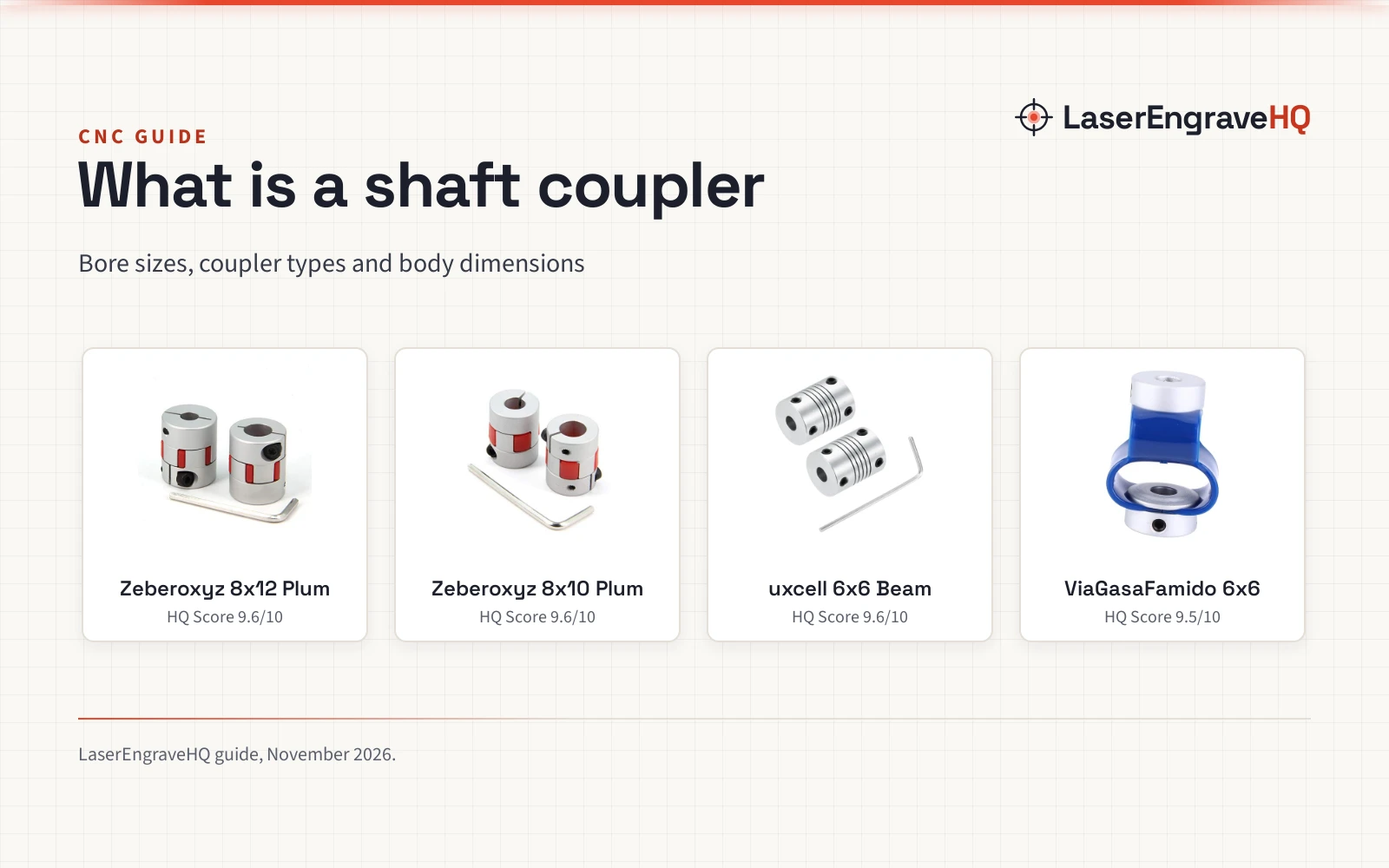
A plum shaped flexible coupler in aluminum alloy with an 8mm to 12mm bore pair, 30mm long and 25mm in diameter, sold as 2 pcs.
Pros
- Widest bore pair here, 8mm to 12mm, for mixed shaft sizes
- Plum shaped design stated for large torque transmission
- Aluminum alloy with surface oxidation treatment
- Stated for CNC machines, servo motors, spindles and step motors
Cons
- 25mm diameter needs more radial space than the 19mm and 20mm picks
- 30mm length needs a longer gap than the 25mm picks
- No warranty term is stated
- No hex wrench is stated as included
Zeberoxyz 2PCS 8mm to 10mm Aluminium Plum Flexible
A plum shaped flexible coupler in aluminum alloy with an 8mm to 10mm bore pair, 25mm long and 20mm in diameter, sold as 2 pcs.
Pros
- 8mm to 10mm bore pair for mixed shaft sizes
- Plum shaped design stated for large torque transmission
- Compact 25mm length and 20mm diameter body
- Stated for CNC machines, servo motors, spindles and step motors
Cons
- A 12mm shaft needs the 8x12 pick instead
- No warranty term is stated
- No hex wrench is stated as included
- Bore pair does not cover 6mm shafts
uxcell 2Pcs 6mm to 6mm Aluminum Alloy Shaft
A spring-type beam coupler in aluminum alloy with a 6mm to 6mm bore pair, 25mm long and 19mm in diameter, sold as 2 pcs with a hex wrench.
Pros
- 6mm to 6mm bore pair for matched small shafts
- Spring-type design stated with a buffering effect
- Hexagonal wrench included in the pack
- Stated for motors, encoders, 3D printers and CNC machine tools
Cons
- Both bores are 6mm, so mixed shaft sizes need another pick
- No torque figure is stated in the listing
- No stated max speed figure
- Aluminum alloy body, not insulated like the glass fibre pick
Flexible Shaft Coupler, 6mm x 6mm Bore
A glass fibre elastic coupler with a 6mm x 6mm bore, 37mm long and 20mm in diameter, with a stated max speed of 5000rpm.
Pros
- Glass fibre stated as insulated and high temperature resistant
- Stated max speed of 5000rpm
- Clamp mount for attachment to the shaft
- Stated for servo motors, stepper motors and encoders
Cons
- 37mm length is the longest here and needs the most gap
- Both bores are 6mm, so mixed shaft sizes need another pick
- No hex wrench is stated as included
- No torque figure is stated in the listing
What is a shaft coupler and how does it work
A shaft coupler sits between a motor and the part the motor drives, such as a lead screw, an encoder or a spindle. Each end of the coupler has a bore, and the bore size must match the shaft that goes into it. The couplers in this guide cover bore pairs from 6mm to 6mm up to 8mm to 12mm.
Flexible couplers add a section that can bend a little, which the makers here describe as buffering, vibration absorption and stress removal between the motor and the driven component. The motor shaft and the driven shaft rarely sit in a perfect line, and the coupler takes up small differences.
Types of shaft couplers in this guide
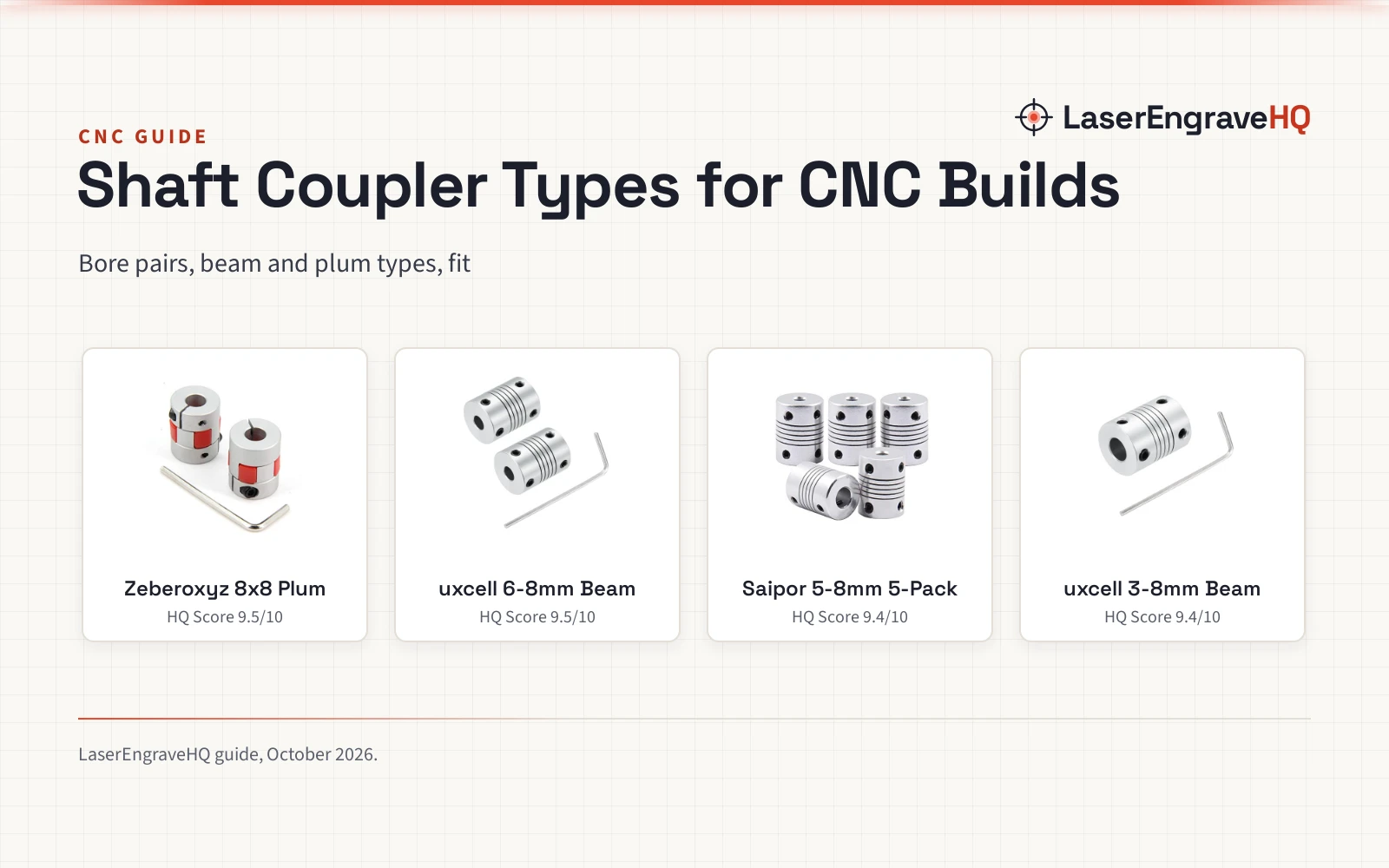
The beam type, also called spring-type by uxcell, is an integrated aluminum alloy body, stated as a spring-type design with a buffering effect for deviation between diameters, angles and shafts.
The plum type from Zeberoxyz is listed as plum shaped, stated for large torque transmission on CNC machines, servo motors, spindles and step motors.
The glass fibre elastic type from ViaGasaFamido is stated as insulated and able to withstand high temperature, with a clamp mount for attachment to the shaft and a stated max speed of 5000rpm.
How to choose a shaft coupler by size
Start with the bore pair. Measure both shafts first, then match them to a stated bore pair: 6mm to 6mm, 8mm to 10mm or 8mm to 12mm in this guide. A coupler bored for the wrong shaft size will not hold the shaft true, so match the bore to the shaft instead of forcing it. The same measure-first habit applies to mill tool holder types, where the holder must match the shank.
Next, check the body size against the space on your machine. Lengths here run from 25mm to 37mm and outside diameters from 19mm to 25mm. The 37mm glass fibre coupler needs more room along the shaft than the 25mm picks, and the 25mm diameter plum coupler needs more room around it than the 19mm beam coupler.
Then check the stated extras. The uxcell pack includes a hexagonal wrench. The ViaGasaFamido coupler (on Amazon) states a max speed of 5000rpm and a clamp mount. If alignment is your worry, our dial indicator setup guide covers mounting and zeroing basics.
Shaft couplers for CNC and printer builds
Each coupler below handles the motor-to-shaft joint step of a CNC or printer build, matched to the bore pair and body size your shafts need.
Common mistakes to avoid
Ordering by outside diameter instead of bore size is a common error. The bore pair decides fit; the diameter only decides clearance. A 20mm diameter coupler with an 8mm to 10mm bore will not fit a 6mm shaft.
Skipping the length check is another error. A 37mm coupler in a gap sized for a 25mm coupler leaves no room for the shafts to seat. Measure the gap between the motor face and the driven part before you order.
Treating every flexible coupler as the same part is another error. A beam coupler, a plum coupler and a glass fibre elastic coupler flex in different ways, so match the type to the job the maker states for it.
FAQ: lasers and CNC
What does a shaft coupler do on a CNC machine?
It joins the motor shaft to the driven shaft so both turn together. Flexible types also absorb small misalignment, which the makers here describe as buffering and vibration absorption between the motor and the driven component.
How do I choose the right bore size?
Measure both shafts, then pick the coupler whose stated bore pair matches. This guide covers 6mm to 6mm, 8mm to 10mm and 8mm to 12mm bore pairs. The bore must match the shaft; the outside diameter does not decide fit.
What is the difference between beam and plum couplers?
The beam coupler here is a spring-type aluminum alloy design with a buffering effect. The plum couplers are plum shaped and are stated for large torque transmission on CNC machines, servo motors, spindles and step motors.
Does length and diameter matter when choosing a coupler?
Yes. Lengths in this guide run from 25mm to 37mm and diameters from 19mm to 25mm. The coupler must fit the gap between the motor and the driven part, with room around it to turn.
Can a flexible coupler fix a misaligned shaft?
It absorbs small misalignment between the motor shaft and the driven shaft. It does not replace correct mounting, and the bore must still match the shaft. Check alignment with a dial indicator if the machine still runs rough after fitting the coupler.