Silica Gel vs Filament Dryer: Which One Should You Buy?
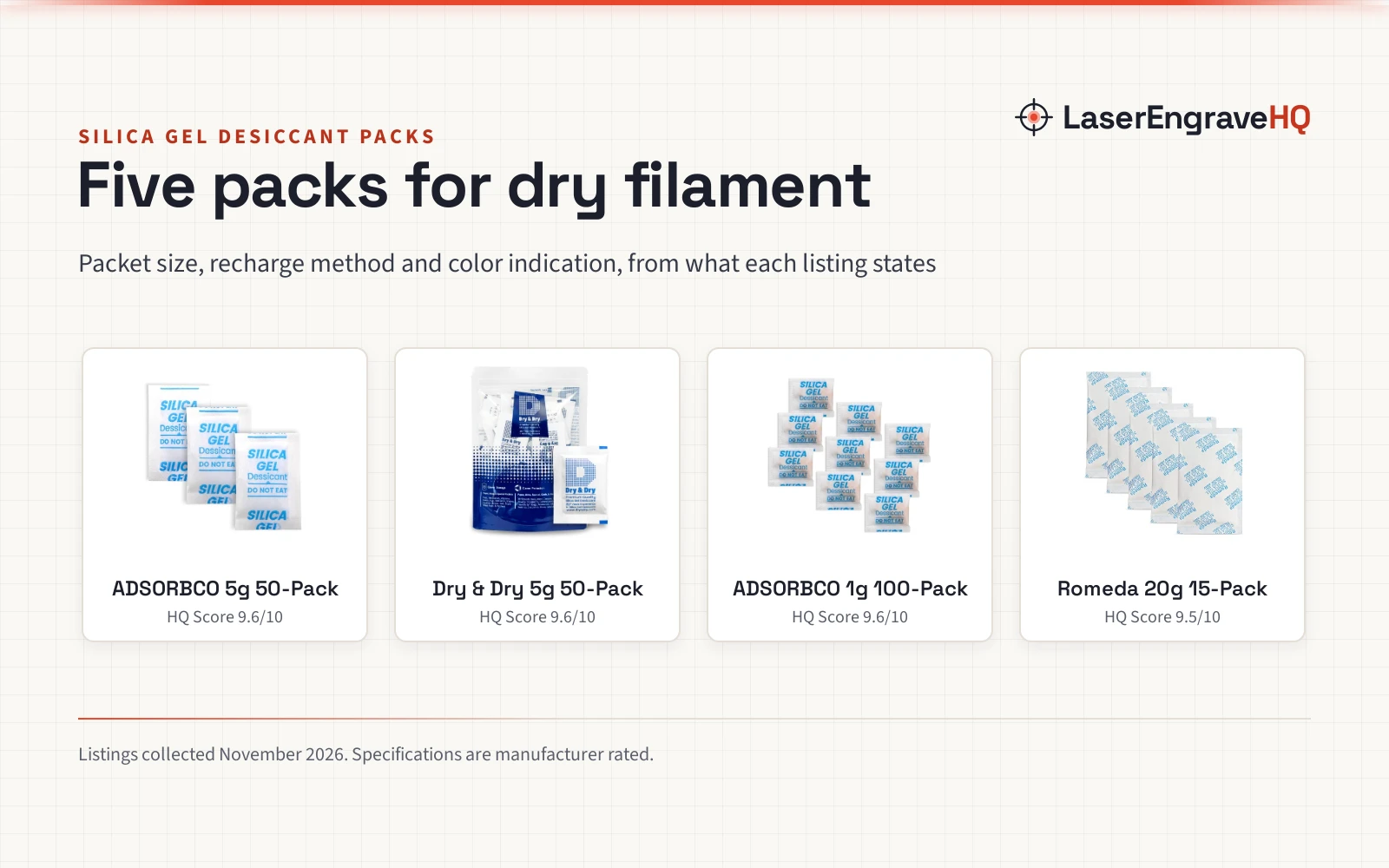
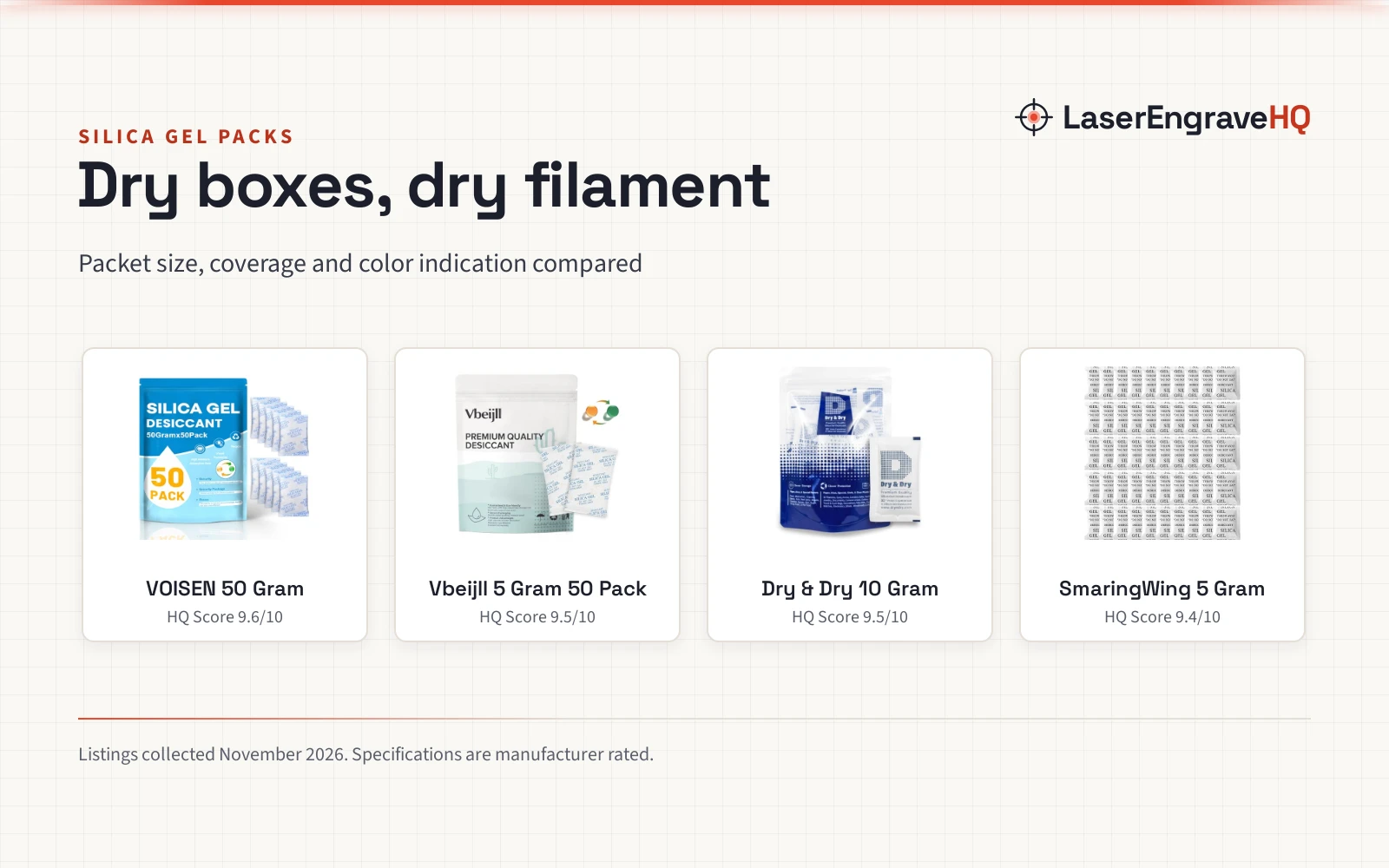
Reusable silica gel beads and a powered filament dryer both fight wet filament, but beads suit sealed storage while a dryer suits soaked spools and busy print queues.

On this page
Top picks at a glance
As an Amazon Associate I earn from qualifying purchases.
- 1
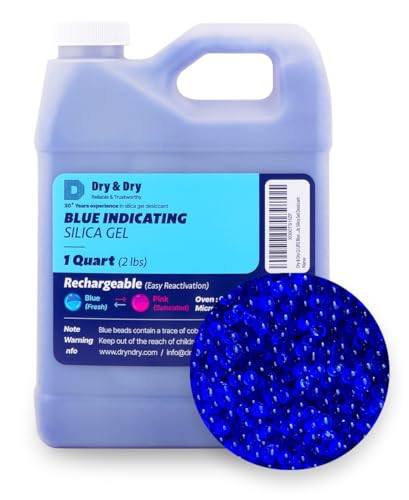 Dry & Dry [2 LBS] Blue Indicating Silica Gel Beads Desiccants9.7/10View on Amazon
- 2
 Comgrow Filament Dryer 4 Spools9.7/10View on Amazon
- 3
 Vbeijll9.7/10View on Amazon
- 4
 VOISEN 2 LBS Orange Indicating Silica Gel Desiccant BeadsView on Amazon
- 5
 wisedry [ 5 LBS ] Silica Gel Beads Reusable Color IndicatingView on Amazon
Silica gel vs filament dryer is a choice between a passive desiccant and a powered heater, and the right pick depends on how wet the filament is and how much printing the workshop does. Silica gel beads sit in a sealed box or bag with the spool and pull moisture from the air, while a filament dryer holds the spool in a heated chamber and drives moisture out. For light, everyday storage, reusable beads do the job; for soaked spools or a busy print queue, a powered dryer works with less watching.
Other machines to compare
 VOISEN 2 LBS Orange Indicating Silica Gel Desiccant BeadsCheck price on Amazon
 wisedry [ 5 LBS ] Silica Gel Beads Reusable Color IndicatingCheck price on Amazon
LaserEngraveHQ earns a commission from purchases made through these links, at no extra cost to you. Read our affiliate disclosure.
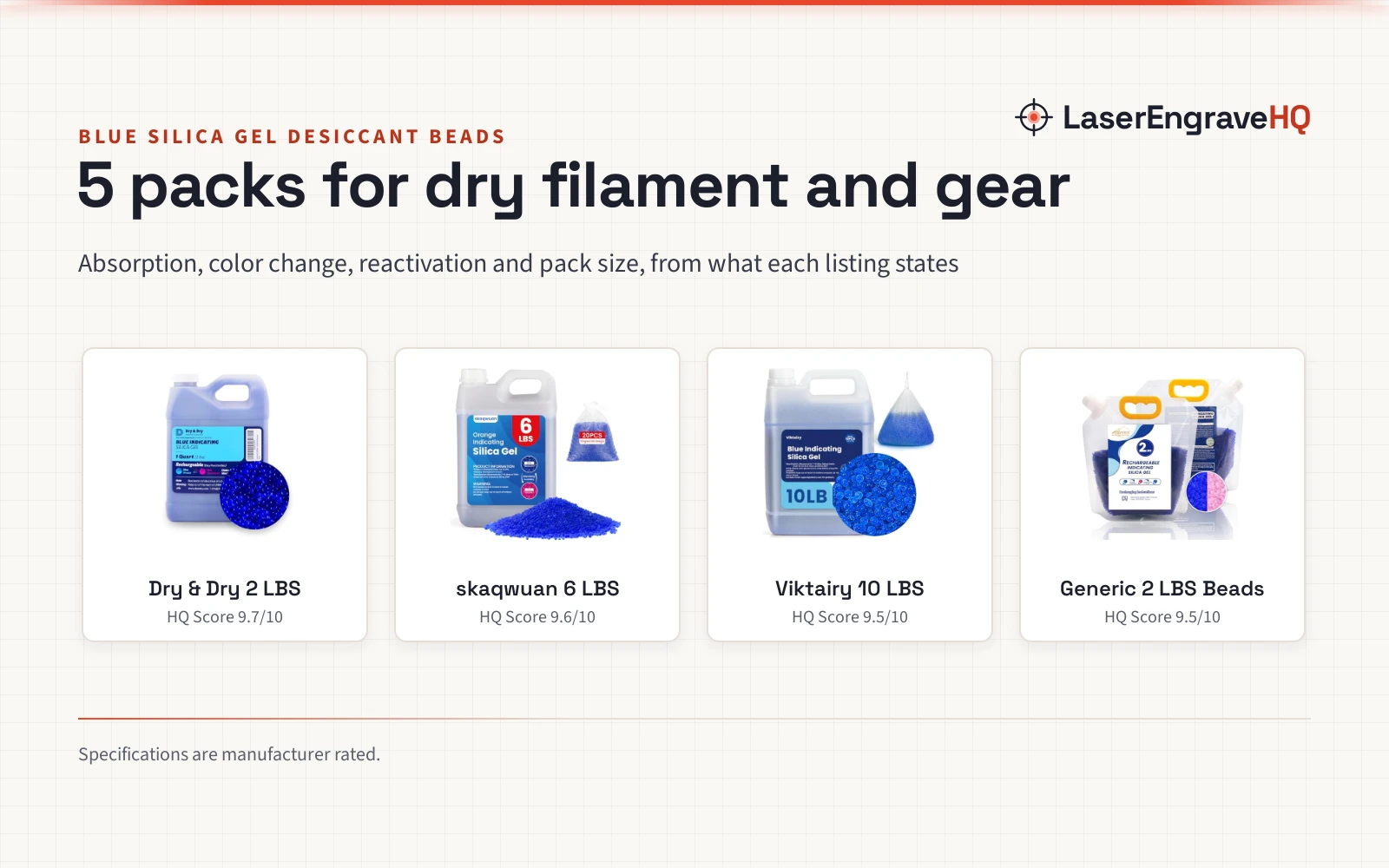
Silica gel reactivates with heat, so follow the bead maker’s stated oven and microwave times and watch the color change. Beads that stay orange still have drying capacity left, even after a hint of green.
Silica gel vs filament dryer: how they work
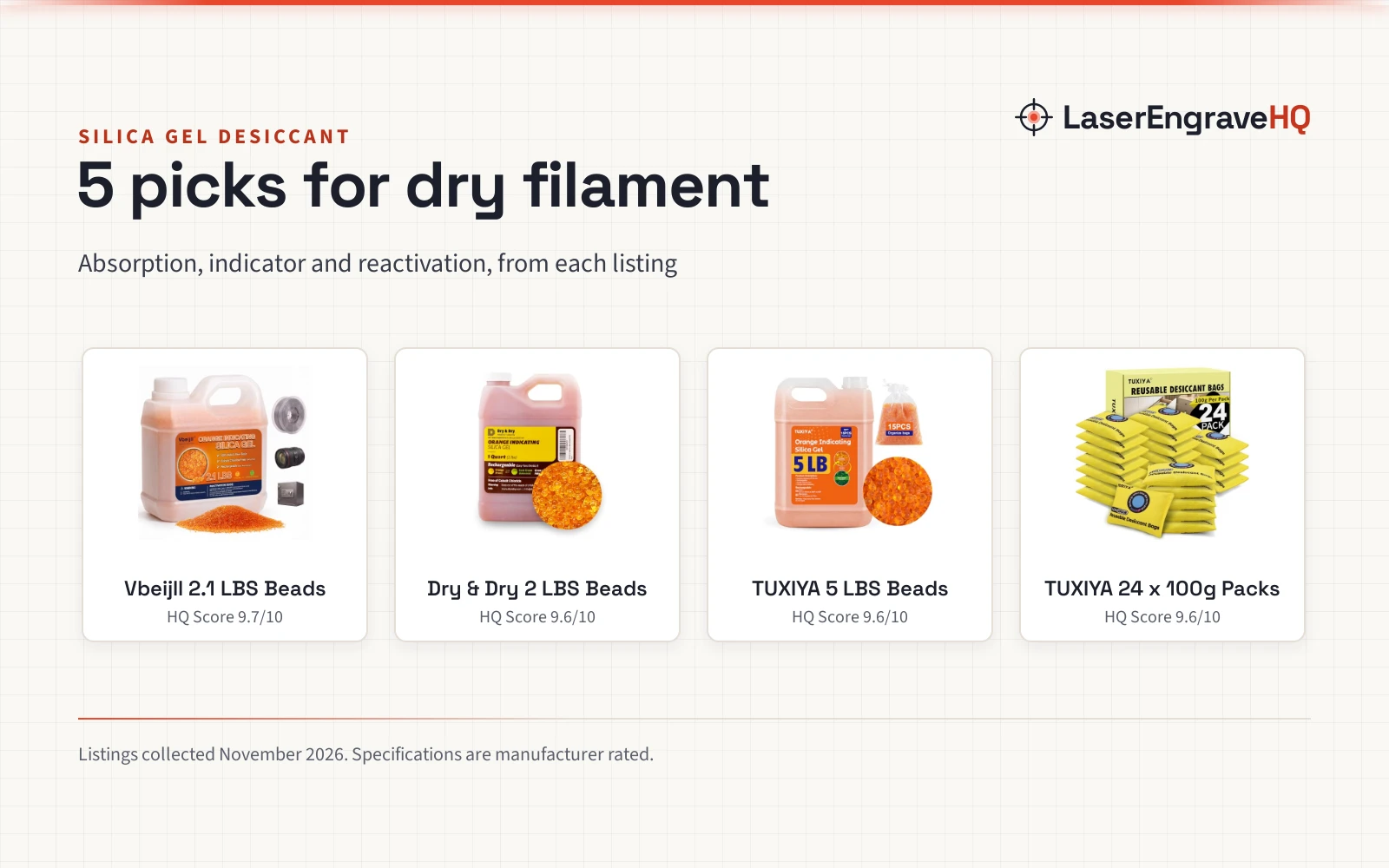
Silica gel beads are small, hard granules that pull moisture from the air around them. Both packs in the gear section list beads 3 to 5 mm in size with a bright orange color, and both change color as they absorb moisture: orange beads turn dark green when about 50 to 60 percent absorbed, with almost half their capacity still left. The beads sit in breathable bags inside a sealed container or dry box with the spool, and the color tells the maker when to reactivate them.
A filament dryer takes the other approach: it heats the spool in an enclosed chamber so moisture leaves the filament and vents away. A dryer suits spools that already print badly from dampness, and it works while the maker does other jobs. Silica gel suits prevention and light drying, while a dryer suits rescue work on wet spools. Neither method needs the spool to leave the workshop, and both keep working as long as the beads stay orange or the dryer runs its cycle.
When silica gel wins
Beads win for storage. A sealed box with beads inside keeps a spool dry between prints, and the same beads protect electronics, cameras, documents, jewelry, and clothes, as both listings state. Beads need no power, make no noise, and fit any box that closes: drop them in an organza bag, a muslin bag, or any breathable bag and set them beside the spool. The VOISEN pack ships with 20 organza bags, so a maker can split 10 lbs of beads across several boxes. For a workshop with many spools in storage, beads cover more boxes from a single pack.
Beads also win for travel and small spaces. A bag of beads rides along in a toolbox or a camera case, and the Sukh 430g pack suits a small box or cabinet. Reactivation needs only oven or microwave time, and the beads can be reused again and again.
When a filament dryer wins
A dryer wins when the spool is already wet. Beads pull moisture slowly from the air, so a soaked spool may sit a long time before it prints cleanly again. A dryer heats the spool directly and shortens that wait, which matters when a print deadline is near. Dryers also win for repeat drying: a maker who dries spool after spool can load, run, and unload without watching bead color. For damp spools, see our best filament dryer for nylon guide.
The gear: two silica gel packs compared
The two packs below cover the two ends of the size range: a 10 lb bulk pack with bags included, and a 430g pack for a small box. Both list 3 to 5 mm orange beads that turn dark green at 50 to 60 percent absorbed, and both reactivate in an oven at 200 to 250F for 0.5 to 2 hours. The VOISEN pack leads on size and included bags; the Sukh pack suits a small storage box at 430g.
| Pack | Size | Beads | Reactivation | Bags included |
|---|---|---|---|---|
| VOISEN 10 lbs | 10 lbs | 3 to 5 mm, orange to dark green | Oven 0.5 to 2 hours at 200 to 250F; microwave 10 minutes on defrost | 20 organza bags |
| Sukh 430g | 430g | 3 to 5 mm, orange to dark green | Oven 0.5 to 2 hours at 200 to 250F; microwave 9 to 12 minutes | Not stated |
VOISEN 10 lbs. The VOISEN listing describes 10 lbs of orange indicating silica gel beads, 3 to 5 mm in size, with 20 organza bags included. The beads turn dark green when 50 to 60 percent absorbed, with almost half their capacity still left, and the maker recommends checking the color regularly. Reactivation takes 0.5 to 2 hours in an oven at 200 to 250F, or 10 minutes in a microwave on defrost mode. The listing states uses for 3D printer filament, electronics, cameras, documents, jewelry, gun safes, and clothes, and the beads arrive in a sealed plastic container for long-term preservation.
Sukh 430g. The Sukh listing describes 430g of orange silica gel beads, 3 to 5 mm in size, for camera lenses, electronics, books, documents, clothes, and jewelry storage. The beads turn dark green when they reach 50 to 60 percent relative humidity, and the listing notes the initial color change does not mean full saturation. Reactivation takes 9 to 12 minutes in a microwave, or 0.5 to 2 hours in an oven at 200 to 250F. The title lists 430g while the spec table lists the size as 1LB; the bullets describe the weight as about 430G, so the listing’s own weight figure is 430g.
How to reactivate silica gel beads
Watch the color. Orange beads are ready to work; dark green beads need heat. Place the beads in the oven for 0.5 to 2 hours at 200 to 250F, or microwave them: 10 minutes on defrost mode for the VOISEN beads, 9 to 12 minutes for the Sukh beads. Check the color during heating, since beads may take less than the stated time to turn orange again. Store any spare beads in a sealed container so they stay dry until needed.
Common mistakes to avoid
- Waiting until the beads are fully saturated: the color changes at 50 to 60 percent absorbed, so dark green beads still hold moisture but have less capacity left.
- Leaving the storage box open, which lets room air undo the beads’ work.
- Microwaving on full power instead of the defrost mode the VOISEN listing names.
- Skipping the color check: both listings recommend checking the bead color regularly.
- Storing beads loose in a damp room instead of a sealed container.
Silica gel vs filament dryer: the short version
- Beads protect stored spools and small spaces; a dryer rescues wet spools.
- Orange beads still have capacity; dark green beads need reactivation.
- Reactivate in an oven at 200 to 250F for 0.5 to 2 hours, or in a microwave at each listing’s stated time.
- VOISEN covers many boxes with 10 lbs and 20 bags; Sukh covers a small box with 430g.
- Check bead color regularly, and keep spare beads sealed.
FAQ: lasers and CNC
How do you know when silica gel beads need reactivating?
Watch the color. Orange beads turn dark green when they are 50 to 60 percent absorbed, and both listings recommend checking the color regularly.
How do you reactivate silica gel beads?
Bake them in an oven at 200 to 250F for 0.5 to 2 hours, or microwave them: 10 minutes on defrost mode for VOISEN beads, 9 to 12 minutes for Sukh beads. Check the color during heating, since beads may take less than the stated time.
Can silica gel dry a soaked spool?
Beads pull moisture from the air in a sealed box, which suits storage and light dampness. A soaked spool dries faster in a powered dryer, so use beads to keep a dry spool dry and a dryer to rescue a wet spool.
What size silica gel pack fits a spool box?
The VOISEN 10 lb pack with 20 organza bags splits across several boxes, while the Sukh 430g pack suits a small box or cabinet. Match the pack to the number of boxes in use.
What else can silica gel beads protect?
Both listings state uses beyond filament: electronics, cameras, documents, jewelry, and clothes, plus books, safes, toolboxes, and closets for the Sukh beads.
Related: the 3D printer hub, best silica gel desiccant packs for 3D printer filament and best large filament dryer. Also see our best rechargeable silica gel desiccant. Also see our filament dryer vs dry box.