Pottery Wheel for Beginners: What to Buy
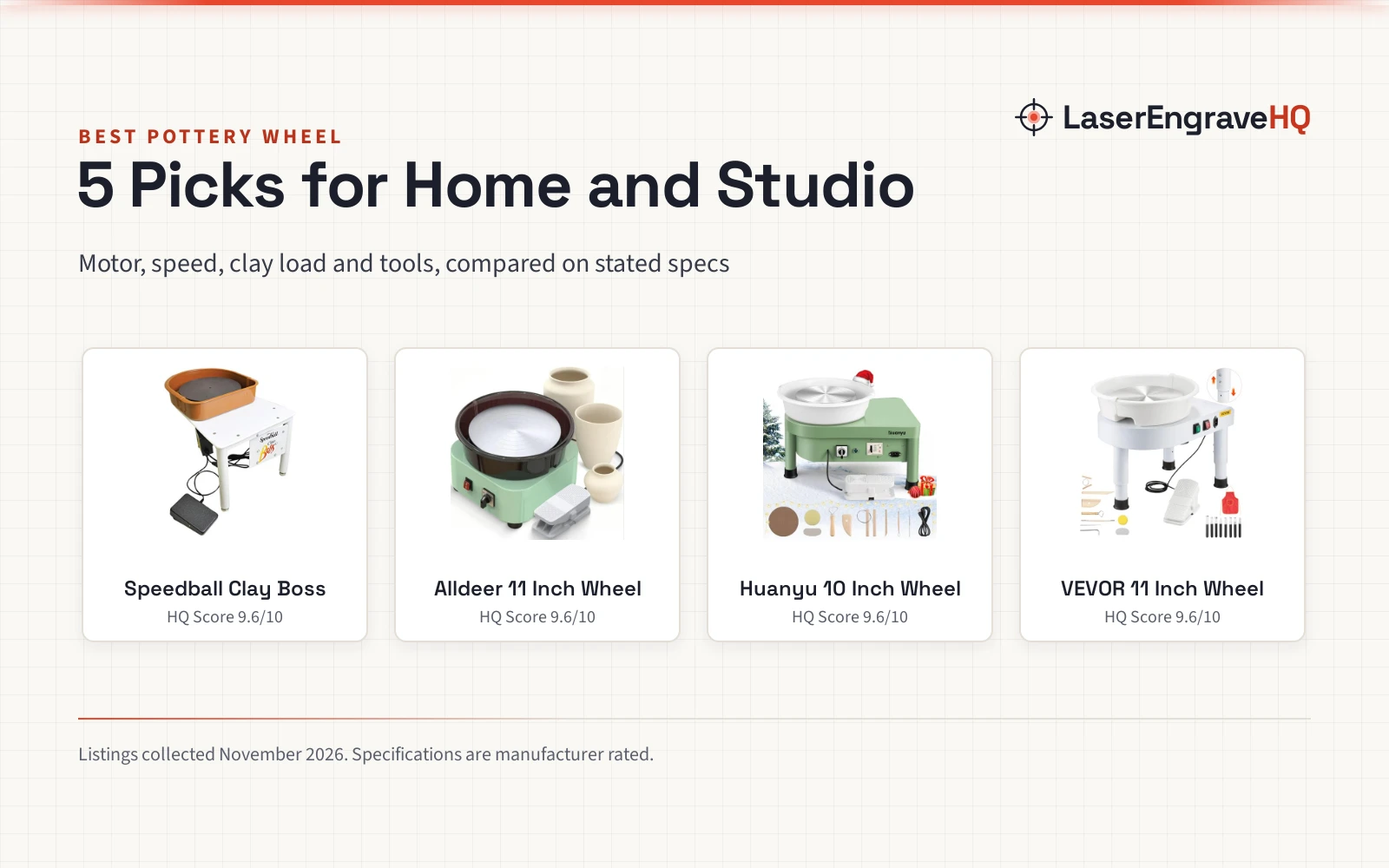
A pottery wheel for beginners is a small electric wheel for learning to center and pull clay, and this guide covers head size, motor power, speed, tools and setup.

On this page
Top picks at a glance
As an Amazon Associate I earn from qualifying purchases.
- 1
 VEVOR Pottery Wheel 11 Inch Aluminum Turntable 450W 30-300View on Amazon
- 2
 VEVOR 14in Pottery Wheel for Adults BeginnersView on Amazon
- 3
 Huanyu Pottery Wheel Machine 10" with Foot Pedal for AdultsView on Amazon
- 4
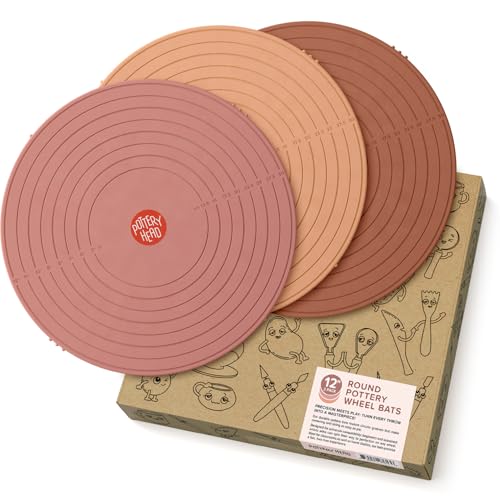 Pottery Bats for WheelView on Amazon
- 5
 HighFree 7 inch Sculpting WheelView on Amazon
- 6
 NATGAI 12 Inch Sculpting WheelView on Amazon
A pottery wheel for beginners is a small electric wheel with a spinning head and a speed control, built for learning to center clay and pull it into bowls and cups. The right starting wheel has a speed range that covers faster centering and slow pulling, a head wide enough for the pieces planned, and a tool set in the box, so practice can start without extra shopping. This guide walks through wheel size, motor power, speed control, tools and setup, using figures from the reference wheels named in the text.
Other machines to compare
 VEVOR Pottery Wheel 11 Inch Aluminum Turntable 450W 30-300Check price on Amazon
 VEVOR 14in Pottery Wheel for Adults BeginnersCheck price on Amazon
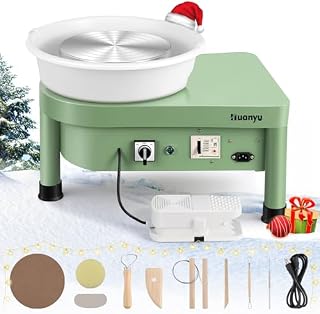 Huanyu Pottery Wheel Machine 10" with Foot Pedal for AdultsCheck price on Amazon
 Pottery Bats for WheelCheck price on Amazon
 HighFree 7 inch Sculpting WheelCheck price on Amazon
 NATGAI 12 Inch Sculpting WheelCheck price on Amazon
LaserEngraveHQ earns a commission from purchases made through these links, at no extra cost to you. Read our affiliate disclosure.
Wheel figures in this guide come only from the reference listings named in the text. Where a figure is not stated, the guide says so rather than guessing, and clay capacity differs between models even at the same motor power.
Step 1: Learn what the wheel does
A pottery wheel spins a lump of clay on a flat head while the hands shape it. The basic moves are centering, opening and pulling: centering puts the clay in the middle of the head, opening makes a hole in the middle, and pulling draws the walls upward into a bowl or a cup.
Start with small pieces and a soft clay that is easy to wedge and center. The National Geographic hobby wheel ships with air-dry clay, which hardens in the air without a kiln, so a first piece can dry on a shelf. A beginner without kiln access can still learn centering and pulling on air-dry clay before moving on.
Step 2: Pick a wheel head size
The wheel head sets how wide the base of a piece can be. The National Geographic hobby wheel has an 8-inch wheel, which suits small bowls, cups and practice pieces. Both VEVOR reference wheels have an 11-inch turntable, listed as 11in/28cm on the LCD model, which gives more room for wider pieces and for hands that are still learning to brace against the clay.
A wider head is not automatically better for a beginner. A smaller head is easier to store and move, and the National Geographic wheel is described as lightweight and portable, for home use and for teaching classes and workshops. Check the full footprint as well: the National Geographic wheel measures 14.17 x 7.68 x 16.34 inches, while the VEVOR LCD model measures 19.7 x 15.0 x 13.8 inches and the VEVOR green model measures 19.29 x 13.78 x 7.48 inches. Measure the table before ordering.
Step 3: Match motor power and speed
Motor power is stated in watts, and speed is stated as a range in RPM. Both VEVOR reference wheels list a 450W motor, one with an adjustable speed of 60-300 RPM and the other with 30-300 RPM, so the green model reaches a lower minimum speed. Centering uses a faster speed, while opening and pulling are done more slowly, so the low end of the speed range matters for the later moves. The National Geographic hobby wheel states variable speed without a stated RPM range, and it offers 2-way rotation for right- and left-handed users.
Clay capacity is where the two VEVOR models part ways despite sharing a 450W motor. The VEVOR LCD model is stated to handle 17.6 lbs of clay, while the VEVOR green model is stated to handle up to 11 lbs of clay. Read the capacity figure for the exact model being bought, not for the motor size alone. The National Geographic wheel states no clay capacity.
On the VEVOR reference wheels, speed control comes as a foot pedal, a handle, or both. The VEVOR LCD model switches between a push lever and a foot pedal, with an LCD touch screen for speed and direction, while the VEVOR green model uses a foot pedal with adjustable speed control. A foot pedal leaves both hands free for the clay, which helps while learning to center. Noise is stated for the National Geographic wheel only, at 60 decibels.
Step 4: Check the tools in the box
A beginner kit should include the tools for centering, opening, shaping and cutting the piece off the head. The National Geographic hobby wheel includes 3 lbs of air-dry clay, 5 wooden sculpting tools, a cut-off tool and a sponge, plus detailed instructions and links to video lessons. That is a complete starting kit: clay, tools and lessons in one box.
The VEVOR LCD model includes a 23-piece sculpting toolset, an 8-piece repair set and a waterproof apron, with a detachable water basin for easy cleaning. The VEVOR green model includes an 8-piece stainless steel tool set, an 8-piece wooden tool set and an apron, plus a right-side dual-layer storage box for trimming tools and other essentials. Compare the tool list against the moves in Step 1: a sponge and a cut-off tool are needed from the start.
Step 5: Set up a workspace
Put the wheel on a stable table at a height where the forearms can brace comfortably while the hands work the clay. The VEVOR green model is listed as having a tabletop 50% smaller than traditional models, and it weighs 18.96 pounds against 28.0 pounds for the VEVOR LCD model, so it is easier to carry and store.
Keep water close by, in the splash pan or basin where the wheel has one, and keep the tools within reach before the clay goes on the head. The VEVOR LCD model has a removable ABS basin that detaches for cleaning, and the VEVOR green model has a detachable basin as well. Wipe the wheel head and the basin after each session.
Step 6: Plan a practice session
Begin with centering: a lump of clay pressed onto the head, hands braced, wheel turning at a faster speed until the clay stops wobbling. Then slow the wheel, open the middle with the thumbs and pull the walls up in slow passes, keeping the hands wet and the pressure even. Stop when the walls feel thin enough, and cut the piece off the head with the cut-off tool.
Expect the early pieces to be uneven. Keep them, note what went wrong, and wedge the clay again for another round. A practice session works best when the clay, water, sponge and tools are all in place before the wheel starts.
Common mistakes to avoid
- Buying a wheel for its top speed instead of its speed range for centering and slow pulling.
- Skipping the footprint check: the wheel, water, tools and drying pieces all need table space.
- Starting with a large lump of clay before centering is comfortable.
- Forgetting the cut-off tool and sponge, which are needed in every session.
- Comparing motor watts alone: the two 450W VEVOR models state different clay capacities.
Pottery wheel for beginners: the short version
- Pick a head size for the pieces planned: 8-inch for small work, 11-inch for wider pieces.
- Match the motor and speed range to the work: centering needs a faster speed and pulling needs a slow one.
- Read the clay capacity for the exact model, not the motor size.
- Check the box for clay, sculpting tools, a cut-off tool, a sponge and an apron.
- Set the wheel on a stable table with water and tools in reach.
- Practice centering, opening and pulling with small pieces before moving larger.
FAQ: lasers and CNC
What size pottery wheel should a beginner buy?
An 8-inch wheel suits small bowls, cups and practice pieces, as on the National Geographic hobby wheel. An 11-inch turntable, as on both VEVOR reference wheels, gives more room for wider pieces.
How much clay can a beginner wheel handle?
It varies by model. The VEVOR LCD model is stated to handle 17.6 lbs of clay, and the VEVOR green model is stated to handle up to 11 lbs of clay, even though both list a 450W motor. The National Geographic hobby wheel states no clay capacity. Start with small lumps while learning to center.
Do I need a foot pedal?
A foot pedal is helpful but not required. The VEVOR LCD model switches between a push lever and a foot pedal, and the VEVOR green model uses a foot pedal. A pedal leaves both hands free for the clay, which helps while learning to center.
What tools come with a beginner pottery wheel?
It depends on the kit. The National Geographic hobby wheel includes 3 lbs of air-dry clay, 5 wooden sculpting tools, a cut-off tool and a sponge. The VEVOR LCD model includes a 23-piece sculpting toolset, an 8-piece repair set and an apron, and the VEVOR green model includes an 8-piece stainless steel tool set, an 8-piece wooden tool set and an apron.
Do I need a kiln to start throwing pottery?
Not for the first practice pieces. The National Geographic hobby wheel ships with air-dry clay, which hardens in the air without a kiln. Clay that needs firing belongs in a kiln.
Related: the pottery and glass hub, the pottery and clay hub and the best pottery wheel guide. Also see our best clay for pottery. Also see our best pottery tools.