Air Assist vs No Air Assist: Which One Should You Buy?
A practical comparison of air assist vs no air assist: discover how forced airflow prevents charring, protects optics, improves cut depth, and refines workshop…

The parts that make a laser work better: air assist pumps, rotary attachments for tumblers, enclosures, honeycomb beds, risers and exhaust fans. Each guide says which machines an accessory fits.
Bare metal points to a fiber laser, clear acrylic to CO2, wood and leather on a budget to a diode, and thick stock or 3D carving to a CNC router. The Machine Finder narrows it down in five questions, and the material guide shows what each type can cut.
A practical comparison of air assist vs no air assist: discover how forced airflow prevents charring, protects optics, improves cut depth, and refines workshop…
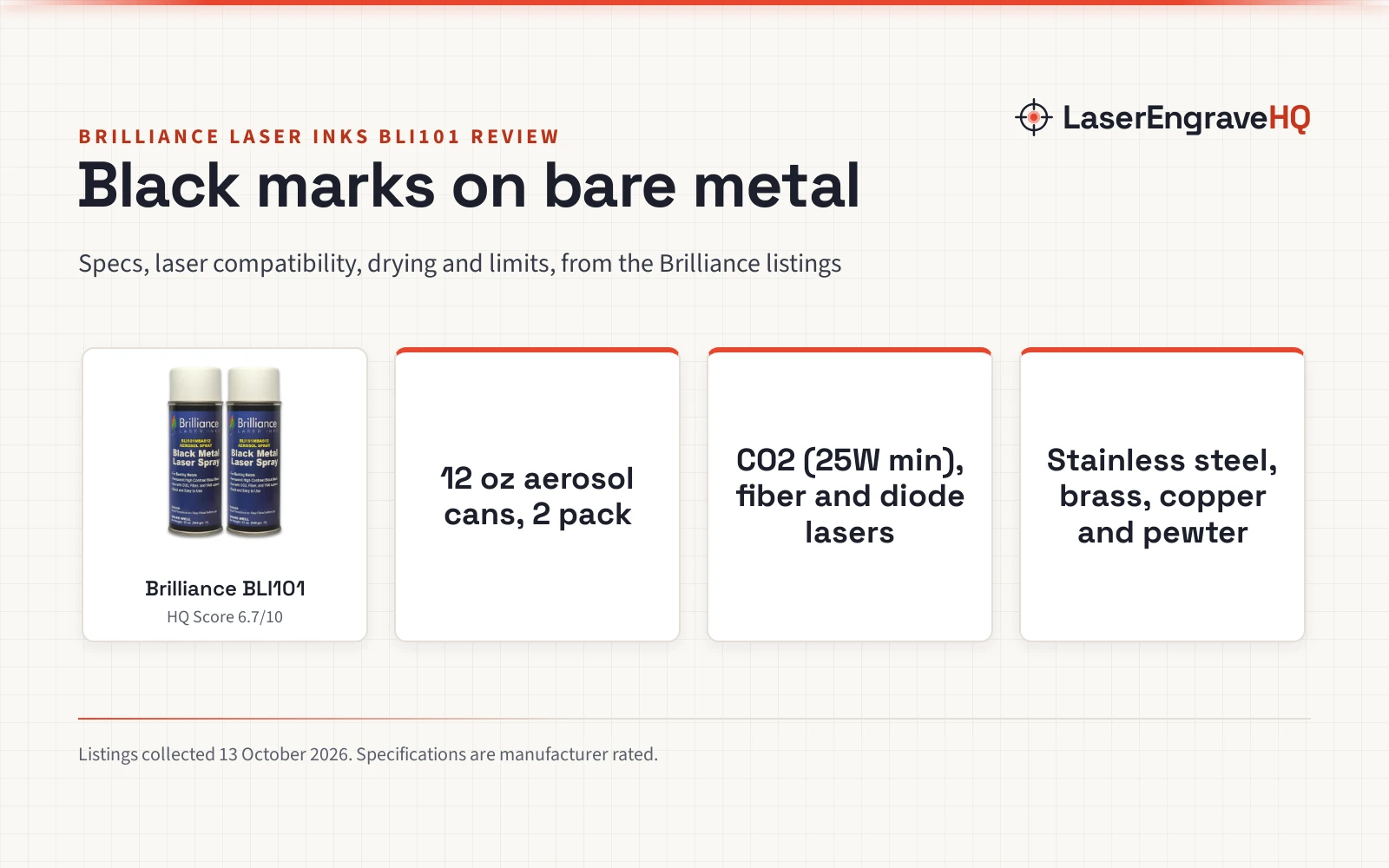
A research-based review of Brilliance Laser Inks BLI101 metal marking spray: what the specs mean, how CO2 and diode lasers pair with it, and…
A complete comparison of roller and chuck rotary attachments for laser engraving, explaining how each mechanism works, which objects it holds, and how to…
Compare honeycomb and slat beds for laser cutting and engraving to choose the right surface for airflow, material support and clean cut edges.
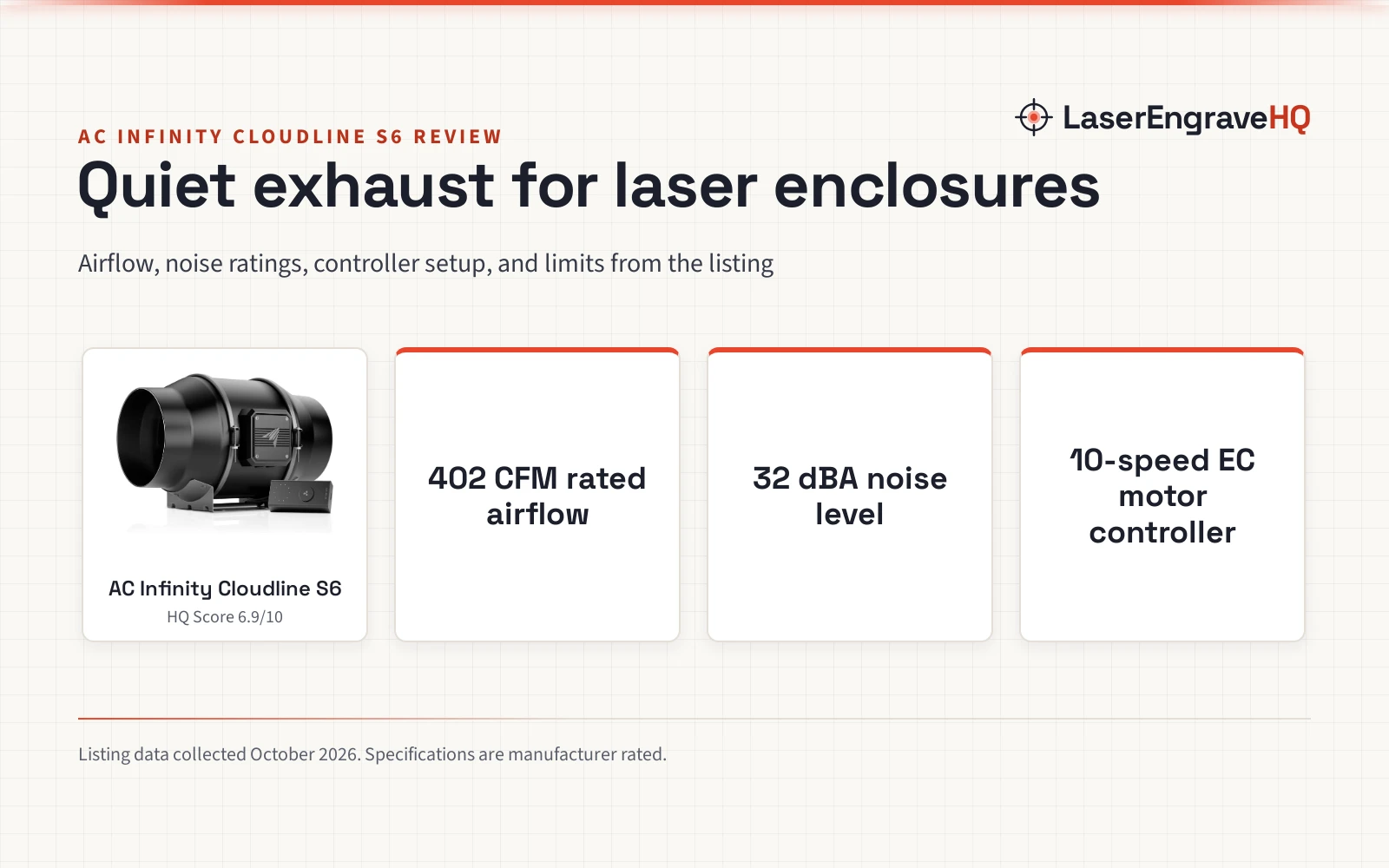
A research-based look at the AC Infinity Cloudline S6 6-inch inline duct fan: what the 402 CFM and 32 dBA specs mean, setup trade-offs,…
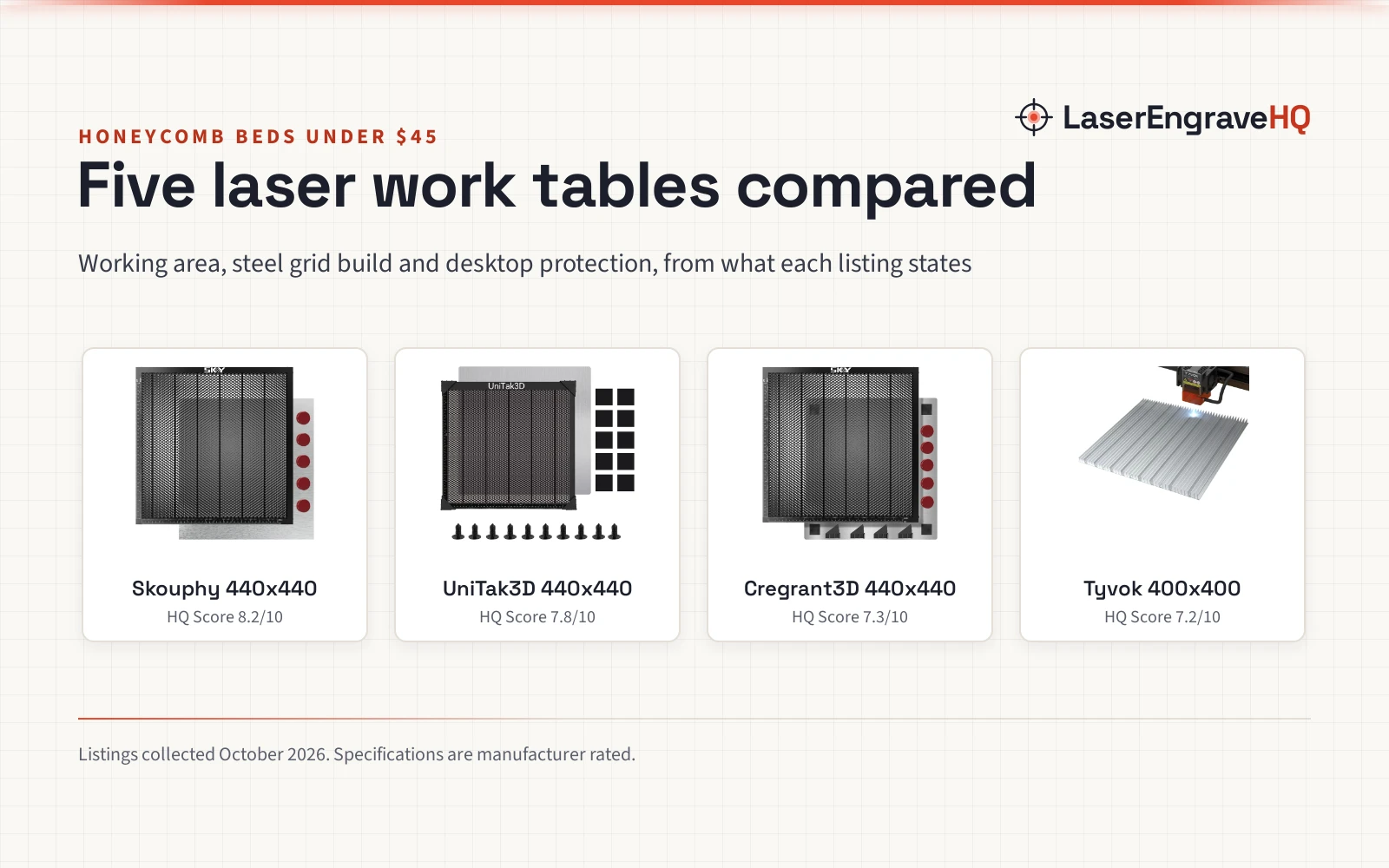
Five laser honeycomb beds under $45 compared by working dimensions, core construction, desktop plate shielding, hold-down accessories and warranty terms.
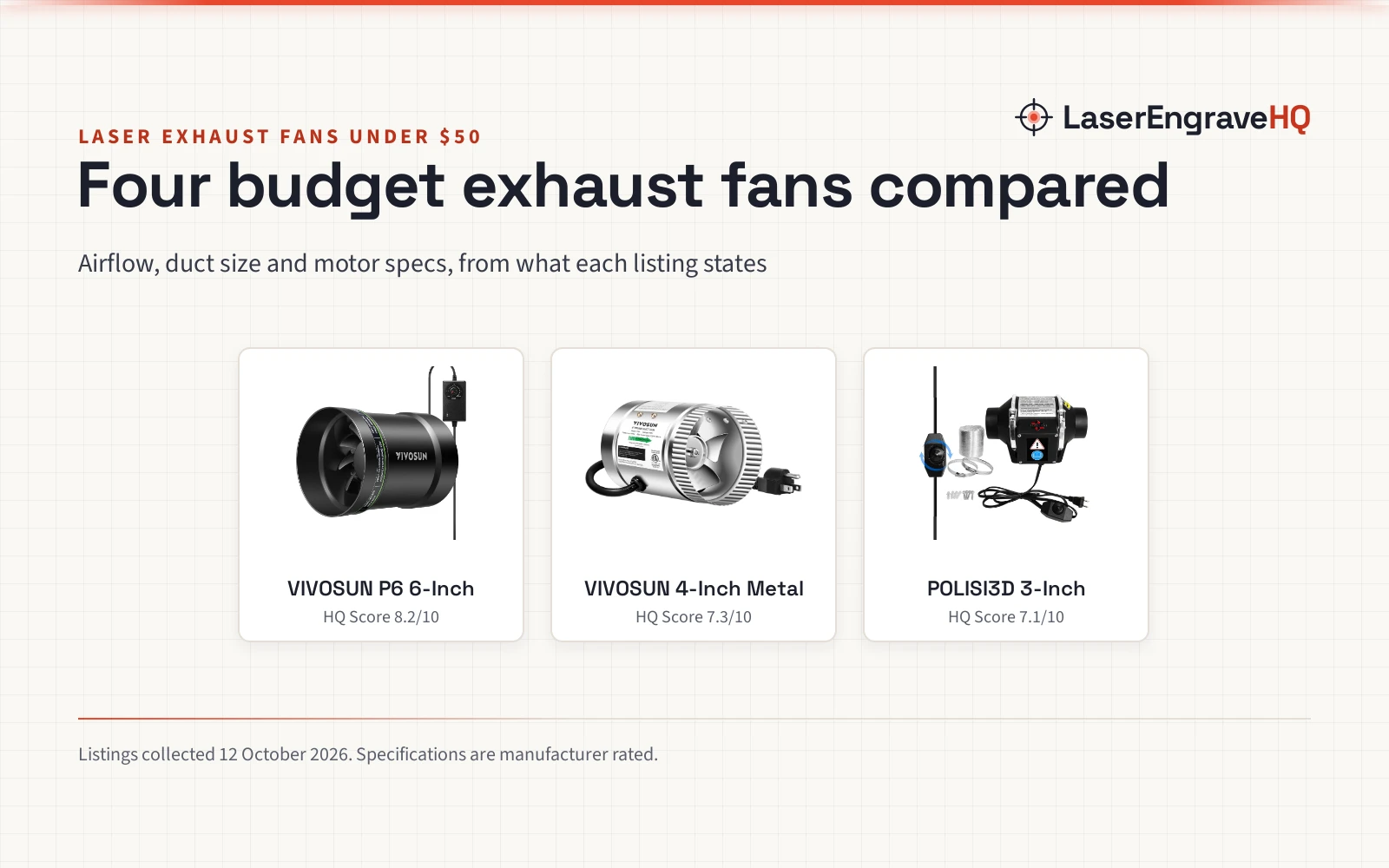
Four laser exhaust fans under $50 compared by airflow volume, duct diameter, motor wattage, noise ratings and included installation hardware.
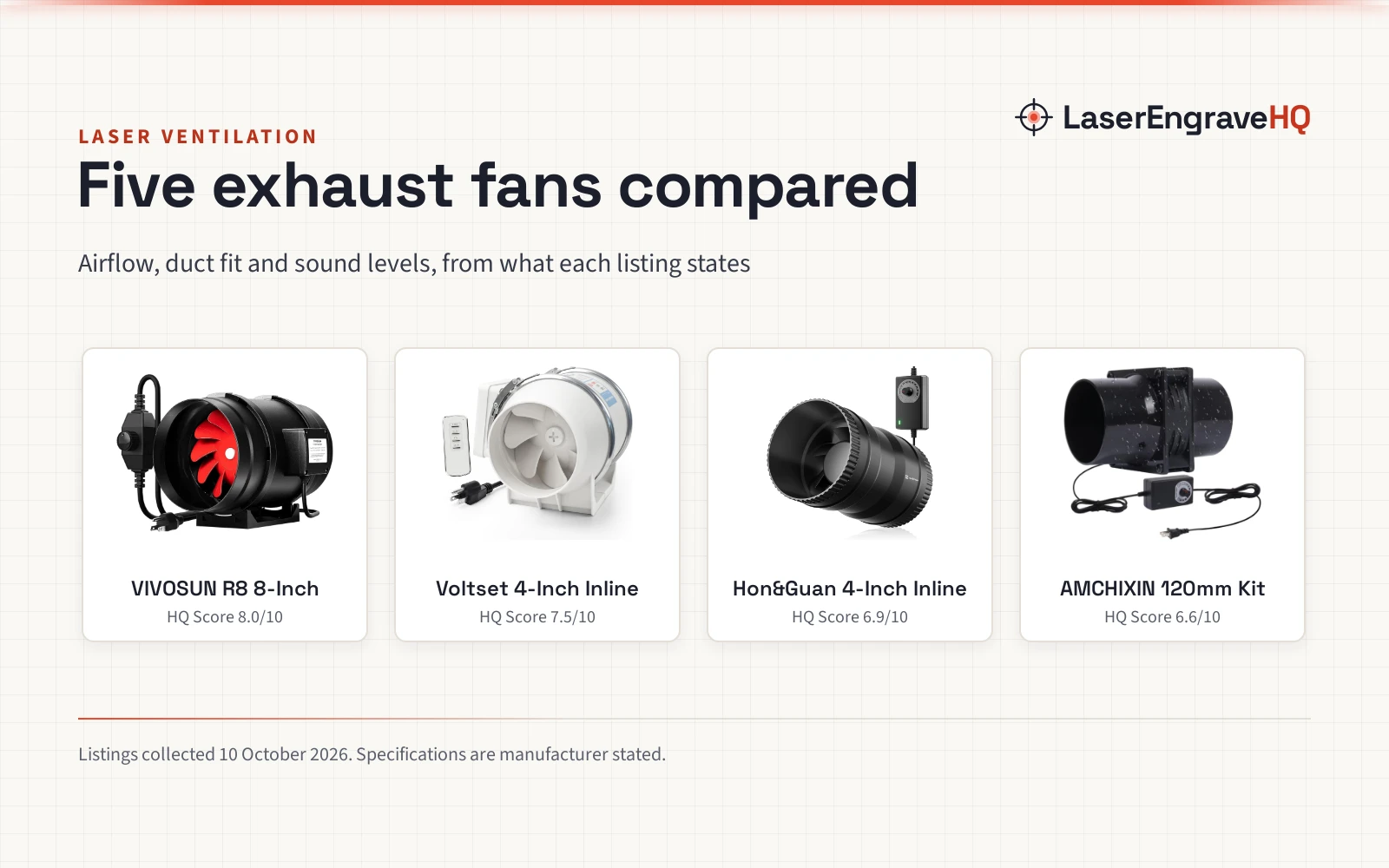
Five inline exhaust fans from 58 to 720 CFM compared for laser engraver enclosures, evaluated by airflow, duct fit, noise level and speed control.
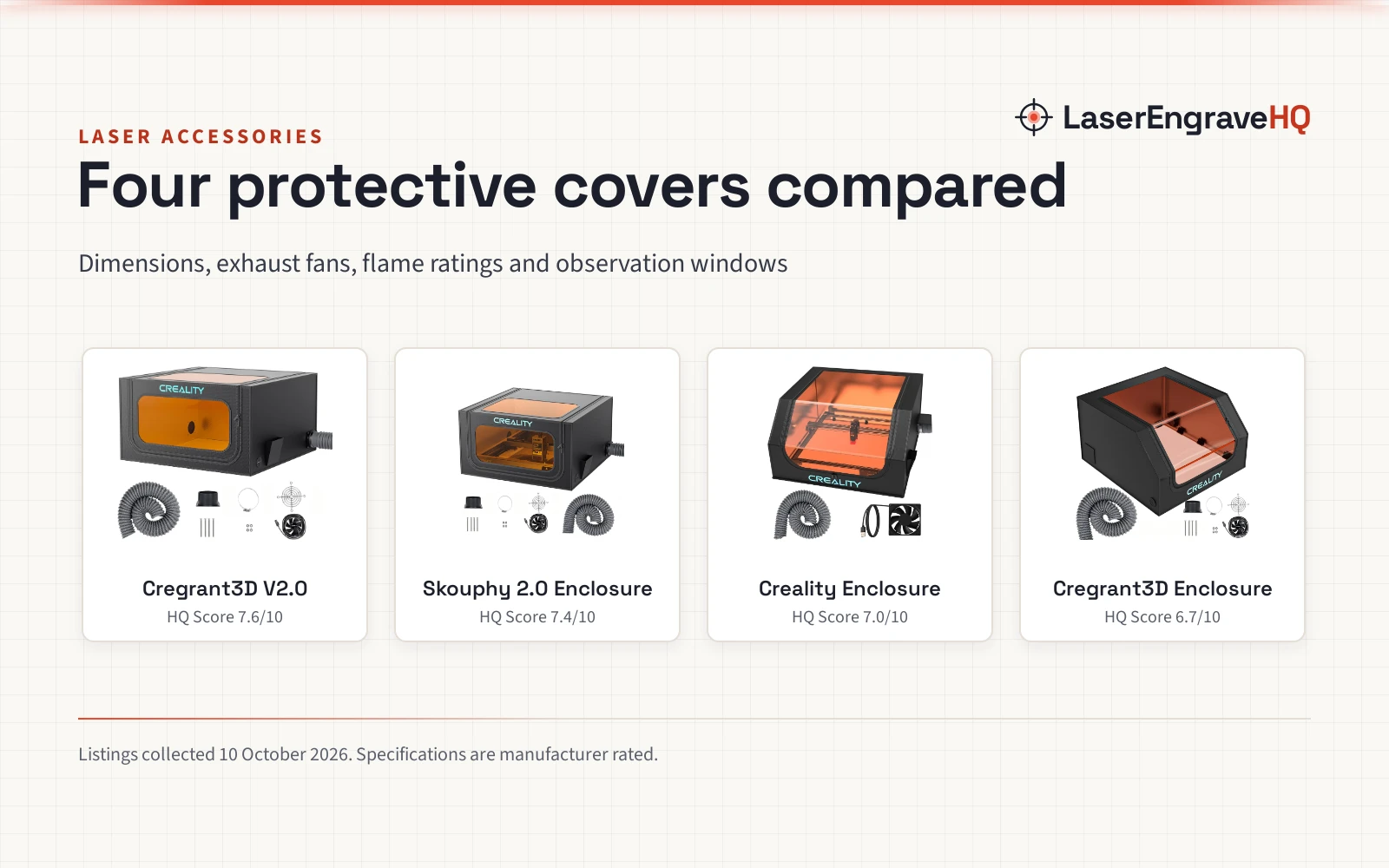
Four laser engraver enclosures compared by workspace dimensions, exhaust ventilation systems, frame materials, safety features and warranty terms.
A step-by-step guide on how to build a laser engraver enclosure: select fire-resistant materials, size the workspace, install exhaust ventilation, and wire safety interlocks.