Baltic Birch vs Pine for CNC: Which One Should You Buy?
Baltic birch plywood gives flat, consistent sheets that cut cleanly on a CNC router, while pine boards suit rustic, low-cost decorative projects.

On this page
Top picks at a glance
As an Amazon Associate I earn from qualifying purchases.
- 1
 6 mm Baltic Birch Plywood 1/4 x 12 x 12 Inch9.6/10View on Amazon
- 2
 SpeTool Carbide Single Flute CNC Router Bits 1/8" Cutting9.7/10View on Amazon
- 3
 3 mm Baltic Birch Plywood 1/8 x 12 x 12 Inch9.5/10View on Amazon
- 4
 Baltic Birch Plywood 8 x 12 x 1/2 InchView on Amazon
- 5
 Baltic Birch Plywood 24 x 24 x 1/2 InchView on Amazon
- 6
 Baltic Birch Plywood 12 x 12 x 1/2 InchView on Amazon
- 7
 12 mm Baltic Birch Plywood 1/2 x 8 x 8 InchView on Amazon
- 8
 Baltic Birch Plywood 18 x 24 x 1/2 InchView on Amazon
- 9
 3 mm Baltic Birch Plywood 1/8 x 12 x 20 InchView on Amazon
For most CNC router work, baltic birch vs pine for cnc comes down to this: Baltic birch plywood gives you flat, void-free sheets that cut cleanly and hold fasteners well, while pine boards are softer, cheaper and better suited to rustic decorative pieces. If your project has parts that must fit together, sign blanks that must stay flat or anything you plan to sell, Baltic birch is the safer pick; for a chunky farmhouse sign or a quick prototype, pine does the job just fine.
Other machines to compare
 Baltic Birch Plywood 8 x 12 x 1/2 InchCheck price on Amazon
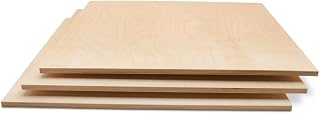 Baltic Birch Plywood 24 x 24 x 1/2 InchCheck price on Amazon
 Baltic Birch Plywood 12 x 12 x 1/2 InchCheck price on Amazon
 12 mm Baltic Birch Plywood 1/2 x 8 x 8 InchCheck price on Amazon
 Baltic Birch Plywood 18 x 24 x 1/2 InchCheck price on Amazon
 3 mm Baltic Birch Plywood 1/8 x 12 x 20 InchCheck price on Amazon
LaserEngraveHQ earns a commission from purchases made through these links, at no extra cost to you. Read our affiliate disclosure.
Explanations in this guide come from general woodworking knowledge. Every figure below comes from a listing cited in the text; where no figure is available, the guide describes the point without one.
What Baltic birch plywood actually is
Baltic birch plywood is a multi-layer engineered panel made from thin birch veneers stacked with the grain running in alternating directions. The listings cited here grade it B/B or B/BB: the face veneer is smooth and mostly defect-free, while the back may carry small repaired defects or, per the Woodpeckers listing, one or two small color-matched patches.
Makers like it for CNC work because the alternating plies make the sheet stiff and stable, the edges cut cleanly with little tearout and the core has no voids that would snag a bit or show up as gaps on a cut edge. Woodpeckers describes its 1/2 inch (12 mm) sheets as stronger than basswood or balsa sheets of the same size, and notes that the thick face veneer provides a smooth surface for CNC routers and engraving machines.
What pine boards bring to the table
Pine is a solid softwood lumber: one piece of wood with visible grain, knots and growth rings. Unlike plywood it has a single grain direction, so it is strong along the grain and weaker across it, and it moves more as humidity changes.
Makers reach for pine when the look is the point. The grain and knots photograph well for rustic signs and farmhouse decor, and the soft wood is easy on bits. The trade-off is that softness: edges can fuzz, thin pine can cup or bow, and knots can chip or burn if the bit meets them at speed.
How each one cuts on a CNC router
On the router, the two materials behave quite differently:
- Baltic birch: consistent density from face to core, so feeds stay steady and cut edges come out crisp. Pockets and inlays hold their shape because the plies resist movement, and tabs and small parts survive because the panel is strong for its weight.
- Pine: cuts quickly because the wood is soft, but the bit can tear grain on cross cuts and fuzz edges on climb cuts. Knots are harder than the surrounding wood, so the bit can chatter or burn when it meets one.
For both materials, run a scrap cut on an offcut before committing to a full sheet; dial in feeds and depth of cut on the scrap, not on your project. If the bit is dull, pine shows it first with fuzzy edges, while Baltic birch is more forgiving but still rewards sharp tooling. Our best spiral router bits for hardwood guide covers bit choices for plywood and hardwood sheet goods.
Sizes and packs you will find
Plywood for small-shop CNC work usually comes as pre-cut sheets rather than full-size panels. Creative Deco sells a 10-sheet pack of Baltic birch measuring about 16.53 x 11.81 inches at 0.11 inch thick, with the maker noting length and width are subject to a plus or minus 5% tolerance. The same brand offers a 10-sheet pack of squares at about 11.81 x 11.81 inches, listed as 0.11 inch (3 mm) thick.
Woodpeckers sells its 1/2 inch (12 mm) Baltic birch in packs of 2, 4, 6 and 12, in sizes from 8 x 12 inches up to 24 x 24 inches. The true sizes run slightly under the nominal ones: the maker lists 23-7/8 x 23-7/8 inches for the 24 x 24 pack, 17-7/8 x 23-7/8 inches for the 18 x 24 pack, 11-7/8 x 11-7/8 inches for the 12 x 12 pack and 11-7/8 x 7-7/8 inches for the 8 x 12 pack. The same storefront also lists plywood squares in both 1/4 inch and 1/8 inch thickness.
Plan your cut layouts from the true size, not the nominal size: on a 23-7/8 inch sheet, a part nested at 24 inches will not fit.
Finishing: stain, paint and engraving
Baltic birch takes stain well, and the light, uniform face veneer described by Woodpeckers gives paint and clear coats an even base. Engraved or lasered detail reads sharply on the smooth face because the surface is consistent. Pine stains unevenly around knots and grain bands; many makers use a pre-stain conditioner or paint instead, and a painted pine sign with carved or engraved lettering is a classic for a reason.
If a sheet arrives with a slight bow, Creative Deco suggests a shop fix: add moisture to the concave side, dry the convex side, then lay the sheet moist side down on the floor for 2 days. Small packs are easier to flatten and store than full-size panels.
Picking the right stock for your project
- Choose Baltic birch for parts that must fit together, layered signs, anything with fine engraved detail and projects you plan to sell. The flat sheet and clean edges do the precision work for you.
- Choose pine for rustic signs, one-off decor, shop jigs and prototypes where looks and low cost matter more than dimensional stability.
- Match thickness to the job: the listings show Baltic birch from 0.11 inch (3 mm) craft sheets up to 1/2 inch (12 mm) structural sheets. Thin sheets suit ornaments and layered art; 1/2 inch sheets suit shelves, cabinet parts and sign blanks.
See our what materials a laser engraver can cut guide for how different machines handle each stock, and the best plywood for laser cut puzzles page for more sheet-plywood picks.
baltic birch vs pine for cnc: the short version
- Baltic birch plywood is flat, layered and stable: the pick for precise CNC parts and products you sell.
- Pine is soft, affordable and rustic: the pick for decorative signs, jigs and prototypes.
- Buy sheet sizes that fit your machine bed, and lay out parts from true sizes (for example 23-7/8 inches, not 24).
- Run a scrap cut first, keep bits sharp, and finish each material for what it is: stain on birch, paint or conditioner on pine.
FAQ: lasers and CNC
Can a small desktop CNC router cut Baltic birch plywood?
Yes. The listings cited here run from 0.11 inch (3 mm) to 1/2 inch (12 mm) sheets sized for small machines, and plywood that thin is well within what a desktop router handles. Take shallow passes and hold the sheet flat to the spoilboard.
Does pine move more than Baltic birch on the spoilboard?
Generally yes. Solid pine reacts to humidity changes along one grain direction, while the alternating plies of Baltic birch resist that movement. Clamp or tape both down, but expect pine to need more hold-down attention on longer jobs.
Which engraves better, Baltic birch or pine?
Baltic birch gives cleaner engraved detail because the face veneer is smooth and uniform. Pine shows more grain contrast, which suits a rustic look but can muddy fine text. Match the material to the style you want.
Can I use Baltic birch for outdoor CNC projects?
The listings cited here describe interior craft and shop use; none claim exterior or marine suitability. For anything that lives outdoors, choose a panel rated for exterior use and seal every surface including cut edges.
Do I need different router bits for pine and Baltic birch?
Not a different type, but sharpness matters more. Pine fuzzes and birch chips when the edge is dull. See our best spiral router bits for hardwood guide for bit picks suited to sheet goods.
What grade of Baltic birch should I buy for CNC work?
The listings here are B/B and B/BB: a clean face with small repairs or patches on the back. That grade suits cut parts and painted projects; reserve your smoothest, cleanest sheets for engraved pieces where the face shows.
Related: the CNC router hub, our birch vs maple for laser engraving comparison and the engraving materials hub. Also see our basswood vs poplar for laser cutting comparison.