Basswood vs Poplar for Laser Cutting: Which One Should You Buy?
Basswood is the soft, forgiving craft wood that cuts fast and engraves evenly, while denser poplar suits sturdier parts; here is how to choose.

On this page
Top picks at a glance
As an Amazon Associate I earn from qualifying purchases.
- 1
 Basswood Sheets 12 x 12 x 1/8 Inch9.7/10View on Amazon
- 2
 Pack of 10 Clear Cast Acrylic Sheet 8" x 10" x 1/8" Thick9.6/10View on Amazon
- 3
 50 Pack Basswood Sheets for Crafts9.6/10View on Amazon
- 4
 12 Pack Basswood Sheets for Crafts-12 x 20 x 1/8 Inch- 3mmView on Amazon
- 5
 30 Pack Basswood Sheets 12"x12"x1/8"View on Amazon
- 6
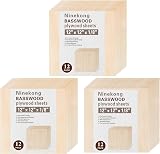 36 Pack Basswood Sheets 1/8 inchView on Amazon
- 7
 12 Pack Basswood Sheets 1/4x12x12 InchView on Amazon
- 8
 60 Pack Basswood Sheets 12x12x1/8 Inch for Crafts,UnfinishedView on Amazon
- 9
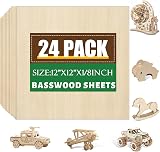 24 Pack Basswood Sheets 1/8 x 12 x 12 Inch for CraftsView on Amazon
If you are stocking a laser for craft blanks, models or small signs, basswood vs poplar for laser cutting is a choice you make at the wood rack, not the machine. Basswood is the soft, light, forgiving craft wood that cuts fast and engraves in pale, even tones. Poplar is the harder, denser hardwood that cuts slower and burns with more color variation, but holds up better where strength matters. For most laser cutting work, basswood is the easier wood; poplar earns its place on sturdier parts.
Other machines to compare
 12 Pack Basswood Sheets for Crafts-12 x 20 x 1/8 Inch- 3mmCheck price on Amazon
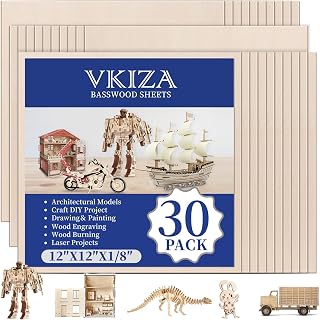 30 Pack Basswood Sheets 12"x12"x1/8"Check price on Amazon
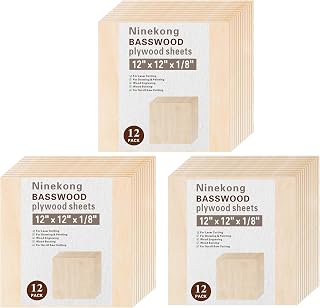 36 Pack Basswood Sheets 1/8 inchCheck price on Amazon
 12 Pack Basswood Sheets 1/4x12x12 InchCheck price on Amazon
 60 Pack Basswood Sheets 12x12x1/8 Inch for Crafts,UnfinishedCheck price on Amazon
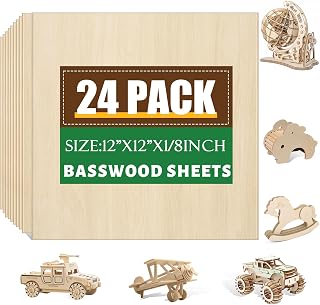 24 Pack Basswood Sheets 1/8 x 12 x 12 Inch for CraftsCheck price on Amazon
LaserEngraveHQ earns a commission from purchases made through these links, at no extra cost to you. Read our affiliate disclosure.
Basswood vs Poplar for Laser Cutting: the Short Answer
Both cut on a laser, and the difference is density and consistency. Basswood is soft and uniform: sheets cut quickly, edges come out clean, and the pale face engraves evenly. Poplar is denser with more grain character and a greenish cast that can show through light finishes, which makes it less predictable under the beam but tougher in the finished part. Pick basswood for speed, detail and forgiveness; pick poplar when the part needs to take a knock.
What Basswood Brings to the Workshop
The listings describe a material made for laser work. AWIZOM lists 12 sheets of 12 x 20 x 1/8 inch, 3 mm thick, at 11.8 x 19.7 inches, marketed for laser cutting and scroll sawing. VKIZA lists 30 sheets of 12 x 12 x 1/8 inch at 3 mm. Ninekong lists 36 sheets of 12 x 12 x 1/8 inch, 3 mm, in 305 x 305 mm. ESRICH lists a 60-pack and a 24-pack of 12 x 12 x 1/8 inch 3 mm sheets, a 36-pack of the same size at 4.95 kg, and a 12-pack of 1/4 inch 6 mm sheets in 305 x 305 mm. Adrattnay lists 36 sheets of 1/16 x 12 x 12 inch at 1.5 mm, and LINAUSTFB lists 10 sheets of 12 x 12 at 1/4 inch, 6 mm, weighing 5 lb.
In practice that means light, even sheets that the laser moves through quickly, with smooth faces that take stain and paint well. The listings call out warp-free, burr-free edges and consistent thickness, which is what keeps cut parts fitting together. Warranties vary by listing: AWIZOM states 365 days, Ninekong states 90 days, ESRICH states a 3 month return on the 6 mm pack, and LINAUSTFB states a 1 year manufacturer warranty.
What Poplar Brings to the Workshop
Poplar is a true hardwood, denser and stronger than basswood, and it behaves accordingly under the laser. It cuts slower at the same settings, needs more power or slower passes for the same thickness, and the grain shows more in the engraved mark. The wood often carries a greenish or grayish cast that can tint light stains, so run a scrap sample of the finish first. Where poplar wins is the finished part: shelves, boxes and structural pieces hold up better than basswood equivalents, and the harder face resists dents in handled items.
Cutting and Burning Compared
| Wood | Cutting feel | Engraved look | Consistency |
|---|---|---|---|
| Basswood | Fast, clean edges at 1/8 inch | Pale, even marks | Very uniform sheet to sheet |
| Poplar | Slower, wants more power | More grain, darker variation | Color and grain vary |
If your design lives on speed and repeatability, like a batch of ornaments or model parts, basswood wins. If it lives on strength, like a box that gets opened daily, poplar wins. Either way, mask the sheet before cutting to cut smoke staining, and read our guide to preventing burn marks for settings habits that keep edges clean.
Thicknesses and Pack Sizes
Match the sheet to the job. The listings show 1/16 inch (1.5 mm) for delicate work, 1/8 inch (3 mm) as the standard laser thickness, and 1/4 inch (6 mm) for sturdier parts. Packs run from 10 sheets (LINAUSTFB) to 60 sheets (ESRICH), with 12, 24, 30 and 36 sheet packs in between, and 12 x 12 inch is the standard sheet with 12 x 20 inch also listed. Larger packs make sense once a design is selling, since reordering the same listing keeps the wood consistent. For sourcing pointers, see our where to buy 3mm plywood guide.
Running Both Woods on Your Laser
The workflow is the same for both: design, focus, a sacrificial sample on scrap, then the real run. The listings market 1/8 inch basswood as laser-ready, which is why it pairs well with the diode lasers in our best laser engraver for wood picks. Poplar, being denser hardwood, usually wants a slower pass or more power for the same thickness, so confirm your machine’s stated capabilities before committing an expensive sheet. If you are weighing basswood against another common ply, our Baltic birch vs basswood comparison and the best basswood for laser cutting list cover the tradeoffs.
Wood cutting needs fire and ventilation planning: exhaust fumes outdoors or through a proper filter, keep a suitable extinguisher within reach and never leave a running job unattended. A quick visual check between passes catches flare-ups before they become problems.
Match the Wood to the Project
- Ornaments and craft blanks: Basswood. Fast cutting, pale even engraving and packs up to 60 sheets.
- Models and puzzles: Basswood. The 1/16 inch sheets suit delicate parts, 1/8 inch suits the rest.
- Boxes and handled items: Poplar. Denser wood resists dents where basswood would ding.
- Signs and decor: Either. Basswood for painted signs, poplar where the piece takes wear.
FAQ: lasers and CNC
Is basswood good for laser cutting?
Yes. The listings describe 1/8 inch (3 mm) basswood sheets as made for laser cutting, with smooth faces, warp-free edges and consistent thickness. It is a standard craft wood for laser work for that reason.
Does poplar cut well on a laser?
It cuts, but slower than basswood. Poplar is denser hardwood, so it wants more power or slower passes for the same thickness, and the grain shows more in the cut and engraved mark.
What thickness of basswood should I buy for laser cutting?
The listings show 1/16 inch (1.5 mm) for delicate work, 1/8 inch (3 mm) as the standard, and 1/4 inch (6 mm) for sturdier parts. Match the thickness to the part, not the machine.
Should I mask basswood before cutting?
Masking helps. A layer of transfer tape over the cut area catches smoke and resin before they stain the face, and it peels away to leave a clean edge. Our burn mark prevention guide walks through the habit in more detail.
Where should I buy basswood for laser projects?
Start with the pack sizes that fit your bed, from 12 x 12 inch up to 12 x 20 inch, and reorder from the same listing while a design is selling. Our where to buy 3mm plywood guide covers sourcing options in more depth.
Related: the engraving materials hub, our Baltic birch vs basswood comparison and the best basswood for laser cutting picks. Also see our MDF vs plywood for laser cutting.