Bearing vs Bearingless Router Bit: Which One Should You Buy?
A guide to bearing and bearingless router bits: how pilot bearings guide template work, when to skip the bearing, and two bearing bits for the shop.

On this page
Top picks at a glance
As an Amazon Associate I earn from qualifying purchases.
- 1
 Yakamoz 3Pcs 1/4" Shank Bowl Tray Template Router Bit Set9.7/10View on Amazon
- 2
 SPEED TIGER ISE Carbide End Mill 1/8”9.8/10View on Amazon
- 3
 SpeTool Compression Flush Trim Router Bit 1/4 Shank9.6/10View on Amazon
- 4
 Freud Rabbeting Bit Set with BearingsView on Amazon
- 5
 FivePears 4 PCS Top and Bottom Bearing Flush Trim Router BitsView on Amazon
- 6
 2-1/2 Inch Flush Trim Top and Bottom Bearing Router BitView on Amazon
- 7
 9pcs Pattern Flush Trim Router Bit 1/4 ShankView on Amazon
- 8
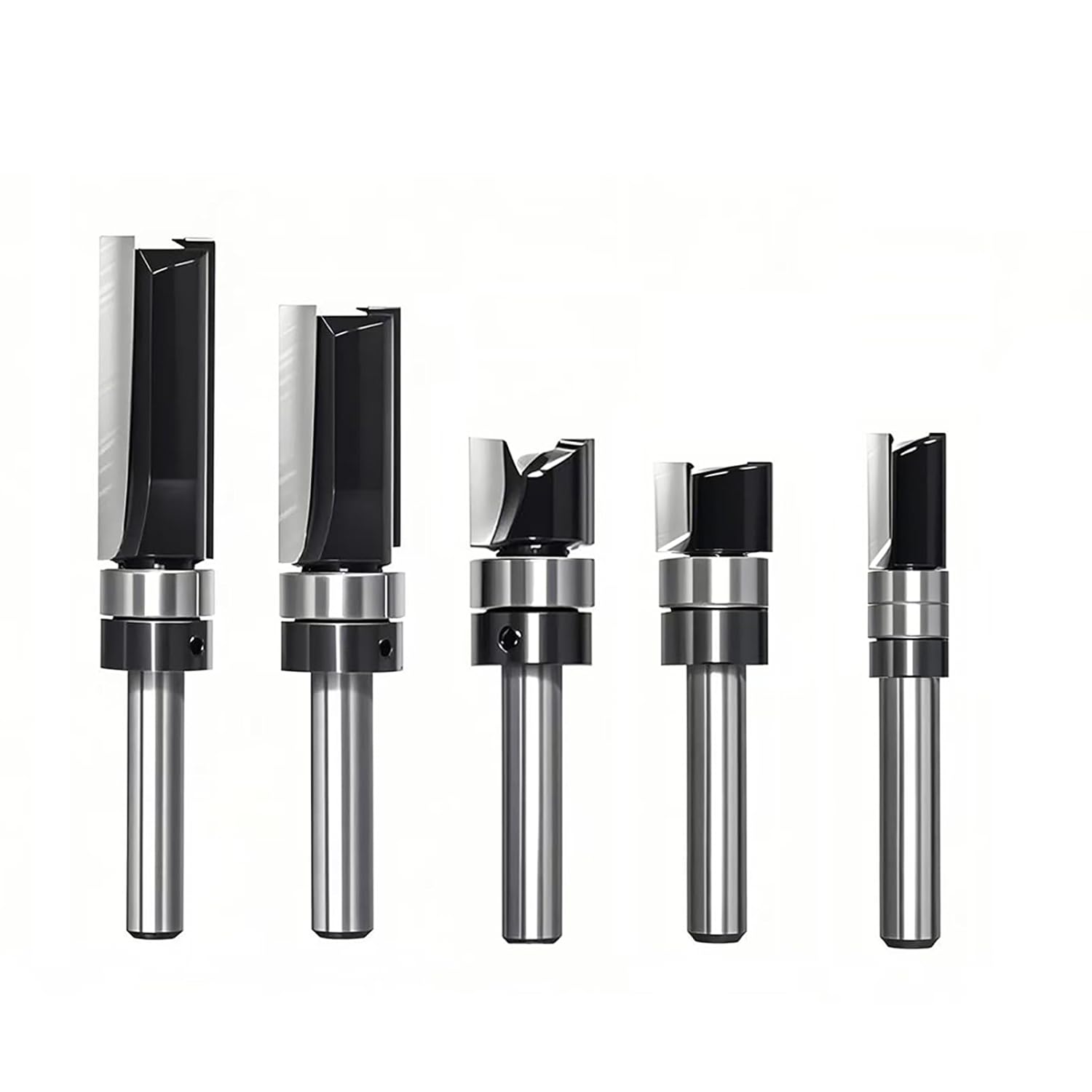 Pattern Flush Trim Router Bit 1/4 Shank Carbide Tipped RouterView on Amazon
- 9
 2-Flute Top Bearing Flush Trim Bit 1/4" Shank 1/4" Dia 3/4"View on Amazon
Bearing vs bearingless router bit comes down to guidance. A bearing bit carries a pilot bearing that rides a template or an edge, so the cutter follows that guide. A bearingless bit carries no pilot, so the router fence, the table fence or a jig sets the path instead. The sections below explain both types, compare them, and feature two bearing bits for template and rabbet work.
Other machines to compare
 Freud Rabbeting Bit Set with BearingsCheck price on Amazon
 FivePears 4 PCS Top and Bottom Bearing Flush Trim Router BitsCheck price on Amazon
 2-1/2 Inch Flush Trim Top and Bottom Bearing Router BitCheck price on Amazon
 9pcs Pattern Flush Trim Router Bit 1/4 ShankCheck price on Amazon
 Pattern Flush Trim Router Bit 1/4 Shank Carbide Tipped RouterCheck price on Amazon
 2-Flute Top Bearing Flush Trim Bit 1/4" Shank 1/4" Dia 3/4"Check price on Amazon
LaserEngraveHQ earns a commission from purchases made through these links, at no extra cost to you. Read our affiliate disclosure.
What a bearing router bit does
A bearing bit uses its pilot bearing as the guide. The Amana Tool 45475 flush trim bit shows the idea clearly: the template is attached to the workpiece, and the pilot bearing rides along the template edge as the cutting edges rout the workpiece, forming an exact duplicate of the template. The listing describes 2 upper ball bearings, a 3/8 inch diameter, a 1/2 inch cutting height and a 1/4 inch shank, with a carbide-tipped 2-flute design for template and pattern routing, joinery and internal cuts in hardwood, MDF and plywood. It works in handheld and table-mounted routers. One discrepancy to note: the spec table lists a cutting diameter of 0.25 inches and a cutting length of 2 inches, which differ from the bullets’ 3/8 inch diameter and 1/2 inch cutting height, so this guide follows the bullets.
What a bearingless router bit does
A bearingless bit has no pilot bearing to ride a template or an edge. The cut is set by something else: the router fence on a handheld router, the fence on a router table, or a jig that holds the workpiece on a fixed path. That makes bearingless bits a fit for straight edge work and grooves where no template exists, or where the edge itself is too rough or damaged for a bearing to follow cleanly. The trade is control: the fence or jig must be set carefully before the cut, because nothing on the bit itself limits the path.
Bearing vs bearingless router bit: the differences
| Feature | Bearing bit | Bearingless bit |
|---|---|---|
| Guidance | Pilot bearing rides a template or edge | Router fence, table fence or jig |
| Setup | Attach the template, ride the edge | Set the fence, guide the router |
| Best for | Template copies, pattern routing, rabbets with bearing sets | Straight edges and grooves without a template |
The practical split is simple. If you have a template or a clean edge to copy, a bearing bit follows it directly. If you have no template, a bearingless bit with a well-set fence handles straight work. The guide is the difference here, not the material range: which materials a bit cuts depends on the bit itself, and the two featured bits list different material sets.
The gear: two bearing bits
Both featured bits use bearings, and they cover two common bearing jobs: template copying and rabbeting.
Amana Tool 45475 flush trim bit. The template bit described above: 3/8 inch diameter, 1/2 inch cutting height, 1/4 inch shank, 2 upper ball bearings and a carbide-tipped 2-flute design. It suits template and pattern routing of parts, joints and internal cuts in hardwood, MDF and plywood, in handheld or table-mounted routers. Amana Tool describes itself as an industry leader for over 50 years in industrial-quality cutting tools.
Freud 32-504 rabbeting bit set. A rabbeting set with interchangeable bearings that cut depths from 1/8 inch to 1/2 inch, so one bit covers several rabbet profiles for back panels, joints and molding details. The set uses a 1/4 inch shank, lists a max RPM of 16,000, includes a wrench for adjustments, and works in handheld, table-mounted and palm routers on plywood, composites, softwood, hardwood and veneered plywood. The listing states a Freud Limited Tooling Warranty with customer service contact details.
How to choose
Choose a bearing bit when you have a template, a pattern or a clean edge to copy, and pick the bearing size that matches the profile: the Amana flush trim bit copies templates, while the Freud set changes rabbet depth by swapping bearings. Choose a bearingless bit when no template exists and a fence or jig can set the path, such as a straight groove or a long edge. Respect the listed limits: the Freud set lists a max RPM of 16,000, so check the router speed before the cut. Make a practice cut on scrap of the same material before committing to the workpiece, and keep hands clear of the cutter path on every pass.
FAQ: lasers and CNC
Do I need a bearing on a router bit for template work?
For the template work described here, the bearing is the guide: the Amana listing states the pilot bearing rides the template edge so the cutter forms an exact duplicate of the template.
Can a bearingless bit cut a rabbet?
A rabbet needs depth control, which a bearing set gives directly: the Freud set cuts depths from 1/8 inch to 1/2 inch by swapping bearings. A bearingless bit would need a fence to set the same depth.
What shank size do these bits use?
Both featured bits use a 1/4 inch shank: the Amana 45475 and the Freud 32-504 set.
Can these bits run in a handheld router?
Yes. The Amana bit works in handheld and table-mounted routers, and the Freud set works in handheld, table-mounted and palm routers.
What materials can they cut?
The Amana bit lists hardwood, MDF and plywood. The Freud set lists plywood, composites, softwood, hardwood and veneered plywood.
Related: the CNC tooling hub, best 1/4 inch pattern router bit and best 1/4 dado router bit. Also see our 1/4 vs 1/2 shank router bits.