Best Industrial Laser Engraver: 5 Machines Compared (2026)
Five industrial diode laser engravers from 5W to 20W, compared by optical power, work area, rated speed, safety certifications and stated warranty terms.

On this page
Top picks at a glance
As an Amazon Associate I earn from qualifying purchases.
- 1
 Best OverallCreality Falcon A1 Pro9.6/10View on Amazon
- 2
 Best ValueATOMSTACK A20 Pro V29.5/10View on Amazon
- 3
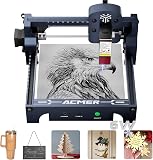 Best CompactACMER S19.5/10View on Amazon
- 4
 Best Large BedTwotrees TTS-20 Max9.5/10View on Amazon
- 5
 Budget PickLonger Ray5 5W9.4/10View on Amazon
- 6
 Longer RAY5 20W Laser EngraverView on Amazon
- 7
 WECREAT Vision 20WView on Amazon
- 8
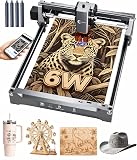 6W Laser Engraver for BeginnersView on Amazon
- 9
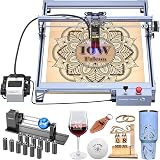 Creality 10W Laser EngraverView on Amazon
- 10
 Longer Laser B1 30W Laser Engraver Cutter with Auto Air AssistView on Amazon
Finding the best industrial laser engraver comes down to matching optical laser wattage, bed dimensions, and safety enclosures to your workshop production requirements. A dependable industrial laser engraver delivers consistent beam focus and rigid motion rails to handle serial engraving across wood, acrylic, leather, and coated metal sheets. This guide compares five desktop and enclosed diode machines from 5W to 20W optical output, examining verified laser wattage, usable work areas, motion speeds, and published safety compliance to determine which tool fits your production bench.
LaserEngraveHQ earns a commission from purchases made through these links, at no extra cost to you. Read our affiliate disclosure.
Quick picks
- Best Overall Creality Falcon A1 Pro: A fully enclosed Class 1 laser with 20W optical diode power, autofocus, HD camera positioning and speeds up to 600 mm/s. Check price on Amazon
- Best Value ATOMSTACK A20 Pro V2: A 20W optical diode engraver with linear guide motion, 400 mm/s rated speed and a stated 1 year warranty. Check price on Amazon
- Best Compact ACMER S1: A lightweight desktop engraver with Class 4 certification, IEC 60825-1 compliance and a stated 12-month warranty. Check price on Amazon
- Best Large Bed Twotrees TTS-20 Max: An extra-large 600 x 600 mm work bed paired with a 20W diode laser and offline memory card carving. Check price on Amazon
- Budget Pick Longer Ray5 5W: A 400 x 400 mm work area with a 3.5-inch touchscreen, motion protection and emergency stop at an entry price. Check price on Amazon
Machines on the list

Creality Falcon A1 Pro 20W Laser Engraver
A fully enclosed Class 1 laser engraver with 20W optical diode power, autofocus, integrated camera positioning and 600 mm/s speed.
Pros
- 20W optical blue diode laser rated to cut 10 mm basswood and 8 mm black acrylic
- Fully enclosed Class 1 design with lid-open halt, internal fan and smoke filtering
- HD camera vision system and Z-axis automatic focusing in 3 seconds
- Rated speeds up to 600 mm/s with smartphone app and touchscreen control
Cons
- No warranty term is stated in the listing
- Title claims 180W output, which is electrical input rather than optical laser power
- The 2W 1064 nm infrared module is not included and requires separate purchase
- Enclosure limits workspace to 460 x 346 mm honeycomb panels, and unit weighs 37.4 lb

ATOMSTACK 20W Laser Engraver
A 20W diode laser engraver built on linear guide rails with a rated 400 mm/s speed and a stated 1 year warranty.
Pros
- 20W optical output power cuts wood and acrylic and engraves coated metal
- Integrated linear guide motion structure with rated speeds up to 400 mm/s
- Spec table states a concrete 1 year warranty with part replacements
- Safety features include a tilt angle sensor beep exceeding 15 degrees and limit switches
Cons
- Work area dimensions are not stated anywhere in the listing title or bullets
- Bundled safety glasses lack an optical density rating and wavelength specification
- Open frame design offers no smoke containment or built-in exhaust fan
- No FDA accession number is published in the listing
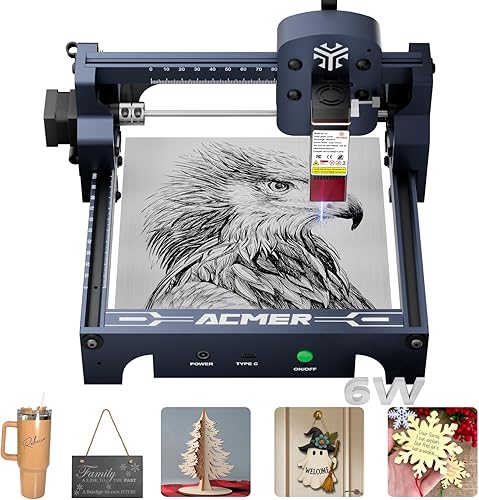
ACMER S1 Laser Engraver Machine
A compact 6W desktop diode laser engraver with Class 4 certification, IEC 60825-1 compliance and a stated 12-month warranty.
Pros
- Listing states Class 4 laser certification and IEC 60825-1 compliance
- Specifies a concrete 12-month warranty and 24/7 customer support
- Fine 0.04 mm laser spot with 455 nm wavelength and 0.01 mm repeatable positioning
- Lightweight 2 kg aluminum frame arrives 99% preassembled for fast setup
Cons
- Compact 130 x 130 mm working area limits project and batch sizes
- 6000mW (6W) optical output is much slower on deep cuts than 20W units
- Open desktop layout provides no integrated fume extraction or enclosure
- No computer-free offline touchscreen or memory card slot stated

Twotrees TTS-20 Max 20000mW Laser Engraver
A 20W diode engraver featuring an extra-large 600 x 600 mm working bed, dual limit homing and standalone memory card carving.
Pros
- Expansive 600 x 600 mm (23.62 x 23.62 inch) bed handles large signs and bulk batches
- High optical power diode with stable output rated at 19.5W or higher
- Standalone offline carving via 4GB memory card, Wi-Fi and USB connectivity
- MKS ESP32-S3 mainboard with dual X/Y limit switches and TMC2209 silent drivers
Cons
- No warranty term is stated in the listing
- Listing contradicts itself on speed, citing 10,000 mm/min in title and 30,000 mm/min in bullets
- Weight is inconsistent, listed as 3.6 kg in bullets and 11.77 pounds in the spec table
- No laser class certification, protective enclosure, or eye protection ratings stated

LONGER Ray5 Laser Engraver and Cutter Machine
A 5W diode laser engraver with a 400 x 400 mm bed, 3.5-inch color touchscreen, motion protection and emergency stop.
Pros
- Generous 400 x 400 mm working bed accommodates standard craft blanks
- Standalone 3.5-inch color touchscreen enables computer-free operation
- Multi-layer safety features including emergency stop, motion protection and overheat detection
- 32-bit ESP32 chipset running at 240 MHz supports rated speeds up to 24,000 mm/min
Cons
- No warranty term is stated in the listing
- 5000mW (5W) optical diode power requires multiple passes for light cutting
- Laser safety class and FDA accession number are omitted from the listing
- Included safety goggles lack stated optical density (OD) and wavelength ratings
Other machines to compare
 Longer RAY5 20W Laser EngraverCheck price on Amazon
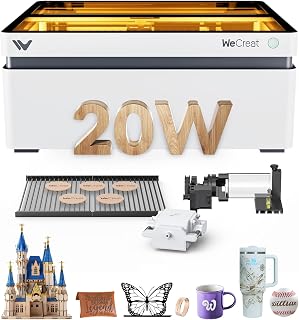 WECREAT Vision 20WCheck price on Amazon
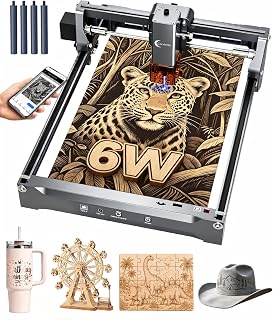 6W Laser Engraver for BeginnersCheck price on Amazon
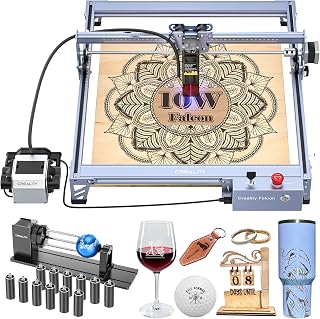 Creality 10W Laser EngraverCheck price on Amazon
 Longer Laser B1 30W Laser Engraver Cutter with Auto Air AssistCheck price on Amazon
Specs compared
| Model | HQ Score | Laser power | Work area | Rated speed | Software | Safety statement | Warranty |
|---|---|---|---|---|---|---|---|
| Creality Falcon A1 Pro | 9.6/10 | 20W diode (180W input) | 460 x 346 mm | 600 mm/s | Falcon Design Space | Class 1, enclosed, lid halt, e-stop | Not stated |
| ATOMSTACK A20 Pro V2 | 9.5/10 | 20W diode | Not stated | 400 mm/s | LightBurn, LaserGRBL, app | Tilt beep (>15°), cover, limit switch | 1 year |
| ACMER S1 | 9.5/10 | 6W diode (48W input) | 130 x 130 mm | 10,000 mm/min | LightBurn, LaserGRBL, ACMER studio | Class 4, IEC 60825-1 | 12 months |
| Twotrees TTS-20 Max | 9.5/10 | 20W diode (≥19.5W) | 600 x 600 mm | 10,000 mm/min (title) / 30,000 mm/min (bullets) | LightBurn, LaserGRBL | Dual limit switches | Not stated |
| Longer Ray5 5W | 9.4/10 | 5W diode | 400 x 400 mm | 24,000 mm/min | LightBurn, LaserGRBL, LaserBurn | E-stop, motion and overheat sensors | Not stated |
Specifications are manufacturer rated, as published on each listing and collected 9 October 2026. Work area reflects the usable engraving bed stated by each maker.
What the listings tell you, and what they leave out
We read five diode laser listings for this roundup. Only two stated a concrete warranty term: ATOMSTACK listed a 1 year warranty in its spec table, and ACMER stated a 12-month warranty in its bullet points. The other three listings omitted warranty terms entirely. Optical power reporting also varied significantly. Creality advertised 180W output in its headline, which represents electrical machine consumption rather than the 20W optical diode beam. ACMER cleanly distinguished its 6000mW optical diode power from 48W machine output, while Twotrees stated optical power at or above 19.5W.
Safety declarations showed sharp differences. Only Creality provided a fully enclosed Class 1 setup with an automatic lid interlock and internal exhaust fan. ACMER stated Class 4 laser certification and IEC 60825-1 compliance. In contrast, Twotrees, ATOMSTACK, and Longer sell open-frame machines that leave beam paths exposed. While Longer and ATOMSTACK include safety goggles, neither listing states optical density ratings or certified wavelength filtering. Treat every open-frame diode unit as a Class 4 device requiring dedicated protective eyewear and room ventilation.
Buying guide: choosing the best industrial laser engraver
Optical output power vs electrical input
When evaluating diode lasers, optical power measures the light energy emitted by the laser diode, while electrical power measures what the power supply draws from the wall. A 20W optical machine like the Creality Falcon A1 Pro or Twotrees TTS-20 Max can slice through 10 mm basswood or 8 mm acrylic in fewer passes. A 5W or 6W optical diode, such as the Longer Ray5 or ACMER S1, excels at fine surface marking, photo engraving, and thin craft cutting, but requires significantly slower speeds or repeated passes on thick stock. Always check for stated optical milliwatts or watts rather than total electrical input wattage.
Work area and frame construction
Engraving bed dimensions dictate the scale of signs, panels, and batch runs you can produce. The Twotrees TTS-20 Max offers an extra-large 600 x 600 mm bed, ideal for oversized wall art and batch engraving. The Longer Ray5 provides a standard 400 x 400 mm format, while the Creality Falcon A1 Pro accommodates 460 x 346 mm panels inside its enclosed cabinet. For small tags and jewelry, the ACMER S1 occupies minimal bench space with its 130 x 130 mm area. Pair large open beds with a dedicated honeycomb bed to support workpieces and reduce backflash scorch marks.
Safety enclosures and laser classifications
Industrial desktop engraving presents optical radiation and air quality hazards. A Class 1 enclosed machine like the Creality Falcon A1 Pro contains the beam during operation, stopping emissions if the lid opens. Open-frame models operate as Class 4 devices where reflected blue light at 450 to 455 nm can permanently damage vision. Protective eye wear must feature an optical density (OD) rating matched to the specific 450 nm wavelength. Review our guide to the best safety glasses for laser engraving before running unshielded hardware.
Control methods, firmware and software
Production workflows benefit from flexible connectivity. All five machines support industry-standard LightBurn and LaserGRBL software. For standalone operation without an attached computer, the Longer Ray5 features a 3.5-inch color touchscreen, the Creality Falcon A1 Pro provides smartphone app control, and the Twotrees TTS-20 Max includes a 4GB memory card for offline carving. Autonomous offline controls protect longer jobs from computer sleep disruptions or connection drops.
Material capabilities and toxic fumes
Diode lasers at 450 to 455 nm process wood, bamboo, genuine leather, dark acrylics, coated stainless steel, and anodized aluminum. However, diode wavelengths pass cleanly through clear or light blue acrylic without marking. Whenever vaporizing organic binders or coated blanks, operate an active exhaust system to expel smoke and fine particulates outdoors.
Diode lasers emit intense blue radiation around 450 nm, and scattered reflections cause irreversible retinal injury. Wear protective goggles certified with adequate optical density (OD) for the 450 nm band whenever operating open-frame machines. Never cut or engrave PVC, vinyl, PVC faux leather, polycarbonate, or ABS, because thermal decomposition produces toxic chlorine gas and hydrochloric acid that destroys human lungs and machine optics. Vent smoke outdoors using an exhaust duct or high-efficiency particulate filter. Refer to official FDA CDRH laser product guidelines and OSHA laser safety standards for workplace compliance.
How the scores add up
Each machine is scored out of 10 on performance, build, value, safety and warranty, with the weights published on our How We Pick page. A spec the listing does not publish scores nothing.
| Product | HQ Score | Perf. /35 | Build /25 | Value /25 | Safety /10 | Warranty /5 |
|---|---|---|---|---|---|---|
| Creality Falcon A1 Pro | 9.6 | 30 | 22 | 19 | 9 | 0 |
| ATOMSTACK A20 Pro V2 | 9.5 | 28 | 20 | 19 | 5 | 2 |
| ACMER S1 | 9.5 | 23 | 18 | 20 | 7 | 3 |
| Twotrees TTS-20 Max | 9.5 | 29 | 19 | 21 | 3 | 0 |
| Longer Ray5 5W | 9.4 | 22 | 19 | 19 | 5 | 0 |
Scores run from 9.2 to 9.8: each product’s point total is placed on that range, so more points always means a higher score.
FAQ: lasers and CNC
How does a laser engraver work?
A laser engraver focuses a coherent beam of light through optical lenses to concentrate high thermal energy onto a tiny focal spot. As the laser module moves along precision guide rails powered by stepper motors, the concentrated heat vaporizes, melts, or chars the top layers of the material, leaving precise engraved lines or complete through-cuts based on chosen speed and power settings.
What is the most versatile laser engraver?
A 20W optical diode machine offers the broadest balance of cutting penetration and fine detail engraving for workshop production. Units like the Creality Falcon A1 Pro or ATOMSTACK A20 Pro V2 provide sufficient optical density to cut 10 mm wood while maintaining small spot dimensions for photographic shading on leather, acrylic, and coated metal.
How much electricity does a laser engraver use?
Desktop diode engravers use modest electrical power compared to heavy machinery. Total machine power draw is determined by electrical input ratings, ranging from 48W machine output on compact units like the ACMER S1 up to 180W on full-featured enclosed systems like the Creality Falcon A1 Pro when internal exhaust fans, cameras, and autofocus motors run alongside the laser module.
What are the different types of laser engravers?
The three main categories are diode lasers, fiber lasers, and CO2 lasers. Blue diode lasers (typically 450 to 455 nm) are economical desktop tools for wood, dark acrylic, and leather. Fiber lasers (1064 nm) specialize in high-speed bare metal marking and industrial engraving. CO2 lasers excel at cutting organic materials, fabrics, and clear acrylic that diode wavelengths cannot process.
What is the best portable laser engraver?
For transport between craft fairs or job sites, lightweight compact units like the ACMER S1 at 2 kg provide the easiest mobility, while open-frame desktop units like the Longer Ray5 (8.78 pounds) offer large work areas with portable frames. Explore our dedicated roundup of portable laser engravers for mobile field marking.
Related: explore our main laser engravers hub, see our guide to the best enclosed laser engravers, and browse diode laser engravers. For commercial planning, read our guide on the best laser engraver for small business, compare technologies in our diode vs co2 laser guide, or start with our laser engraver for beginners guide. Also see our xtool f2 review. Also see our laserpecker lp5 review. Also see our laserpecker lp2 plus review.