Linear Guide Rails vs Round Linear Rods: Which One Should You Buy?
A practical comparison of linear guide rails vs round linear rods for CNC routers, covering axis rigidity, deflection, load capacity, and mounting options.

On this page
Top picks at a glance
As an Amazon Associate I earn from qualifying purchases.
- 1
 VEVOR Linear Rail9.7/10View on Amazon
- 2
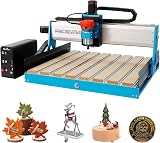 6050 CNC Router Machine9.6/10View on Amazon
- 3
 SainSmart Genmitsu 4040-PRO MAX CNC Router with 710W Trimmer9.6/10View on Amazon
When comparing linear guide rails vs round linear rods for a CNC router or laser machine, linear guide rails are the better choice for heavy cutting, high rigidity, and resisting deflection across long spans, while round linear rods work well for lighter desktop carving where tool loads remain modest and simpler alignment matters most. Guide rails bolt continuously along an aluminum extrusion or steel machine base, which prevents the sag that unsupported round rods can suffer under spindle cutting forces. Round rods offer lower manufacturing complexity and forgive minor frame misalignment, but their circular contact profile flexes under heavy side loads. The sections below walk through each difference step by step so you can choose the right motion system for your machine build or axis upgrade.
LaserEngraveHQ earns a commission from purchases made through these links, at no extra cost to you. Read our affiliate disclosure.
Axis rigidity depends on both the linear motion hardware and the structural frame it bolts to. Upgrading from unsupported rods to supported rails improves cutting accuracy only when your machine frame, gantry risers, and carriage plates are rigid enough to resist flexing under cutting loads.
Step 1: Understand how linear motion bearings support axis loads
Every CNC router axis relies on linear bearings to guide movement while opposing cutting forces generated by spinning router bits. The mechanical distinction between motion styles lies in how their bearing blocks interface with the steel track and machine frame.
Unsupported round linear rods use cylindrical bushings filled with recirculating steel balls that slide over a smooth circular shaft. Because contact between the balls and the round shaft occurs along narrow lines, lateral forces can cause the carriage to deflect. Rectangular profile linear guide rails feature precision-ground ball tracks that grip the rail from multiple angles, allowing a single profile block to handle radial loads, reverse loads, and twisting moments simultaneously. Supported round rails (such as SBR systems) mount a round shaft to a continuous aluminum spine, which stops the shaft from bowing under downward and lateral forces, though the open cylindrical bushings still rely on a paired parallel rail to resist rotational moments.
Step 2: Compare deflection and rigidity across axis spans
Shaft deflection is the primary limitation for unsupported round linear rods on larger machines. When a round rod is anchored only at its ends, the weight of the router spindle combined with cutting resistance causes the rod to bow downward and flex sideways toward the center of travel as the span increases.
Makers encounter this issue when scaling up machine dimensions. For example, Vigorous lists linear motion rods in 8mm x 1000mm (0.315 x 39.37 inches) made of 45# carbon steel with an HRC55-62 hardness, a straightness of 0.1/1000mm or less, and a chrome plated thickness of 0.01mm. Over a long span, an 8mm unsupported rod flexes noticeably under cutting loads, leading to chatter and uneven cut depths. Supported linear guide rails solve this problem by mounting an aluminum support spine beneath the shaft. VEVOR lists supported SBR20 guide rails in lengths of 2000 mm (78.74 inch) and 2200 mm (86.6 in) featuring an HRC58-66 shaft hardness and an electroplated layer of more than 10 μm. Because the rail base bolts directly to a rigid aluminum extrusion along its full span, shaft deflection is constrained by the underlying structure rather than the unsupported rod alone.
Step 3: Evaluate bearing contact area and load ratings
Load capacity determines how aggressively you can push feed rates before your machine loses precision or binds. Published static and dynamic ratings show how much force bearing blocks can endure while maintaining smooth linear travel.
VEVOR publishes verified load ratings for its matching motion hardware kits. For 16 mm hardware, VEVOR lists a dynamic load per block of 774 N and a static load per block of 1180 N on its SFC16 shaft set and its SBR16 guide rail set across a 39.4 in / 1000 mm rail length. Stepping up to 20 mm hardware, VEVOR rates both the SFC20 and SBR20 slide blocks for a dynamic load per block of 882 N and a static load per block of 1370 N. While published load ratings can be identical between open and closed round bearing blocks of matching diameter, supported rail systems resist deflection far better during cutting because the continuous support base anchors the shaft against bending. To resist twisting moments around the axis, round rail designs require parallel rails spaced apart, whereas rectangular profile guide rails can resist moment loads on a single rail due to their profiled ball grooves.
Step 4: Examine machine frame mounting and alignment tolerances
A stiffer linear motion system demands a flatter, more precise mounting surface. Round linear rods are forgiving because end-support blocks allow slight angular misalignment without causing the carriage bearings to bind. This makes unsupported round rods popular on lightweight hobby kits assembled from basic aluminum extrusions.
In contrast, linear guide rails require coplanar mounting surfaces. If parallel rails are bolted to twisted extrusions, the tight internal tolerances of recirculating guide blocks will cause them to bind and wear prematurely. Assembly mass also increases substantially with supported rails. A 39.4 in / 1000 mm SFC20 unsupported round rod kit from VEVOR lists an item weight of 7.3 pounds, whereas a 39.4 in / 1000 mm SBR20 fully supported rail kit from VEVOR lists an item weight of 17.4 pounds, and an 86.6 in / 2200 mm SBR20 rail setup reaches an item weight of 32.8 pounds. Moving that extra mass requires properly sized stepper motors and rigid gantry plates.
Step 5: Weigh maintenance, dust protection, and seal performance
CNC routers produce fine wood dust, abrasive chips, and debris that can quickly degrade recirculating linear bearings if dust bypasses the seals. Evaluating bearing protection helps avoid frequent tear-downs and rebuilds.
Many linear guide blocks feature integrated rubber wiper seals on both ends that help push dust away from the raceways during travel. High-grade profile rails also frequently include internal side seals and grease ports that allow direct lubrication of the ball circuits. By contrast, basic linear ball bushings on round rods often feature simpler lip seals that can allow fine wood and MDF dust to enter the ball tracks over extended use if unserviced. Once abrasive dust enters a ball bushing, the recirculating balls can skid rather than roll smoothly, causing premature wear along the shaft.
Step 6: Match the motion style to your workpiece materials
Your choice between linear guide rails and round rods should match the materials you intend to process. Light carving in softwoods, foam, or thin acrylic generates minimal tool pressure, meaning round linear rods can deliver clean detail without deflecting.
Hardwood carving, deep pocketing in dense plywood, and non-ferrous metal milling benefit significantly from supported linear guide rails. When a spinning end mill cuts dense materials like oak or aluminum, cutting resistance exerts substantial lateral force against the spindle carriage. Unsupported round rods can deflect under these loads, leading to chatter marks, reduced surface quality, or broken bits. For makers planning heavier cuts or frequent spoilboard surfacing, supported guide rails provide the necessary stiffness to keep cuts accurate.
Step 7: Decide when to upgrade an existing machine
Upgrading an existing machine from round rods to linear guide rails is an effective way to boost cut quality, but it requires careful planning. Before purchasing hardware, inspect whether your machine frame has flat mounting channels where rails can bolt directly.
If you are shopping for a new machine rather than retrofitting an old frame, comparing factory axis configurations saves hours of fabrication. Our guide on how to choose a desktop CNC router walks through frame styles and drive configurations. If you are debating between rail types and wheel systems, read our breakdown on linear rails vs V wheels CNC to understand how guide rails compare to roller wheels on V-slot extrusions.
Common mistakes to avoid
- Bolting supported linear guide rails onto warped or twisted aluminum extrusions without checking for coplanar alignment.
- Using long unsupported round rods on wide gantry spans where spindle weight causes center-span sagging.
- Over-tightening linear bearing carriage blocks before verifying that parallel rails run smoothly across their full travel.
- Neglecting bearing lubrication until wood dust packs into the ball tracks and binds the recirculating bearings.
- Expecting guide rails to eliminate cutting chatter on a machine that has flexible acrylic or thin sheet metal gantry plates.
Linear guide rails vs round linear rods: the short version
- Choose supported linear guide rails when cutting hardwoods, plastics, or metals that generate significant tool resistance.
- Use round linear rods for lightweight laser engraving modules or compact desktop carving where cutting forces remain minimal.
- Check axis span distance, because long unsupported round shafts bow downward under the combined weight of the carriage and spindle.
- Ensure your machine frame and mounting plates are flat and rigid enough to align parallel rails without binding the bearing blocks.
- Verify bearing load ratings, stepping up to larger rail diameters when handling heavier spindles or aggressive roughing passes.
- Plan regular maintenance by keeping wiper seals clean and applying grease to recirculating ball circuits.
Choosing the correct linear motion hardware ensures your machine cuts cleanly without chatter, maintains tight tolerances across long runs, and holds up to demanding workshop projects.
FAQ: lasers and CNC
Are linear guide rails more rigid than round linear rods?
Yes. Supported linear guide rails bolt directly to the machine frame along their full length, which prevents the bending and flexing that unsupported round rods can experience when carrying a heavy router spindle.
Can round linear rods handle heavy CNC milling loads?
Unsupported round linear rods generally struggle with heavy milling loads because lateral cutting forces cause long suspended shafts to deflect, which can result in chatter marks and broken cutters. Supported rails or shorter spans are better suited for heavy cutting.
What is the difference between supported and unsupported round rods?
Unsupported round rods mount only at their ends using support blocks, leaving the center of the shaft suspended. Supported round rails attach an aluminum spine beneath the shaft that bolts continuously to an extrusion or machine bed.
Do linear guide rails require more precise machine alignment?
Yes. Linear guide rails have tight internal tolerances, so parallel rails must be mounted coplanar and parallel along their entire length. If the mounting surface is twisted or out of square, the bearing carriages can bind.
Can I replace round linear rods with linear guide rails on a desktop CNC router?
Yes, many makers upgrade desktop routers by mounting supported rails to existing structural extrusions. However, you must ensure your carriage plates and motor mounts provide proper clearance for the new rail profile and block height.
How do I lubricate and maintain linear rails and bearing blocks?
Keep rail surfaces clean by wiping away dust and chips after cutting jobs. Apply light machine oil or grease through bearing grease ports or along the raceways to maintain smooth ball circulation.
Related: the CNC router hub, our best desktop CNC for beginners roundup, and our best CNC router for small business guide. For axis drive comparisons, see linear rails vs V wheels CNC and ball screw vs lead screw CNC. If you are building a custom machine, check out our guide on DIY CNC router kit assembly and CNC router maintenance.