Closed Loop vs Open Loop Stepper CNC: Which One Should You Buy?
A practical comparison of closed loop vs open loop stepper CNC systems, covering encoder feedback, missed steps, motor torque and wiring upgrades.

On this page
Top picks at a glance
As an Amazon Associate I earn from qualifying purchases.
- 1
 FoxAlien Masuter 3S CNC Router Machine with Closed-Loop9.6/10View on Amazon
- 2
 SainSmart Genmitsu 3020-PRO Ultra CNC Router Machine9.7/10View on Amazon
- 3
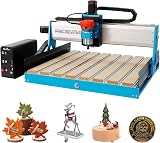 6050 CNC Router Machine9.6/10View on Amazon
- 4
 MKS SERVO42C NEMA17 Closed Loop Stepper Motor Driver LowView on Amazon
- 5
 FoxAlien XE-Ultra 8080 CNC Router Machine with NEMA 23View on Amazon
- 6
 STEPPERONLINE CNC Stepper Motor Driver 1.0-4.2A 20-50VDCView on Amazon
- 7
 Twotrees TTC450 Pro All-Metal CNC Router Machine with NEMA 57View on Amazon
- 8
 AOLDHYY Doesbot GRBL 1.1 A4988 Control Board CNC ControllerView on Amazon
- 9
 CNCTOPBAOS K12-100mm CNC 4th Axis Rotary Table 4 Jaw Chuck w/View on Amazon
When carving hardwood signs, milling custom aluminum brackets, or running batch parts on a workshop router, choosing between a closed loop vs open loop stepper CNC setup determines whether your machine recovers from heavy cutting loads or halts safely before ruining raw stock. Closed loop steppers add rotary encoders that monitor physical shaft movement and allow drivers to correct minor positional lag or trigger an alarm when stalled, making them the preferred choice for commercial production, deep carving passes, and demanding feed rates. Open loop steppers lack position feedback, yet they remain reliable and economical for light hobby carving, decorative relief work, and maker projects where cutting forces stay well within motor torque limits. The sections below compare both motor architectures step by step, covering feedback mechanics, torque behavior, driver wiring, and practical upgrade decisions.
Other machines to compare
 MKS SERVO42C NEMA17 Closed Loop Stepper Motor Driver LowCheck price on Amazon
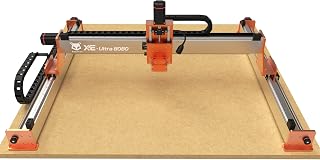 FoxAlien XE-Ultra 8080 CNC Router Machine with NEMA 23Check price on Amazon
 STEPPERONLINE CNC Stepper Motor Driver 1.0-4.2A 20-50VDCCheck price on Amazon
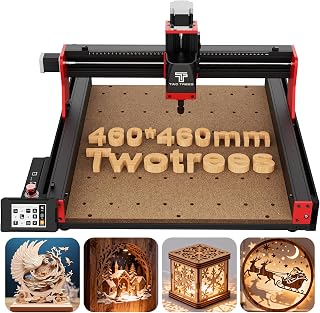 Twotrees TTC450 Pro All-Metal CNC Router Machine with NEMA 57Check price on Amazon
 AOLDHYY Doesbot GRBL 1.1 A4988 Control Board CNC ControllerCheck price on Amazon
 CNCTOPBAOS K12-100mm CNC 4th Axis Rotary Table 4 Jaw Chuck w/Check price on Amazon
LaserEngraveHQ earns a commission from purchases made through these links, at no extra cost to you. Read our affiliate disclosure.
Motor holding torque and driver current describe static magnetic grip rather than cutting force at the tool tip. Machine frame rigidity, lead screw pitch, and spindle power also dictate whether your CNC maintains cutting accuracy under load.
Step 1: Understand how open loop stepper systems operate
In an open loop configuration, the CNC motion controller generates step and direction electrical pulses based on your G-code file. The motor driver translates those pulses into energized coil phases that advance the motor shaft in discrete angular increments. For example, CNCTOPBAOS and STEPPERONLINE specify a 1.8 degree step angle on their motors, while HOCENWAY lists driver support for both 0.9 degree and 1.8 degree motors. Under normal cutting conditions where feed rates and chip loads match machine capabilities, the rotor follows each commanded step cleanly.
However, open loop systems have no positional feedback mechanism. The controller assumes the motor completed every commanded step. If an aggressive feed rate, deep plunge, or dense wood grain creates resistance exceeding motor torque, the rotor slips magnetically behind the commanding field. Because no sensor detects this stall, the machine continues executing subsequent coordinates with a permanent positional offset, ruining the workpiece. FoxAlien lists an open-loop NEMA 23 upgrade kit featuring four motors with DM542 drivers, rated at 2.2 Nm of torque and a maximum moving speed of 8000 mm/min. While capable for hobby carving, open loop setups rely entirely on conservative settings to prevent stalls. Readers troubleshooting lost coordinates can consult our guide on why CNC machines lose steps.
Step 2: Examine how closed loop feedback detects missed steps
A closed loop stepper system mounts an optical or magnetic rotary encoder onto the rear shaft of the motor. The encoder continuously monitors physical rotation and feeds positional data back to a digital driver, which compares actual shaft position against commanded pulses in real time.
When cutting resistance causes the rotor to lag, the driver detects the positional error angle and automatically boosts coil current to supply corrective torque. If the motor catches up within its allowable tracking window, the cut proceeds without losing synchronization. If a severe mechanical jam or tool collision prevents correction, the driver trips an alarm signal to halt machine motion immediately, saving your workpiece and router bit. CNCTOPBAOS publishes a closed-loop NEMA 23 kit featuring a 1000-line optical encoder, a 32-bit DSP driver, and a 200 KHz pulse response frequency with microsteps up to 51200 microsteps per revolution. STEPPERONLINE integrates encoders providing 1000 PPR, translating to 4000 CPR across quadrature decoding, on its NEMA 23 packages for exact tracking. For compact machinery, HOCENWAY lists the MKS SERVO42C NEMA 17 package with a 14-bit magnetic encoder supporting 1 to 256 microstep subdivisions. For comparisons with industrial servos, see our breakdown of stepper motor vs servo motor CNC systems.
Step 3: Compare holding torque, travel speed, and operating temperatures
Standard open loop stepper drivers supply a fixed, preset operating current whenever an axis moves, regardless of whether the cutter is engaging dense hardwood or traversing through open air. Because the driver cannot sense actual cutting resistance, it supplies full configured run current throughout motion, generating steady heat in the motor coils.
Closed loop drivers use field-oriented control or dynamic current regulation to adjust current based on real-time mechanical resistance. When an axis moves with minimal load, current drops, allowing motors to run noticeably cooler and quieter. When cutting resistance increases, the driver supplies maximum current up to its rated peak to maintain synchronization. Manufacturer data reflects these torque bands across motor sizes: STEPPERONLINE lists NEMA 23 closed-loop motors rated at 1.2 Nm (169.97 oz.in) and 3.0 Nm (424.92 oz.in), alongside a NEMA 24 motor rated at 4.0 Nm and a NEMA 34 package delivering 12.0 Nm (1699.34 oz.in). Regarding speed ratings, HOCENWAY rates its NEMA 17 closed-loop package up to a maximum speed of 1000 RPM, while FoxAlien rates its open-loop NEMA 23 kit for rapid travel up to 8000 mm/min. If choosing a machine platform before upgrading motors, review how to choose a desktop CNC router.
Step 4: Evaluate wiring complexity, power supplies, and driver integration
Upgrading to closed loop requires updating wiring and power infrastructure. Common open loop stepper packages, such as the 4-lead configurations from FoxAlien, connect directly via motor coil leads. In contrast, closed loop motors require those coil wires plus a dedicated multi-conductor encoder cable that returns position signals to the driver.
Routing these extra lines requires adequate cable drag chain space and proper shielding to prevent spindle electrical noise from causing false alarms. STEPPERONLINE provides 1.7 m motor and encoder extension cables and an RS232 debugging cable with its CL57T and CL86T packages, while HOCENWAY includes a 60 cm 6-pin data cable with its NEMA 17 unit. Supply voltage also plays a major role in dynamic performance, as higher voltages help overcome motor coil inductance at elevated speeds. CNCTOPBAOS specifies DC 24 to 50 V input on its 4.2 A driver, while STEPPERONLINE supports 24 to 48 VDC on its CL57T driver and 24 to 80 VDC on its CL86T driver. Connecting the driver alarm signal into your controller emergency-stop loop ensures the router pauses instantly if an axis stalls. For wiring diagnostics, see our guide on CNC router troubleshooting.
Step 5: Decide whether your workshop workflow warrants an upgrade
Choosing between motor types depends on your materials, run times, and workshop priorities. Open loop steppers remain practical and economical for hobby routers focused on craft signs and shallow relief carving. For makers starting out with machines in our guide to the best desktop CNC for beginners or dedicated signage machines in our guide to the best CNC router for sign making, open loop motors deliver reliable accuracy when feeds remain conservative.
Closed loop steppers excel during long 3D carving runs, deep pocketing passes in hardwoods, or commercial batch production where a lost step ruins expensive stock. Commercial shops operating machines like those in our guide to the best CNC router for small business rely on closed loop feedback to run faster feeds with total confidence. However, remember that closed loop motors cannot fix mechanical problems like loose pulleys or frame flex; ensure your mechanical foundation is sound before upgrading.
Common mistakes to avoid
- Assuming closed loop steppers eliminate mechanical backlash or structural frame flex.
- Routing unshielded encoder cables alongside spindle power lines, triggering false position alarms.
- Failing to wire the driver alarm output to the controller emergency-stop circuit.
- Installing oversized motors that twist lightweight aluminum frames under high acceleration.
- Neglecting drag chain clearance when adding encoder wiring bundles to an existing router.
Closed loop vs open loop stepper CNC: the short version
- Open loop steppers execute pulse commands without feedback, making them affordable but vulnerable to undetected stalls under excessive load.
- Closed loop steppers integrate rotary encoders to detect position lag and boost current dynamically.
- Closed loop systems run cooler during light motion and maintain higher usable torque across cutting speeds compared to fixed-current open loop drives.
- Upgrading requires routing separate encoder cables, verifying drag chain space, and wiring driver alarm lines.
- Open loop fits light hobby carving, while closed loop provides vital security for commercial work and expensive hardwoods.
Open loop delivers great value for hobbyists on a budget, while closed loop offers essential protection against ruined workpieces during production carving.
FAQ: lasers and CNC
Can closed loop steppers completely prevent lost steps on a CNC router?
Closed loop steppers detect and correct rotational lag during temporary cutting resistance, preventing minor stalls from ruining position. However, if a severe mechanical bind or collision occurs that completely stalls the rotor, the driver trips an alarm and halts the machine, preventing the tool from continuing off path.
Do closed loop steppers run cooler than open loop motors?
Yes, during motion. While modern open loop drivers reduce current during idle periods, they supply full configured current continuously while moving, regardless of cut depth. Closed loop drivers regulate current dynamically based on actual cutting resistance, keeping motors noticeably cooler during light carving passes.
Can I replace open loop steppers without buying a new CNC controller?
It depends on your controller design. If your motion board uses standalone external drivers or socketed driver modules, as HOCENWAY notes for boards where drivers are not soldered on, closed loop drivers connect to standard step, direction, and enable lines. However, compact desktop boards with drivers soldered directly to the PCB require an external breakout board or upgraded controller to wire external drivers and alarm lines.
Are closed loop steppers as fast as brushless servo motors?
No. While closed loop steppers maintain torque better at speed than open loop units, their torque still drops at high RPM compared to brushless servos. They provide an economical middle ground between open loop simplicity and servo performance.
Do desktop CNC routers need closed loop motors for wood carving?
Desktop machines carving softwoods and craft projects generally do not need closed loop motors. When cutting feeds and depth of cut stay within machine capabilities, standard open loop steppers deliver clean and accurate cuts.
What happens when a closed loop stepper motor exceeds its position tolerance?
When cutting resistance prevents the motor from correcting its position within a configured error limit, the driver signals a fault. When wired to your controller, this halts axis motion and pauses the job, protecting your cutter and workpiece.
Related: the CNC router hub, the desktop CNC router hub, best desktop CNC for beginners, best CNC router for sign making, and best CNC router for small business. Also see our guide on why CNC machines lose steps and our comparison of stepper motor vs servo motor CNC systems.



