Types of Paint Brushes and What Each Is For
Flat, angle, round, filbert, fan, liner and chip brushes each suit a different job; this guide explains what each type of paint brush does and how to pick the right brush for your project.

On this page
Top picks at a glance
As an Amazon Associate I earn from qualifying purchases.
- 1
 GENERAL'S The Masters Brush Cleaner and Preserver9.7/10View on Amazon
- 2
 The Masters Non-Toxic Paint Brush Cleaner and Preserver9.6/10View on Amazon
- 3
 U.S. Art Supply Brush Cleaner and Restorer9.5/10View on Amazon
Types of paint brush come down to shape, size and bristle. A flat brush lays down broad coats, an angle brush cuts a clean line along trim, a round brush handles curves and detail, and a fan brush blends and softens edges. The sections below explain each shape, the sizes makers list for it, and the job it suits, so you can pick the right brush before you open a can of paint.
LaserEngraveHQ earns a commission from purchases made through these links, at no extra cost to you. Read our affiliate disclosure.
Types of Paint Brush by Shape
Most paint brushes fall into a few shape families. Flat brushes have a straight edge and cover broad, flat areas. Angle brushes, also called sash brushes, have bristles cut at a slant and suit cutting in along edges. Round brushes come to a point and suit curves, outlines and detail. Filbert brushes have a flat body with a rounded tip, which suits blending and soft edges. Fan brushes spread bristles into a wide fan for blending and dry-brush effects. Liner brushes, also called rigger brushes, have long, thin bristles for fine lines. Dagger brushes taper to a sharp point for long strokes.
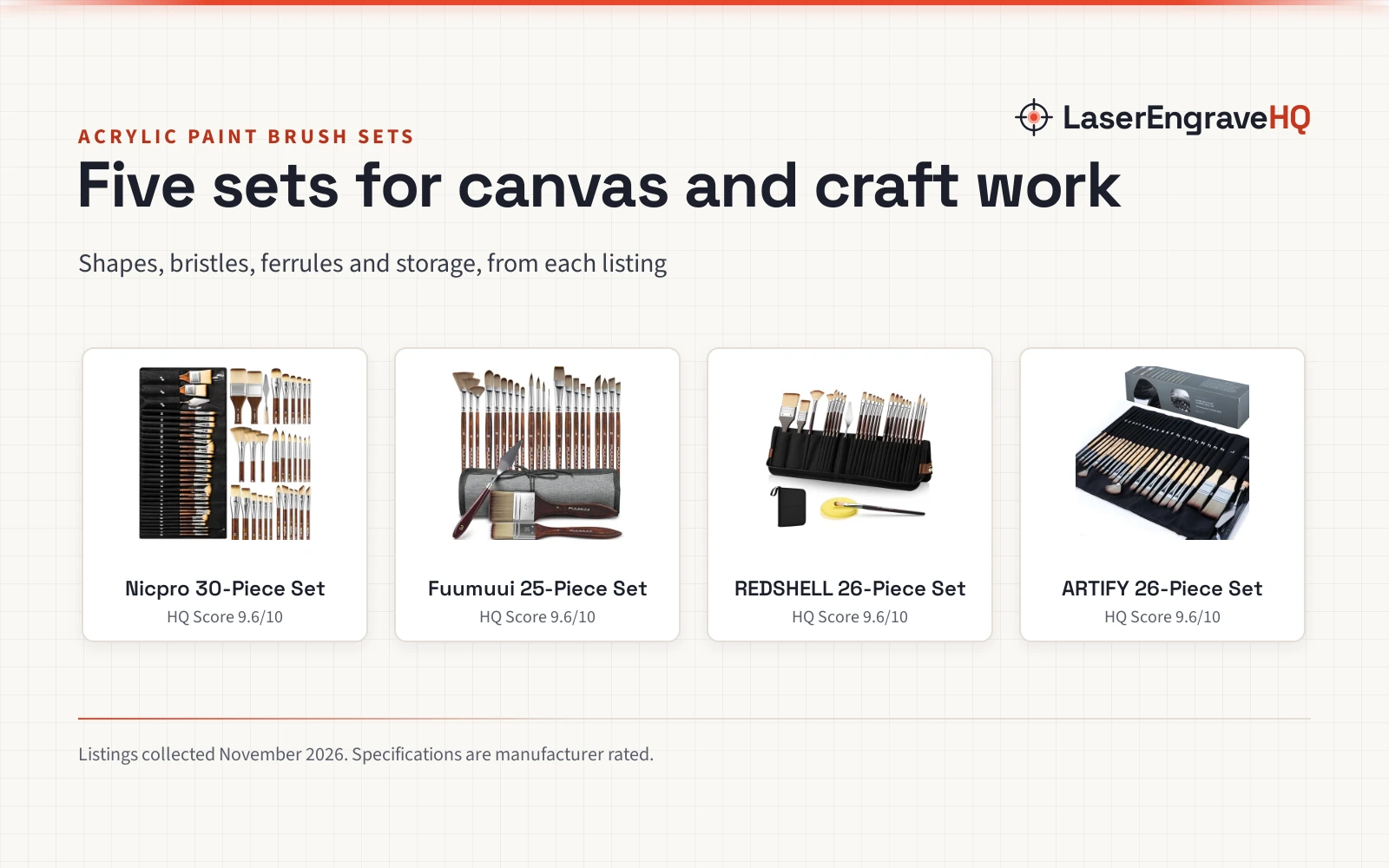
Artist sets often bundle several shapes together. A Nicpro set lists 12 brushes in flat, round, filbert, angle and liner shapes, with flat sizes 7 and 12, round sizes 2, 5 and 9, filbert sizes 3, 8 and 10, angle sizes 4, 6 and 11, and a liner in size 1. A larger Nicpro set lists 30 pieces across flat, round, filbert, angle, fan, dagger, cat’s tongue, liner and spatula shapes, while a Fuumuui set lists 24 brushes in 9 shapes, plus a palette knife, for 25 pieces in all.
Flat and Angle Brushes for Walls and Trim
Flat and angle brushes do most of the work on walls, trim, cabinets and doors. A Pro Grade 5-piece set lists a 1 inch flat, a 1.5 inch angle, a 2 inch flat, a 2 inch angle stubby and a 2.5 inch angle brush, with synthetic bristles and softwood handles, for latex and oil-based paint, primer, sealer and wood stain. The maker lists the 2 inch angle stubby for tight cabinet interiors, window sashes, inside corners and detailed trim, while the 1 and 2 inch flat brushes suit broad coverage on walls, furniture, shelving, doors, fences and decks.
A Bates Choice 6-pack lists 3 flat and 3 angled brushes, with 1, 1.5 and 2 inch flat bristles and 1.5, 2 and 2.5 inch angled bristles, with treated wood handles and natural bristles, for stain and interior painting. A Pro Grade 3-pack lists 2 inch angled brushes with medium stiff bristles for cutting in and detail work. Angle brushes earn their keep at edges, where the slanted tip follows a ceiling line or a baseboard with less masking. For a full room, a Pro Grade 10-piece kit lists 9 inch and 4 inch roller frames with 1/2 inch nap covers, plus a 1 inch flat, a 1.5 inch angle and a 2 inch angle brush.
Round, Filbert and Liner Brushes for Detail Work
Round brushes suit outlines, curves and small areas where a flat edge would leave a hard line. Filbert brushes suit blending on canvas and softening an edge. Liner brushes suit long, thin lines such as lettering, veins on a leaf or rigging on a model ship. The Nicpro 12-brush set above covers all three shapes, and the Nicpro 30-piece set lists round tips in sizes 14, 8, 6, 4, 2 and 0, filbert tips in sizes 14, 10, 8, 6, 4 and 2, and a liner in size 1.
Fan, Dagger and Other Artist Shapes
Fan brushes suit blending skies, grass and water, and dry-brushing texture onto a surface. Dagger brushes suit long, tapering strokes such as petals and leaves. Bright brushes have short, flat bristles for short, controlled strokes, while mop brushes have soft, round heads for blending washes. A KEVIN&SASA set lists 15 brushes in 6 kinds of heads: 1 fan, 2 detail, 2 mop, 3 bright, 3 round and 4 angle brushes, with nylon hair and silicone crystal penholders, for oil, acrylic and watercolor painting. The Fuumuui 25-piece set lists fan, dagger and cat tongue shapes among its 9 shapes, and the maker claims 40% higher pigment capacity than standard brushes for its synthetic bristles.
Chip Brushes and Foam Brushes for Stain and Glue
Chip brushes are low-cost, disposable utility brushes for stain, varnish and glue, where cleaning a good brush is not worth the effort. A Pro Grade 24-piece chip brush set lists 6 each of 2, 1.5, 1 and 0.5 inch brushes, with 1.5 inch long natural china bristles and wood handles, in 4 widths. A Bates Choice 19-piece roller kit lists a 2 inch foam brush alongside 1 inch, 1.5 inch angle and 2 inch angle brushes, plus 9 inch and 4 inch roller frames and a 6 by 9 foot drop cloth.
Brush Sizes: What the Numbers Mean
Brush size is the width of the bristle head in inches. Small brushes in the 0.5 and 1 inch range suit detail, edges and small pieces. Mid-size brushes in the 1.5 and 2 inch range suit trim, cabinets and doors, and a 2.5 inch angle brush suits larger edges. Roller covers use a different measure: the 1/2 inch nap listed on the Pro Grade roller kit suits smooth to semi-rough surfaces. Artist brushes use size numbers instead of inches: the Nicpro 30-piece set lists flat tips from size 2 to size 14, round tips from size 0 to size 14, and a liner in size 1.
Bristles and Handles
Synthetic bristles suit latex paint and water cleanup, while natural bristles suit oil-based paint and oil-based stain. The Pro Grade sets list synthetic filaments for latex and oil-based paint, primer, sealer and stain, and the Bates Choice 6-pack lists natural bristles for oil-based paint and latex stain. Nicpro artist sets list synthetic nylon bristles for acrylic, oil, watercolor, gouache and tempera, and Fuumuui lists synthetic bristles with double-crimped copper ferrules. Handles matter on long jobs: the listings here show softwood, solid wood, birch wood and treated wood handles, and a double-crimped ferrule, listed on the Nicpro and Fuumuui sets, holds the bristles in place.
How to Choose the Right Brush
Start from the job, not the set. For walls and ceilings, pair a roller with a 2 inch angle brush for cutting in. For trim, cabinets and doors, a 1.5 or 2 inch angle brush and a 1 or 2 inch flat brush cover most edges and faces. For canvas and craft work, a set with flat, round, filbert, angle, fan and liner shapes covers broad washes, blending and fine lines with a compact set. For stain, varnish and glue, chip brushes in the 0.5 to 2 inch range keep your good brushes out of messy work. If you paint with an airbrush as well, a brush still earns its place for edges and touch-ups; the airbrush vs paint brush for miniatures comparison shows where each tool fits. For spray work, see the best airbrush cleaner guide and the best airbrush picks.
Care After Painting
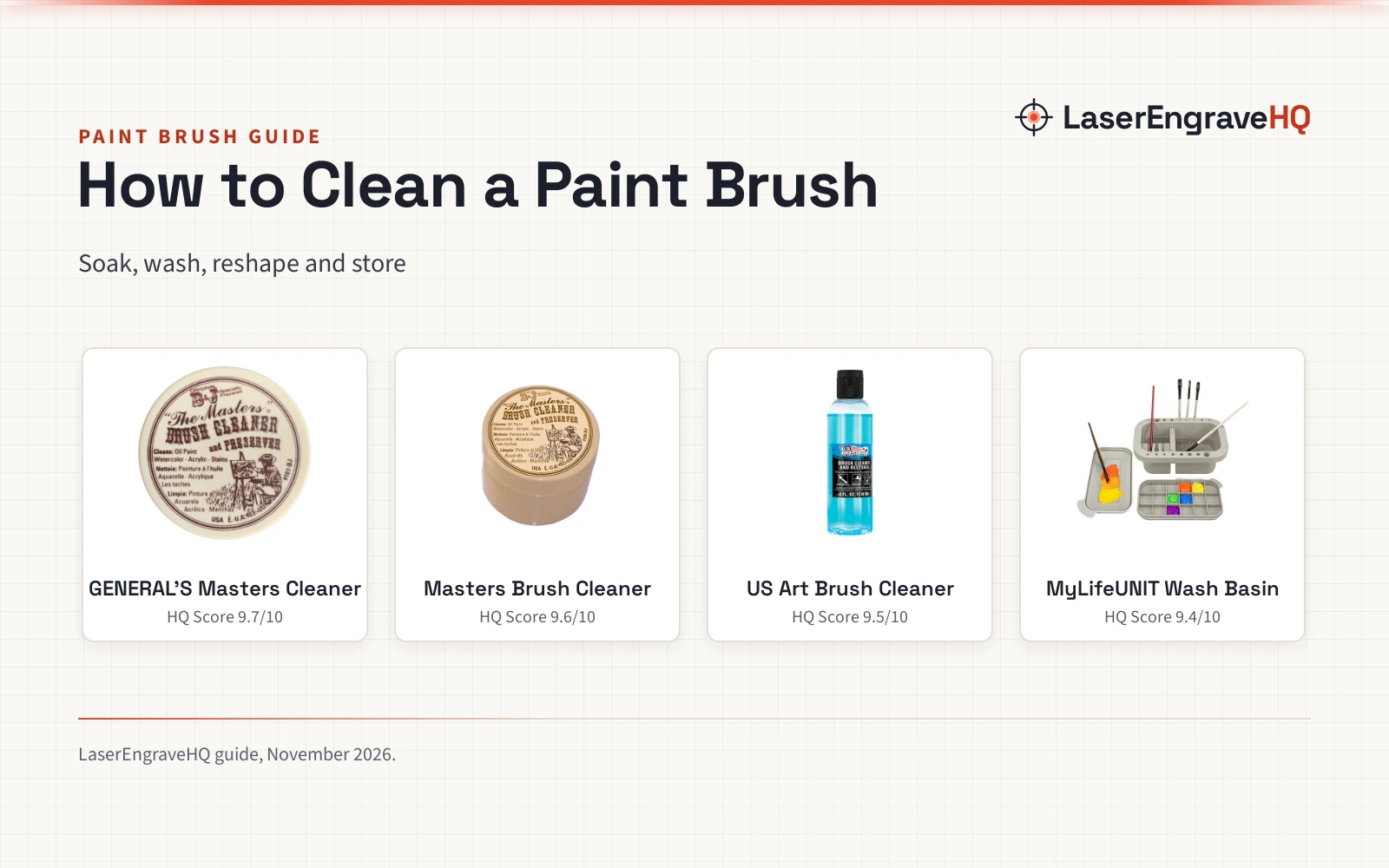
Clean brushes soon after use so paint does not set in the bristles. Rinse with warm water after water-based paint, reshape the bristles and air dry, as the Nicpro care card in the 12-brush set describes. The how to clean a paint brush guide walks through the steps. For oil paint, see the how to clean oil painting guide, and for acrylic paint, the is acrylic paint water based guide explains cleanup. Store brushes bristle-up or flat, with the bristles reshaped, so they keep their edge for the next job.
FAQ: lasers and CNC
What is the most versatile type of paint brush?
A 2 inch angle brush covers the widest range of house painting jobs: cutting in along trim, ceilings and corners, plus detail work on cabinets and doors, as listed on the Pro Grade 3-pack and 5-piece set.
What size paint brush should I use for trim?
A 1.5 or 2 inch angle brush suits trim, with a 1 inch flat brush for small faces. The Bates Choice 6-pack lists 1.5, 2 and 2.5 inch angled brushes and 1, 1.5 and 2 inch flat brushes for this kind of work.
What is the difference between a flat brush and an angle brush?
A flat brush has a straight edge for broad, even coats on walls, furniture and doors. An angle brush has bristles cut at a slant, so the tip follows a ceiling line, a door casing or a baseboard and leaves a clean edge.
Can I use the same brush for latex and oil-based paint?
Yes, if the bristles suit both. The Pro Grade sets list synthetic filaments for latex and oil-based paint, primer, sealer and stain, while the Bates Choice 6-pack lists natural bristles for oil-based paint and latex stain.
How should I clean a paint brush after use?
Rinse with warm water after water-based paint, reshape the bristles and air dry, as the Nicpro care card describes. The how to clean a paint brush guide walks through the steps in full.
Related: the painting and airbrush hub and airbrush vs paint brush for miniatures. Also see the best airbrush picks.