Pottery Painting Ideas: Mugs, Plates and Planters
Pottery painting ideas for mugs, plates and planters, with a simple workflow from a bare piece to finished, sealed work.


On this page
Pottery painting ideas start with the piece in front of you: a plain mug, plate, planter or tile turns into a finished object when you pick a design that fits its shape, choose paint made for pottery, and work in thin layers with drying time between them. The sections below walk through the whole workflow, from choosing a piece to sealing the finished work, with design ideas for makers at any skill level.
As an Amazon Associate I earn from qualifying purchases. LaserEngraveHQ earns a commission from purchases made through these links, at no extra cost to you. Read our affiliate disclosure.
This guide gives no drying times, firing schedules or paint ratios, since those depend on the paint, clay and piece you use. Follow the instructions on the paint and clay you buy, and let each layer dry before you add the next.
Choose a piece that fits the design
Start with bisque ware, which is pottery that has been fired and left unglazed, with a matte surface that takes paint well. Mugs, plates, bowls, planters and tiles all make good starting pieces, and a smooth surface is easier to paint than a heavily textured surface. Look for a piece with no chips or cracks, and wipe away dust with a damp cloth before you paint, so the paint grips the surface.
Shape guides the design. A tall mug suits vertical stripes or a wrap-around scene, a wide plate suits a central motif with a border, and a planter suits leafy patterns or a name band near the rim. Tiles suit small square designs that work as coasters or wall pieces. Pick the piece with the design already in mind, rather than painting a design that fights the shape.
Pick paint made for pottery
Underglaze is the classic choice for pottery: it goes on bisque ware, takes a clear glaze over it, and survives firing. Acrylic paint sits on the surface and suits decorative pieces that will not be washed often or used for food. Spray paint made for ceramic pots suits planters and outdoor pieces. See our best underglazes for pottery guide and our best spray paint for ceramic pots guide for paint options.
When a piece will hold food or drink, use paint and glaze rated food safe, and follow the instructions from the maker of the paint and glaze. When in doubt, keep the piece decorative. Brushes matter as much as paint: soft brushes suit smooth coats, while stiff brushes suit stippling and dry-brush texture. See our best brushes for ceramic glaze guide for brush options.
Plan the design before you paint
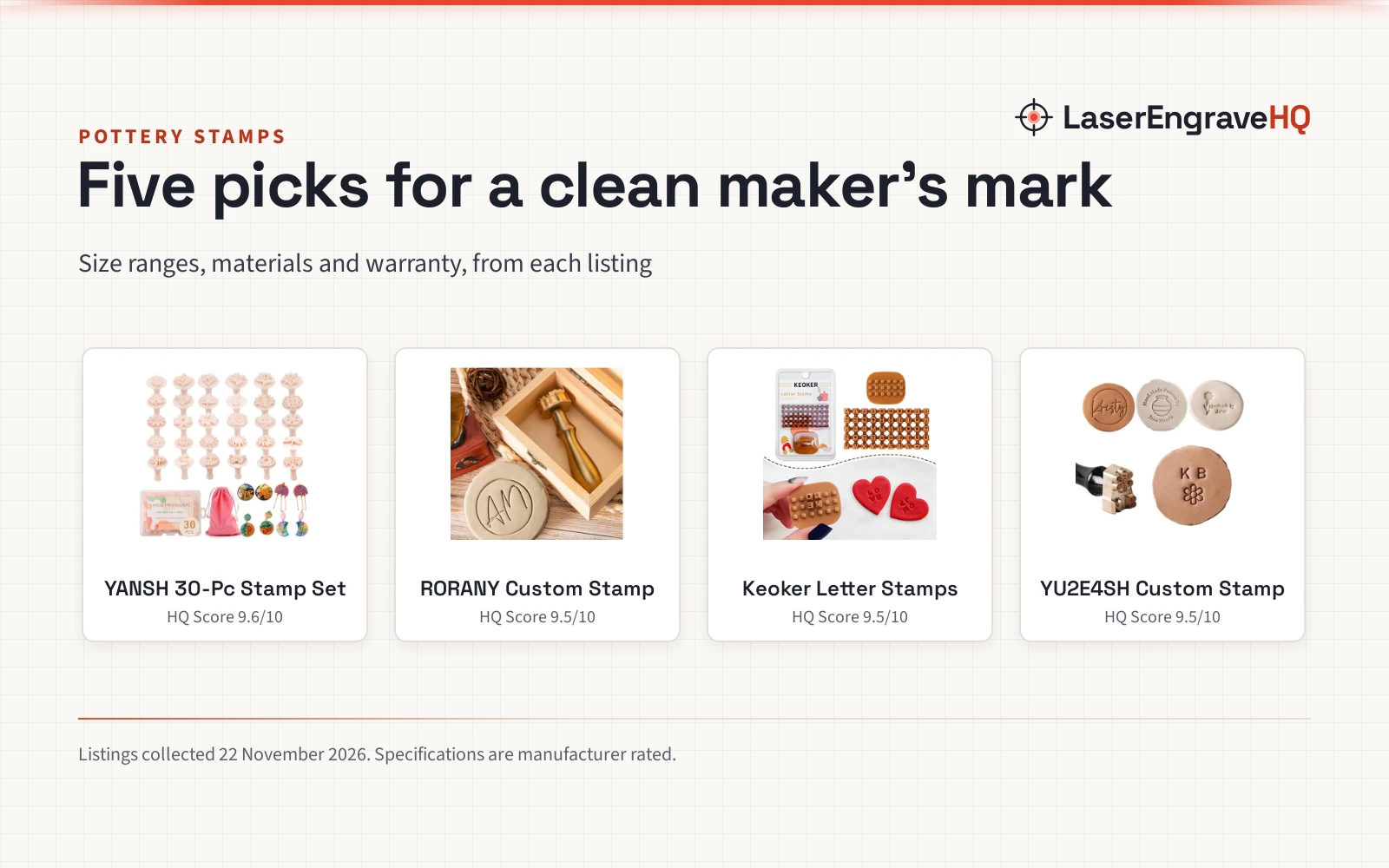
Sketch the design on paper, then hold the sketch against the piece to check the scale and placement. Pencil lines on bisque burn away when the piece is fired, so you can sketch lightly on the piece itself and paint over the lines for glazed work. Tape gives clean edges for stripes and bands, stencils give repeatable shapes, and stamps give quick motifs for borders.
Simple designs paint best. Stripes, dots, checks, leaves, waves and geometric shapes all read well on curved surfaces, while fine lettering and detailed scenes need a steady hand and a flat area. Leave breathing room around the design: a crowded surface looks busy, and a plain rim or base frames the painted area.
Paint in thin layers
Thin coats dry evenly and build color without pooling or cracking. Load the brush lightly, paint with smooth strokes, and let each coat dry before adding the next coat. A clear glaze can shift how underglaze colors look, so try the pairing on a spare piece before you paint the real one. Work from light colors to dark colors, so a dark line can cover a light mistake.
Keep water nearby for rinsing brushes, and change the water when it turns cloudy. Wipe the rim and base clean as you go, so drips do not dry on the unpainted areas. A damp cloth wipes away wet mistakes, while dry mistakes need a gentle scrape with a wooden tool.
Add detail and finish the surface
Detail work goes last, after the base coats dry. A fine brush adds outlines, dots, lettering and small motifs. Sgraffito, scratching through a coat of underglaze to show the clay beneath, adds line work without a brush. Let the piece dry fully before you handle it for glazing or sealing.
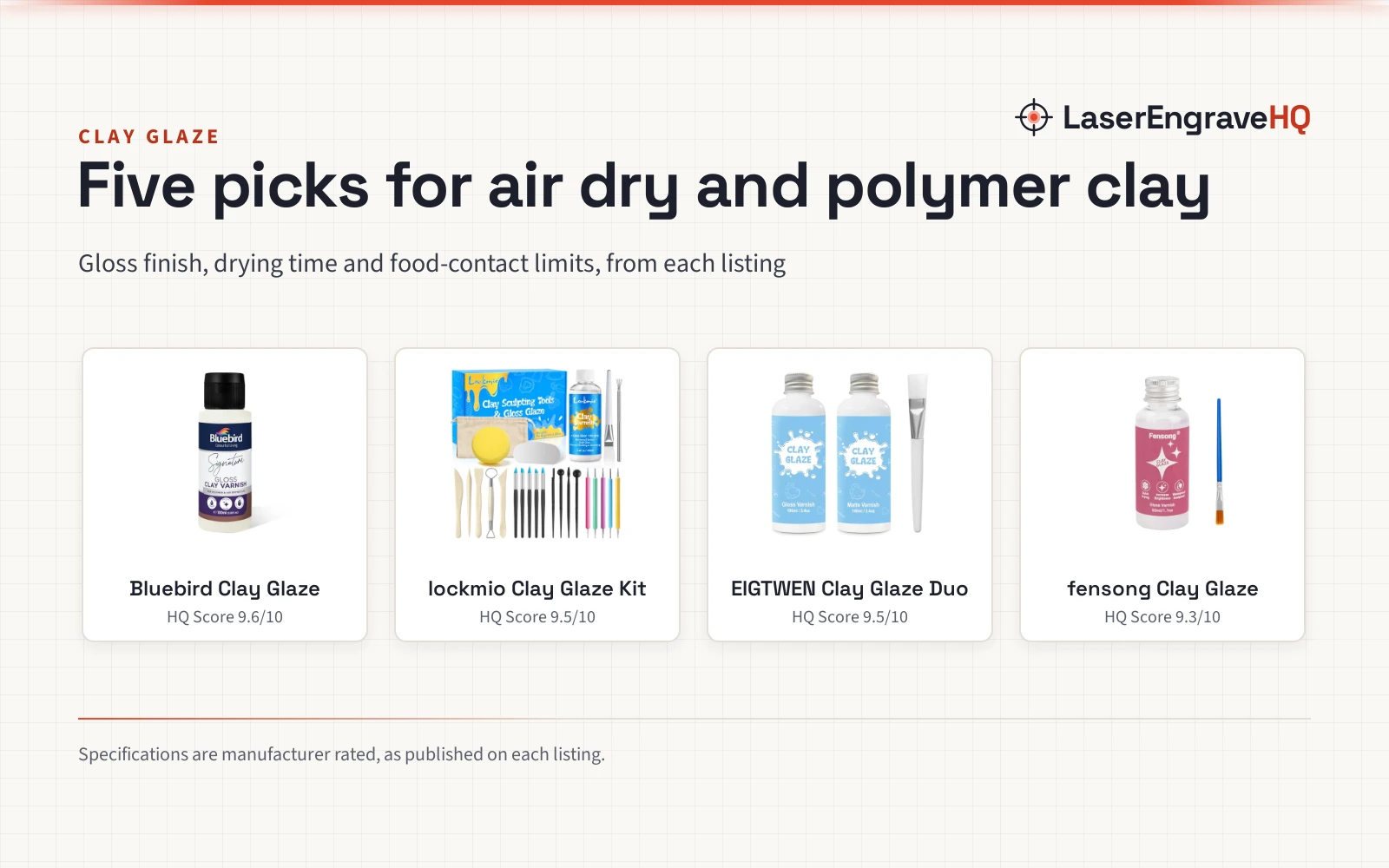
Seal the work with a clear glaze or a sealant made for pottery, following the instructions from the maker. Glaze gives a smooth, washable surface. Pieces painted with acrylic need a sealant rather than a kiln firing, and decorative pieces can stay unglazed if the paint is sealed.
Pottery painting ideas to try
These designs suit makers at any skill level, and each design works on a plain piece with basic brushes:
- Striped mug: vertical stripes in alternating colors around a tall mug, with a plain band at the rim.
- Floral plate: a central flower with leaves radiating toward a dotted border.
- Herb planter: leafy sprigs down the sides, with the herb name painted near the rim.
- Tile coasters: a small geometric pattern on each tile, in a matching set for the table.
- Animal faces: a cat, fox or owl face on a round plate, with ears following the rim.
- Geometric bowl: triangles and arcs in bold colors around the outside of a bowl.
- Name plate: a name or short word in the center, framed by a simple border.
- Seasonal ornament: snowflakes, leaves or blossoms on a small hanging piece for the season.
Common mistakes to avoid
- Painting on a dusty piece, so the paint lifts as it dries.
- Painting thick coats that pool, crack or peel.
- Skipping drying time between coats, so colors muddy together.
- Using acrylic on a piece that will hold food or drink.
- Leaving paint off the plan for the rim and base, so the piece looks unfinished.
- Sealing before the paint dries, so the sealant clouds or smears.
Pottery painting ideas: the short version
- Choose a smooth bisque piece with no chips or cracks.
- Pick paint made for pottery, and food-safe paint and glaze for pieces that hold food or drink.
- Sketch the design on paper, then lightly on the piece.
- Paint in thin layers, letting each coat dry.
- Add detail last, then seal with a clear glaze or sealant.
- Follow the instructions from the maker of the paint and glaze.
FAQ: lasers and CNC
What paint should I use on pottery?
Underglaze is the standard choice for pottery that will be glazed and fired, while acrylic suits decorative pieces that will not hold food or drink. Spray paint made for ceramic pots suits planters and outdoor pieces. See our best underglaze for pottery guide for options.
Do I need to fire painted pottery?
It depends on the paint. Underglaze and glaze need firing in a kiln to set, while acrylic paint and sealant dry in the air. Follow the instructions on the paint you buy.
Can I paint pottery without a kiln?
Yes, with paint made for air-dry pieces: acrylic paint on bisque ware, sealed with a sealant made for pottery, gives a finished decorative piece without firing. Pieces that will hold food or drink need glaze and firing, so keep kiln-free work decorative.
How do I keep the paint from peeling?
Start with a clean, dust-free piece, paint in thin layers, let each coat dry, and seal the finished work. Thick coats and a dusty surface are the usual causes of peeling.
Can painted pottery hold food and drink?
Only when the paint and glaze are rated food safe and the piece is finished as the maker instructs. When in doubt, keep the piece decorative and use it for display or dry storage.
Related: see our pottery and glass guides, our pottery for beginners ideas, our ceramic glaze ideas and our clay types guide. Also see our pottery ideas handbuilding. Also see our clay ideas easy.