Diamond vs Carbide Burrs: Which One Should You Buy?
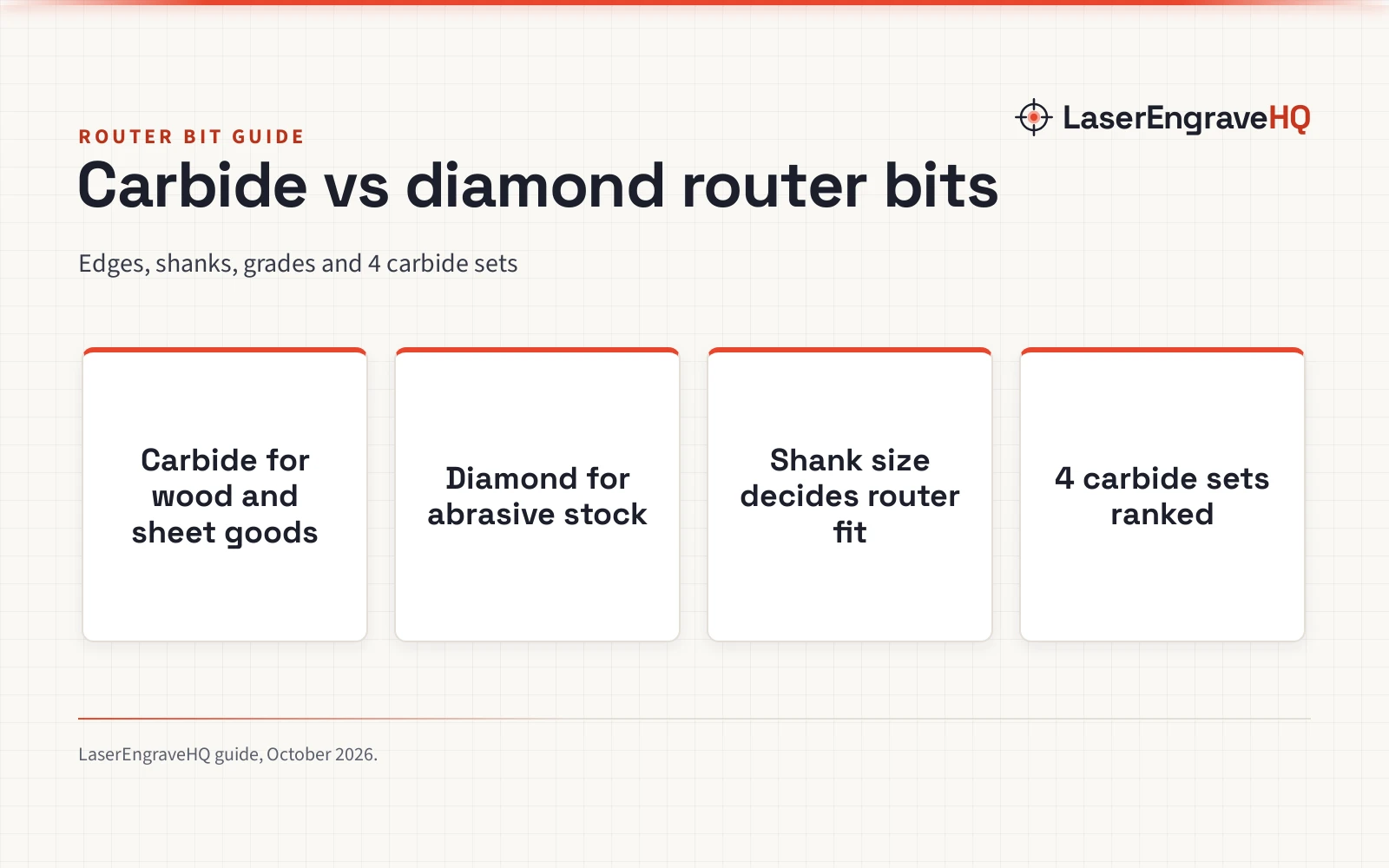
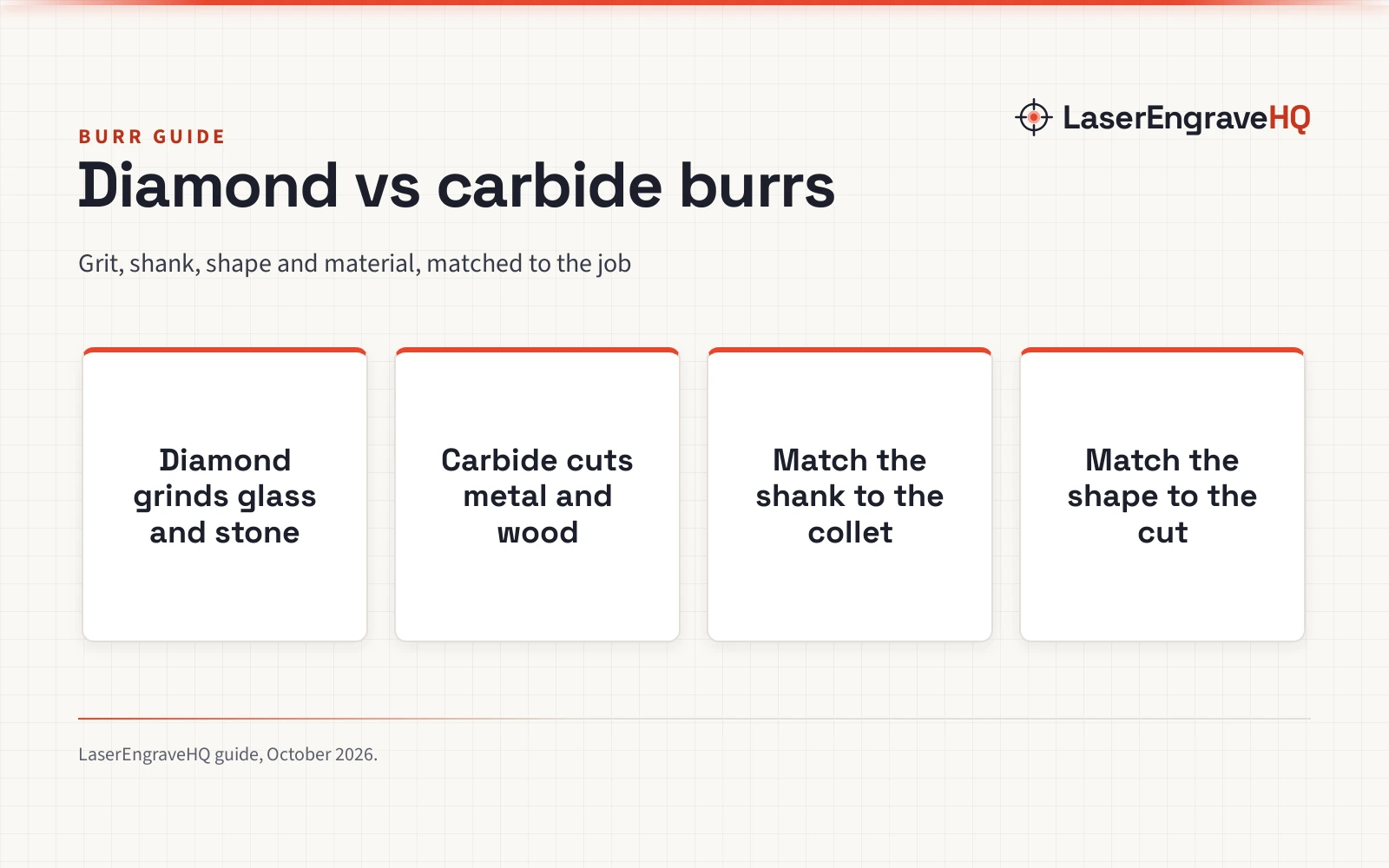
Diamond vs carbide burrs: diamond burrs grind glass, stone, ceramic and tile with grit, while carbide burrs cut metal and wood, so match the burr to the material.

On this page
Top picks at a glance
As an Amazon Associate I earn from qualifying purchases.
- 1
 Drilax Diamond Drill Bits for Stone9.6/10View on Amazon
- 2
 Tungsten Carbide Rotary Burr Set for Dremel9.7/10View on Amazon
- 3
 shengbenhao Diamond Grinding Burr Bit Set Compatible with9.6/10View on Amazon
- 4
 JINGLING Diamond Grinding Bits 1mm Spherical Head CarvingView on Amazon
- 5
 JINGLING Diamond Ball Burrs 2mm Round Grinding Bits StoneView on Amazon
- 6
 20Pcs 120 Grit Diamond Grinding Bit Set 1/8 Inch ShankView on Amazon
- 7
 Rannb Diamond Burr Bits Cylinder Shape Carving BitsView on Amazon
- 8
 Big Horn 19391 5PC Diamond Burr SetView on Amazon
- 9
 SE 30-Piece Set of Titanium-Coated Diamond BurrsView on Amazon
A stone carving that needs a smooth edge, a glass piece that needs a fine line, a metal blank that needs shaping: the diamond vs carbide burrs question starts with the material in your hand. The short answer: diamond burrs grind hard, brittle materials like glass, stone, ceramic and tile with grit, while carbide burrs cut metal and wood with fluted teeth, so match the burr to the material and the shank to the collet. The diamond sets here also list metal, wood and alloys among their uses, so check the material list on the set you buy.
Other machines to compare
 JINGLING Diamond Grinding Bits 1mm Spherical Head CarvingCheck price on Amazon
 JINGLING Diamond Ball Burrs 2mm Round Grinding Bits StoneCheck price on Amazon
 20Pcs 120 Grit Diamond Grinding Bit Set 1/8 Inch ShankCheck price on Amazon
 Rannb Diamond Burr Bits Cylinder Shape Carving BitsCheck price on Amazon
 Big Horn 19391 5PC Diamond Burr SetCheck price on Amazon
 SE 30-Piece Set of Titanium-Coated Diamond BurrsCheck price on Amazon
LaserEngraveHQ earns a commission from purchases made through these links, at no extra cost to you. Read our affiliate disclosure.
The gear section below shows diamond burr sets only. The carbide side is compared on the material it suits, not on a listing.
How diamond burrs work
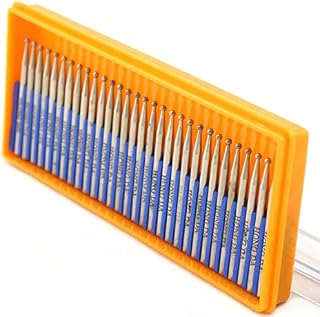
A diamond burr grinds rather than cuts. Grit bonded to the head wears the material away a little at a time, which suits hard, brittle work like glass, stone, ceramic and tile. The JINGLING set states premium type diamond coated in grit 120, and the HOMEIDOL set states 120 grit diamond particle; the Luo ke sets state premium diamond particles with no grit figure. One set here directs water cooling: the HOMEIDOL set says to add water during grinding to cool the bits and extend the life of the bits. Shapes set the cut: ball heads round out curves and hollows, while cylinders, cones, needles, ovals and inverted cones cover flat areas, edges and fine detail. The Luo ke ball set covers 1mm, 2mm and 3mm heads in one set, and the JINGLING set is a single 2mm ball head in a pack of 30.
How carbide burrs work
A carbide burr cuts with fluted teeth, so it shears material away instead of wearing it down. That suits metal and wood, where the burr needs to remove material and leave a shaped edge. Carbide burrs come in the same head shapes as diamond burrs, ball, cylinder, cone and needle, and the same rule holds: the shape sets the cut. Where a diamond set directs water to stay cool, carbide burrs ask for a light touch and a clear path for chips, so the teeth keep cutting instead of clogging.
Match the shank to the collet
The shank is the part the collet grips, and a burr only runs true when the shank matches the collet. The sets here use shank sizes of 3/32″ and 1/8″. The JINGLING set uses a 2.35mm shank, marked 3/32″, and the Luo ke ball set uses a 3/32″ shank, and both fit a 3/32″ collet, while the HOMEIDOL set and the Luo ke various-shape set use a 1/8″ shank. The Luo ke various-shape set notes to replace the rotary collet with 3.2mm before using, so check the collet before the first run. A burr with the wrong shank will not run true, so match the figure on the listing to the collet on the tool.
Match the shape to the job
Shape decides what the burr can reach. Ball heads suit curves, hollows and rounded carving: the JINGLING set and the Luo ke ball set are ball heads only. Mixed-shape sets cover more ground: the HOMEIDOL set lists cylindrical, oval, T shape and ball shape heads, and the Luo ke various-shape set lists ball, cylinder, cone, needle, oval and inverted cone heads. Pick the shape that matches the cut, and keep the unused shapes aside for the next job.
The gear: 4 diamond burr sets
The gear section shows diamond burr sets only, mixed-shape sets first, then ball-only sets.
- HOMEIDOL 50-piece set: 120 grit diamond burrs in cylindrical, oval, T shape and ball shape heads, with a 1/8″ shank, for stone, resin, jewelry, rock, ceramic, glass, metal, wood, clay, jade, marble and granite. Add water during grinding.
- Luo ke various-shape set: 30 pieces with a 1/8″ shank in ball, cylinder, cone, needle, oval and inverted cone heads, for gemstone, glass, rock, tile, marble, agate and ceramics, in a sturdy plastic box. Replace the collet with 3.2mm before using.
- Luo ke ball set: 30 pieces with a 3/32″ shank in 1mm, 2mm and 3mm ball heads, for jade, rock, agate, ceramics, glass, tile and gemstone.
- JINGLING ball set: 30 pieces with a 2.35mm shank and a 2mm spherical head in premium 120 grit diamond, for glass, jewelry, shells, ceramic tiles, alloys and stones. Total length 45mm.
Common mistakes to avoid
- Grinding dry when the listing says to add water: the HOMEIDOL set says to add water during grinding to cool the bits.
- Mixing a 1/8″ shank with a 3/32″ collet, or the reverse: match the shank figure to the collet before the first run.
- Picking a ball head for a flat cut: match the shape to the cut.
- Pressing hard to speed the work: let the grit do the grinding and keep the burr moving.
- Forgetting the collet swap: the Luo ke various-shape set notes to replace the rotary collet with 3.2mm before using.
Diamond vs carbide burrs: the short version
- Match the burr to the material: diamond grinds glass, stone, ceramic and tile, while carbide cuts metal and wood; the diamond sets here also list metal, wood and alloys.
- Match the shank to the collet: 3/32″ or 1/8″ here.
- Match the shape to the cut: ball for curves, cylinder for flat areas, cone and needle for edges and detail.
- Add water when the set you buy directs it, as the HOMEIDOL set does.
- Start with a mixed-shape set when the job needs more than one profile.
Everything after that is repetition: swap shapes as the cut changes and keep the burrs stored between jobs.
FAQ: lasers and CNC
What grit are the diamond burrs here?
The JINGLING set states premium type diamond coated in grit 120, and the HOMEIDOL set states 120 grit diamond particle. The Luo ke sets state premium diamond particles with no grit figure.
Which shank sizes do the diamond sets use?
3/32″ and 1/8″. The JINGLING set uses a 2.35mm shank, marked 3/32″, and the Luo ke ball set uses a 3/32″ shank, while the HOMEIDOL set and the Luo ke various-shape set use a 1/8″ shank.
Do diamond burrs need water?
The HOMEIDOL set says to add water during grinding to cool the diamond bits and extend the life of the bits.
What materials do the diamond burrs here cover?
Glass, stone, ceramic, tile, jade, marble, granite, resin, wood, clay, metal, gemstone, agate, shells, carbide and rock, across the 4 sets. Check the material list on the set you buy before the first run.
What shapes come in the sets?
Ball, cylinder, cone, needle, oval, inverted cone and T shape, across the sets. The JINGLING set and the Luo ke ball set are ball heads only, while the HOMEIDOL set and the Luo ke various-shape set mix shapes.
Related: the CNC tooling hub, best carbide burrs for rotary tool and best tungsten carbide burr bits. Also see our best engraving bit for glass. Also see our rotary tool vs laser engraver.