Air Dry Clay vs Pottery Clay: Which One Should You Buy?
Air dry clay hardens in air with no kiln, while pottery clay is fired in a kiln; this guide compares drying, firing and finishing so you can pick the clay for your project.

On this page
Air dry clay vs pottery clay comes down to heat. Air dry clay hardens on its own in room air, so a finished piece never needs a kiln. Pottery clay is made to be fired, and the kiln is what turns soft clay into a hard ceramic piece. The sections below compare drying, firing and finishing, and the gear in this guide, so you can pick the clay that fits the project in front of you.
As an Amazon Associate I earn from qualifying purchases. LaserEngraveHQ earns a commission from purchases made through these links, at no extra cost to you. Read our affiliate disclosure.
The ACTIVA listing states a layer ¼ inch thick dries in 24 hours, and the Jovi listing states drying time depends on the thickness of the craft.
Air dry clay vs pottery clay: the short answer
Choose air dry clay when there is no kiln in the plan. It hardens in air, it needs no oven or microwave, and it suits hand building, moulds, reliefs, ornaments, handprints and miniatures. Choose pottery clay when the piece must be fired, since the kiln gives fired clay its strength. The clay types guide at clay types covers the wider family of clays for makers.
- Air dry clay: hardens in room air, no kiln needed, ready to paint once dry.
- Pottery clay: shaped for firing, hardened in a kiln.
The VIBRATITE clay in this guide is sold as air dry clay, yet the maker states it can be air dried or fired in a kiln, with a kiln firing range of 2012 ℉ to 2462 ℉ (1100 ℃ to 1350 ℃). The ACTIVA clay can be kiln dried if desired.
What air dry clay is
Air dry clay hardens in air, with no baking and no kiln. The Jovi clay in this guide is a no-baking clay made from a soft, clay-like base with natural ingredients, and the maker states it is non-toxic, odorless and gluten-free. It dries naturally in 24 hours depending on the thickness of the craft, and once dry it can be painted or decorated with water-based paint, acrylic tempera, special markers or a glossy varnish finish. The maker also states it is CPSIA-certified.
The ACTIVA clay is a self-hardening, natural earth clay with an ultra-fine grain and exceptional plasticity, made for studio, classroom and hobby use. A layer ¼ inch thick dries in 24 hours, and the maker states it hardens with minimal shrinkage, will not crumble, and can be carved, sanded and drilled when hard. The VIBRATITE clay is a natural air dry clay of porcelain, also known as kaolin, with a fine and uniform texture, and the maker states it is non-toxic and odorless. It suits hand building, wheel throwing and classroom art projects.
What pottery clay is
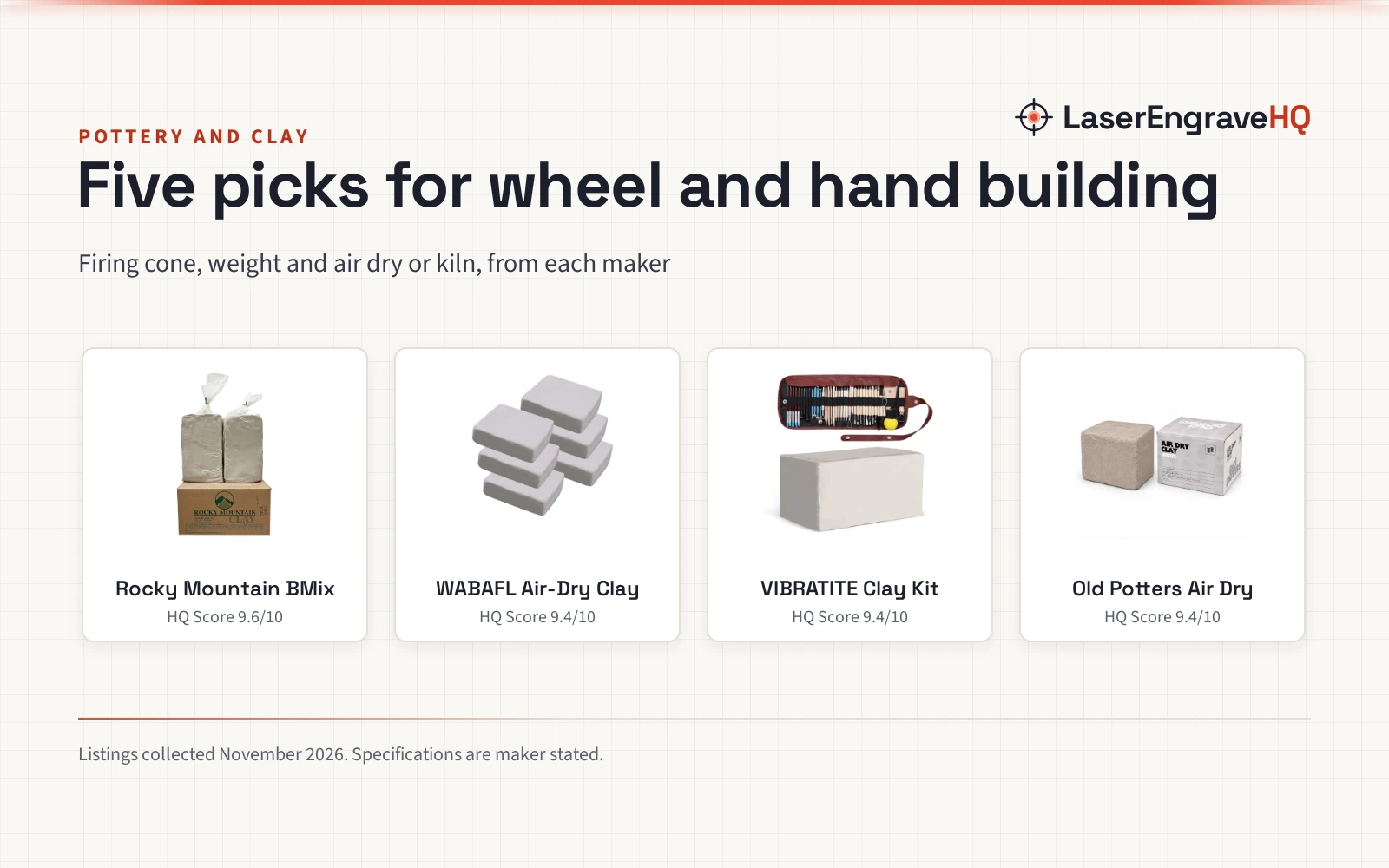
Pottery clay is the clay that is shaped for the kiln. It is thrown on the wheel or built by hand, then dried and fired, and the firing is what turns soft clay into a hard ceramic piece. The VIBRATITE listing states a kiln firing range of 2012 ℉ to 2462 ℉ (1100 ℃ to 1350 ℃) for ceramic clay. Without a kiln, pottery clay dries but never becomes a hard ceramic piece. The best clay for pottery guide compares clays for wheel and hand building.
The 4 products in this guide
The 4 products below are ordered from the strongest listing to the weakest, judged on the stated specs, materials and safety details. Each earns its place for a different kind of project.
ACTIVA Supreme Artist’s Air-Dry Clay, 2.2 lbs
The ACTIVA clay leads this guide on drying and safety detail. It is a white, self-hardening, natural earth clay in a 2.2 lbs (1 kg) pack, with an ultra-fine grain and exceptional plasticity for studio, classroom and hobby use. A layer ¼ inch thick dries in 24 hours, and the maker states the clay hardens with minimal shrinkage, will not crumble, and can be carved, sanded and drilled when hard. The maker states it is non-toxic and non-staining, meets ASTM D4236, is ACMI Certified, and is made in Spain.
VIBRATITE 10LB Air Dry Clay
The VIBRATITE clay is the bulk pick in this guide, with 10 pounds of white ceramic sculpting clay in the pack. The maker describes it as porcelain, also known as kaolin, with a fine and uniform texture, and states it is non-toxic and odorless. It is made for hand building, wheel throwing, DIY crafts and classroom art projects, and the maker states it can be directly air dried or fired in a kiln, with a kiln firing range of 2012 ℉ to 2462 ℉ (1100 ℃ to 1350 ℃). After air drying, the maker advises storing the finished craft in a cool dark place.
Jovi Air Dry Clay, 4 units
The Jovi set is the classroom pick, with 4 clay bars of 2.2 lb each and 8.8 lb in total, in white. It is a ready-to-use, no-baking clay that dries naturally in 24 hours depending on the thickness of the craft, and once dry it can be painted with water-based paint, acrylic tempera or special markers, or given a glossy varnish finish. The maker states it is non-toxic, odorless and gluten-free, CPSIA-certified, and recommended for boys and girls of 3 years and up, and for adults.
lockmio Air Dry Clay Glaze and 25 Clay Tools
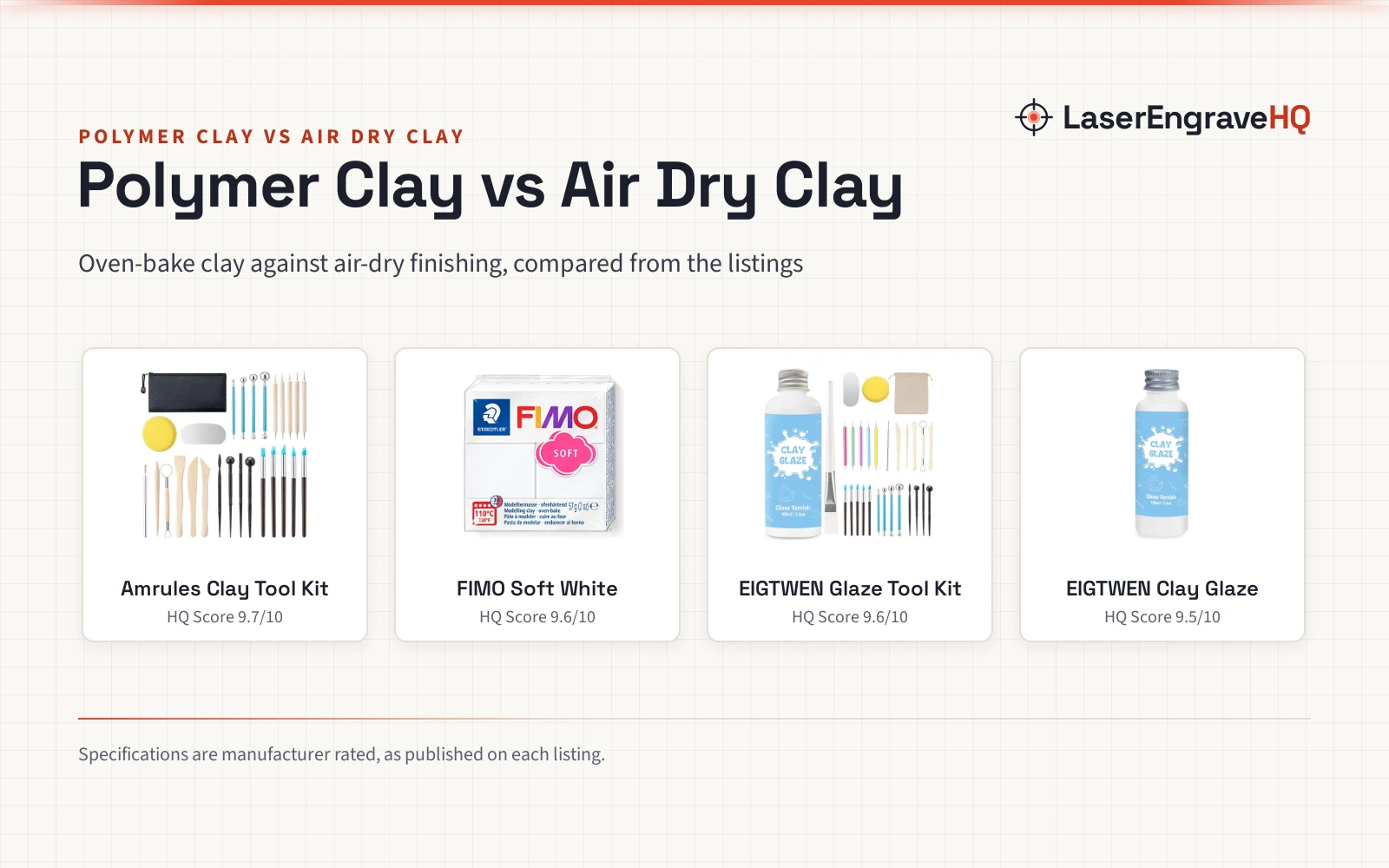
The lockmio kit is the finishing pick, not a clay: it combines a 3.4FL OZ high-gloss glaze with 25 clay tools for stippling, carving, molding and shaping. The glaze forms a transparent layer that the maker states prevents cracking, scratches and daily wear, for air dry clay, polymer clay and modeling clay. Apply it in a thin, even coat, repeat 2–3 times while waiting 30–40 minutes between coats, and allow 24 hours for a durable, glossy finish. The tools are sharp, so handle them with care, and adult supervision is recommended.
How to choose between air dry clay and pottery clay
Start with the kiln question. With no kiln in the plan, air dry clay is the practical pick: it hardens in room air and it is ready to paint once dry. When the piece must be fired for strength, pottery clay is the pick, and the kiln becomes part of the plan. For classroom work, the Jovi set is made for 3 years and up and is CPSIA-certified. For fine detail, the ACTIVA listing states an ultra-fine grain and that the clay can be carved, sanded and drilled when hard.
Finishing air dry clay
Finish only a fully dry piece. The Jovi listing states the clay can be painted or decorated with water-based paint, acrylic tempera, special markers or a glossy varnish finish once dry. The lockmio glaze goes over a painted clay project that has dried fully: apply it in a thin, even coat, repeat 2–3 times while waiting 30–40 minutes between coats, and allow 24 hours for a durable, glossy finish.
Safety notes for clay work
Read the safety notes on each listing before starting. The lockmio tools are sharp, so handle them with care, and adult supervision is recommended when working with these precision tools. The Jovi clay is stated as non-toxic, odorless and gluten-free, and the ACTIVA and VIBRATITE clays are stated as non-toxic. Kiln work needs ventilation, eye protection and a heat-proof surface.
FAQ: lasers and CNC
Does air dry clay need a kiln?
No. Air dry clay hardens on its own in room air, and the Jovi listing states it is a no-baking clay that avoids the need for high-temperature ovens or microwaves.
Can air dry clay go in a kiln?
Some can. The VIBRATITE listing states the clay can be directly air dried or fired in a kiln, with a kiln firing range of 2012 ℉ to 2462 ℉ (1100 ℃ to 1350 ℃), and the ACTIVA listing states the clay can be kiln dried if desired.
How long does air dry clay take to dry?
The listings state 24 hours for a thin layer: the ACTIVA listing gives 24 hours for a layer ¼ inch thick, and the Jovi listing gives 24 hours depending on the thickness of the craft.
Can you paint air dry clay?
Yes, once it is dry. The Jovi listing states the clay can be painted with water-based paint, acrylic tempera, special markers or a glossy varnish finish. The lockmio glaze goes over a painted, fully dry piece in 2–3 coats, with 30–40 minutes between coats.
Is air dry clay made for children?
The Jovi listing states the clay is recommended for boys and girls of 3 years and up, and that it is non-toxic, odorless and gluten-free, and CPSIA-certified. The lockmio tools are sharp, so adult supervision is recommended when children use them.
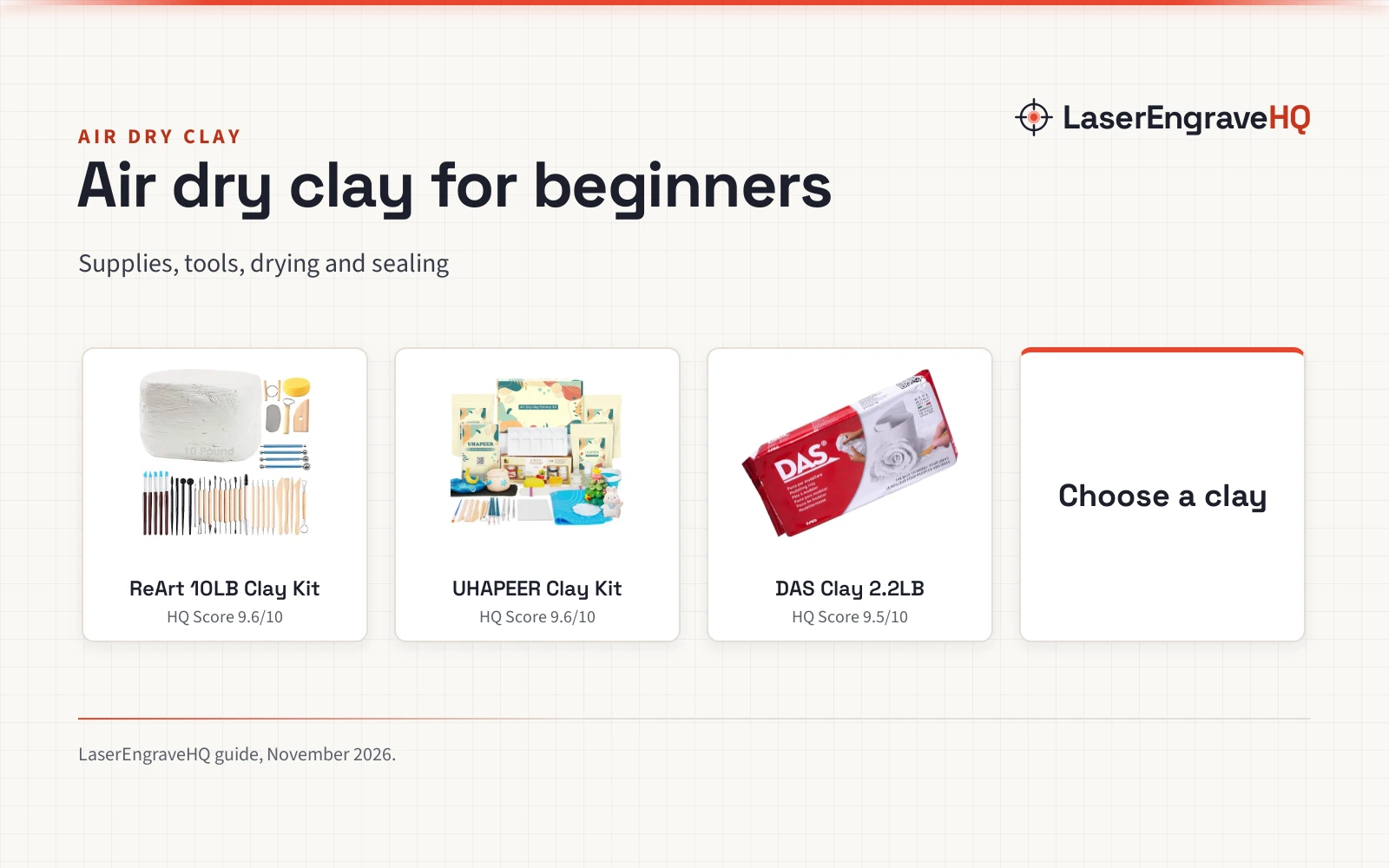
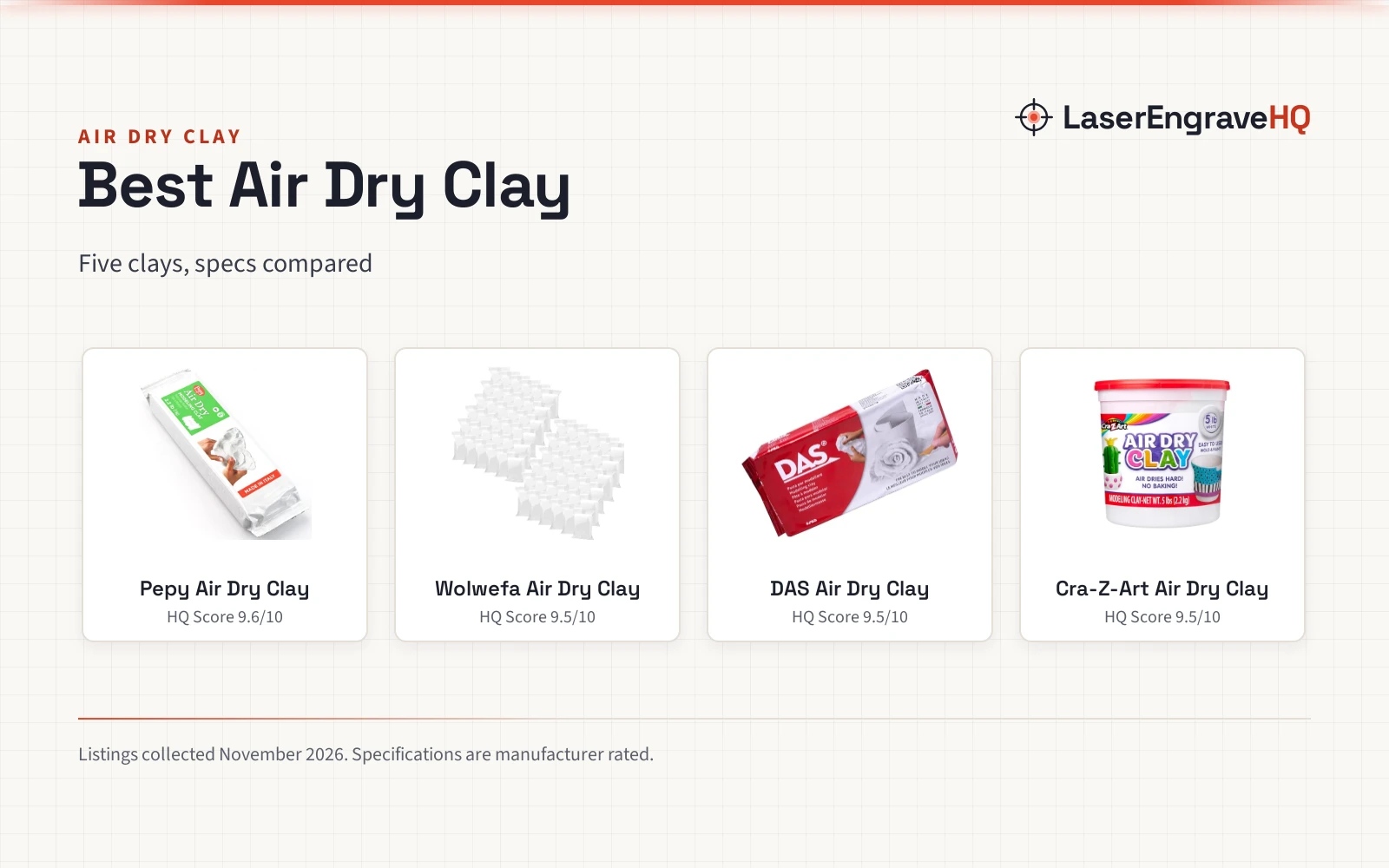
Related: the clay types guide, best air dry clay and best clay for pottery. Also see our air dry clay for beginners. Also see our stoneware vs porcelain clay.