Oak vs Maple for CNC: Which Wood Should You Cut?
Oak vs maple for CNC compared: bold oak grain for carved signs, smooth maple for fine detail, plus red oak boards sized for small projects.

On this page
Top picks at a glance
As an Amazon Associate I earn from qualifying purchases.
- 1
 SpeTool Carbide Single Flute CNC Router Bits 1/8" Cutting9.7/10View on Amazon
- 2
 SainSmart Genmitsu 3020-PRO Ultra CNC Router Machine9.7/10View on Amazon
- 3
 Ball Screw SFU1605 1050mm CNC Parts RM1605 16mm with Metal9.7/10View on Amazon
- 4
 Red Oak Lumber BoardView on Amazon
- 5
 Red Oak PlanksView on Amazon
- 6
 Wood-All White Oak Wood Veneer SheetView on Amazon
- 7
 White Oak Lumber BoardView on Amazon
- 8
 Edge Supply White Oak Wood Veneer Sheet Rift CutView on Amazon
- 9
 Natural White Oak Wood Veneer SheetsView on Amazon
Oak vs maple for CNC comes down to the look you want on the finished piece and the level of detail in the design. Oak brings bold, open grain and warm color that makes carved signs and rustic panels read well from across a room, while maple brings a quieter, more even surface that keeps fine lettering and small relief details crisp. For bold carved work where grain is part of the design, oak is the stronger pick; for fine detail where the carving itself should carry the design, maple is the stronger pick. The rest of this guide breaks down grain, workability and finishing, then looks at red oak boards sized for signs and small parts so you can match the wood to the job.
Other machines to compare
 Red Oak Lumber BoardCheck price on Amazon
 Red Oak PlanksCheck price on Amazon
 Wood-All White Oak Wood Veneer SheetCheck price on Amazon
- White Oak Lumber BoardCheck price on Amazon
 Edge Supply White Oak Wood Veneer Sheet Rift CutCheck price on Amazon
 Natural White Oak Wood Veneer SheetsCheck price on Amazon
LaserEngraveHQ earns a commission from purchases made through these links, at no extra cost to you. Read our affiliate disclosure.
Verdict: Pick oak for bold grain and rustic carved signs; pick maple for fine detail and clean, lightly finished work.
Oak vs maple for CNC: the short answer
The two woods suit different designs, so the right pick depends on what the carving needs to show. Oak shows its grain loudly, which suits signs, panels and rustic decor where texture is welcome. Maple stays quiet, which suits lettering, logos and detailed relief where every line needs to read cleanly.
- Oak: open, highly variable grain with a classic look in brown to reddish brown. The listing for the red oak blanks below describes a high density hardwood with an open grain pattern that varies from board to board.
- Maple: a tighter, more even grain and a paler surface that keeps small carved lines legible and takes a light finish without fighting the design.
- Signs and panels: oak, for grain that adds character at a distance.
- Lettering and fine relief: maple, for detail that stays crisp up close.
For a wider look at carving stock, see our best wood for CNC carving guide, and for another maple pairing, read maple vs birch for CNC.
Oak for CNC: grain, color and workability
Red oak earns its place in CNC work through grain and color. The maker of the blanks featured below describes red oak as a high density hardwood with an open and highly variable grain, and a classic look in brown to reddish brown. That variation is the point for many makers: each carved sign comes out with its own pattern, and the grain adds depth that a plain surface cannot. The trade-off is that fine lines can get lost where the grain runs strong, so oak rewards bold lettering, deep relief and designs with room to breathe.
Both red oak boards in the gear section arrive kiln dried and sanded, which matters for CNC work. Kiln drying keeps the boards stable as they move from the shop to the wall, and a sanded surface means the bit meets clean wood rather than rough saw marks. Plan the design around the grain: run bold text and simple shapes where the grain is strongest, and keep delicate lines for maple or for a calmer stretch of oak.
Maple for CNC: where it earns its place
Maple earns its place wherever detail matters more than grain. Its even surface lets small text, logos and detailed relief stay readable, and it finishes cleanly with a light coat that does not hide the carving. Painted projects also suit maple, since the quiet grain does not show through the paint the way bold oak grain can. The trade-off is character: a maple piece will not carry the rustic warmth of oak, so it suits modern signs, awards, detailed ornaments and any design where the carving, not the wood, should draw the eye.
When choosing between the two, ask what the viewer should notice first: the grain and warmth of the wood, or the words and fine detail. Many shops keep both on hand and let the design decide.
The gear: red oak boards for CNC work
Both boards featured here are red oak, ranked by how widely each one fits everyday CNC and engraving projects. The thin blanks take the top spot for range, while the thicker boards suit deeper carving and sturdier signs.
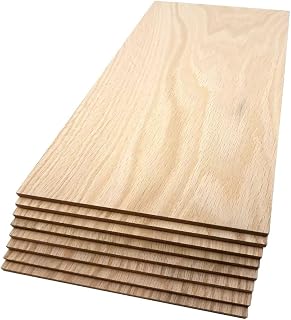
Top pick: THE HARDWOOD EDGE red oak planks. The listing describes an 8-pack of thin-sawn, 100% pure hardwood planks for crafts, with boards measuring 1/4 x 6 1/2 x 15 inches. The maker states the planks are kiln dried, precision sliced and sanded to a smooth finish, with natural red oak grain and color rather than a veneer on plywood. The listed uses cover signs, gifts, ornaments and awards, and the blanks are described as natural wood blanks for laser cutting and engraving machines. Read the listing with care, because it describes itself in more than one way: the bullets call red oak a high density hardwood with an open and highly variable grain and call engraving an advanced level task, while the spec table calls the grain subtle and straight, the density low and the skill level best for beginners. The title and bullets win over the spec table here, so plan for open grain and a learning curve, not for a plain, easy board. The thin profile suits signs, ornaments and layered projects, while deeper carving needs thicker stock.
Runner-up: Barrington Hardwoods red oak lumber boards. The listing describes a 4-piece set of boards measuring 3/4″ x 2″ x 18″, kiln dried with two sides sanded to 3/4″ thickness, and a weight of 5 pounds for the set. The maker lists a beautiful grain as the headline quality, and the rectangular boards suit small carved signs, plaques and parts where a thicker blank gives the bit room to work. The narrow width limits the size of any single piece, so plan designs that fit the board. For chunky small signs and parts that need depth, the extra thickness is the reason to pick this set over the thin blanks.
Between the two, start with the thin blanks for signs, gifts and ornaments, and reach for the thicker boards when the design needs depth or a sturdier feel. For bit choices, see our best engraving bits for wood and best downcut router bit guides.
Choosing between oak and maple for your project
- Carved house signs and rustic panels: oak, for grain that reads from a distance.
- Small lettering, logos and fine relief: maple, for lines that stay clean.
- Ornaments, gifts and awards: the thin red oak blanks, for a classic look at a handy size.
- Deeper carving and sturdy small signs: the thicker red oak boards, for depth the thin blanks cannot give.
- Painted or lightly finished work: maple, for a quiet surface under the finish.
Match the blank to the design before cutting, and keep a practice piece from the same stock for checking depth and feed settings before the real cut.
CNC safety and finishing notes
CNC work throws dust and chips, so ventilation and dust collection belong in the plan before the first cut. Clear chips often, keep hands clear of the bit path, and never leave a running job unattended. Check the bit and workholding before starting, and wear eye protection rated for the machine. For laser work on the same blanks, never laser PVC, vinyl, PVC-based faux leather, polycarbonate or ABS, and vent fumes outdoors or through a filter made for laser fumes.
For finishing, sand with the grain and seal oak to even out how the open grain takes the finish; a first light coat shows where the grain drinks more, and a next coat evens it out. Maple needs less help: a light sanding and a clear coat keep the detail visible without changing the color much. Try the finish on a scrap piece from the same board when possible, since grain varies from board to board in red oak.
FAQ: lasers and CNC
Is oak or maple better for CNC signs?
Oak suits bold signs where grain adds character, while maple suits signs with small text or fine detail. Pick by the design: loud grain for rustic signs, quiet grain for detailed ones.
Can the red oak boards here be used for laser engraving too?
The HARDWOOD EDGE planks are listed as natural wood blanks for laser cutting and engraving machines, so they suit both CNC and laser projects. The Barrington boards are listed as lumber boards, so use them for carved work sized to their dimensions.
What size oak boards should I start with?
Start with the sizes the listings state: thin blanks measuring 1/4 x 6 1/2 x 15 inches for signs, ornaments and gifts, and boards measuring 3/4″ x 2″ x 18″ for deeper, sturdier small pieces. Match the blank to the design size before cutting.
Does oak grain affect carved detail?
Yes. Red oak grain is open and highly variable, so bold designs carve well while very fine lines can lose definition where the grain runs strong. Keep delicate detail for maple or for a calmer stretch of oak.
Is maple better for painted CNC projects?
Maple usually suits painted work better, because its even grain stays quiet under paint. Oak grain can show through paint, which suits a rustic look but not a smooth painted finish.
Related: the best wood for CNC carving guide, maple vs birch for CNC and birch plywood vs oak plywood for CNC.