Router Table vs CNC Router: Which One Should You Buy?
How a router table and a CNC router differ in control, repeatability, space and learning curve, with four router table picks for the shop.

On this page
Top picks at a glance
As an Amazon Associate I earn from qualifying purchases.
- 1
 SpeTool Carbide Single Flute CNC Router Bits 1/8" Cutting9.7/10View on Amazon
- 2
 SainSmart Genmitsu 3020-PRO Ultra CNC Router Machine9.7/10View on Amazon
- 3
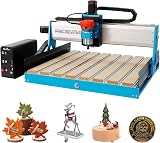 6050 CNC Router Machine9.6/10View on Amazon
- 4
 POWERTEC Router Table Insert Plate BoschView on Amazon
- 5
 RYOBI Universal Router Table A25RT03 Brand: RYOBIView on Amazon
- 6
 Kreg Precision Router Table TopView on Amazon
- 7
 Rockler Router Table w/ 28” ProFence and PlateView on Amazon
- 8
 MDF Router Table TopView on Amazon
- 9
 Cast Iron Router Table Extension WingView on Amazon
A router table vs CNC router decision comes down to who guides the cut: you guide the workpiece on a router table, while a CNC router follows a file you design on a computer. A router table is the simpler, smaller, more manual setup for edges, grooves and joinery; a CNC router repeats complex shapes and carvings automatically once the file is right. If you want to make one-off parts by hand, start with a table; if you want to repeat the same design many times, look at a CNC.
Other machines to compare
 POWERTEC Router Table Insert Plate BoschCheck price on Amazon
 RYOBI Universal Router Table A25RT03 Brand: RYOBICheck price on Amazon
 Kreg Precision Router Table TopCheck price on Amazon
 Rockler Router Table w/ 28” ProFence and PlateCheck price on Amazon
 MDF Router Table TopCheck price on Amazon
 Cast Iron Router Table Extension WingCheck price on Amazon
LaserEngraveHQ earns a commission from purchases made through these links, at no extra cost to you. Read our affiliate disclosure.
Every listing in the gear section below is a router table; no CNC router listing was in this product group, so the CNC side of this guide is described in general terms. The four table picks are ranked by what their listings state.
Router table vs CNC router: the short answer
A router table spins a bit in a fixed table while you push the wood past it by hand, using a fence, featherboards and a miter gauge for control. A CNC router moves the bit itself along computer-controlled paths, so the same file cuts the same part every time. The table takes less floor space and has a shorter learning curve; the CNC repeats complex work automatically once you know the software.
What a router table does well
Edge profiles, grooves, rabbets, raised panels and joinery cuts are the router table’s home ground. You feel the cut, adjust the feed by hand and change bits in minutes. Dust collection matters here: the Bosch RA1171 has two dust ports, one at the fence and one at the cabinet, and the Bosch RA1141 has a 2-1/2 inch vacuum hose port. Featherboards hold the workpiece against the fence, and both Bosch tables include them.
What a CNC router does well
A CNC router shines at repeatability: signs with the same lettering, inlays and nested parts cut from sheet goods come out identical run after run. Design happens on the computer, so curves and pockets that would need templates on a router table are just more lines in the file. The trade is floor space and dust on a bigger scale, plus the time to learn the software. See the mini CNC vs full size CNC router comparison for how the sizes compare.
Space, dust and learning curve
A benchtop router table like the Leegol, 34 inches wide, fits a small shop, and the Bosch RA1171 is a cabinet-style table with storage underneath. A CNC router needs room for the gantry plus the computer station. Both make chips and fine dust, so plan dust collection and ventilation for either; see the best shop vac for CNC router guide. Never leave a running machine unattended, and keep a suitable extinguisher within reach.
Which one fits your shop
Choose a router table if your work is edges, grooves and joinery on solid wood, or if shop space is tight. Choose a CNC router if you sell repeated designs, cut sheet goods into nested parts, or carve shapes that hand guiding cannot repeat. Some shops end up with both: the table for quick edge work and the CNC for production runs. For sheet stock, MDF vs plywood for CNC router covers the common choices.
Router table gear: four picks
Ranked by what each listing states. All four are router tables.
1. Bosch RA1171 cabinet router table
The RA1171 is a cabinet-style table with a laminated top, a rigid aluminum mounting plate and an extra tall fence with adjustable MDF faceplates. It includes featherboards, a clear guard, a starter pin and mounting hardware, plus two dust-collection ports, one at the fence and one at the cabinet. The table is 24.2 inches wide and weighs 35 pounds, and the listing states a Limited 1 Year warranty. Best for a permanent shop station where dust management matters.
2. Bosch RA1141 portable router table
The RA1141 is a portable jobsite table with a 26 by 16-1/2 inch laminated MDF top and folding legs. It has a tall fence with two adjustable featherboards, a 2-1/2 inch vacuum hose port, a starter pin and guard, and onboard storage for bits. It weighs 31.6 pounds and the listing states a Limited 1 Year warranty. Best for small shops and for taking the table to the work.
3. Leegol RT150 benchtop router table
The Leegol is a benchtop table 34 inches wide and 7.98 kg, with 8 by 18 inch extension tables at both ends. The fence works with a miter gauge for straight cuts and can serve as a vertical jointer, and the table accepts routers with up to a 6-inch diameter base plate. The spec table lists 1.5 hp. The listing promises a manufacturer warranty without stating a term. Best for wide workpieces on a budget footprint.
4. POWERTEC 71850 insert plate
The POWERTEC 71850 is not a table but the plate that holds the router: a 9-1/4 by 11-3/4 inch aluminum insert, 3/8 inch thick, with 8 leveling points and 4 reducer rings for different bit sizes. The listing names compatibility with a long list of routers from Bosch, DeWalt, Makita and others, and says it fits most commercial router table openings. Best for building a custom table or upgrading an existing one.
FAQ: lasers and CNC
Can a router table do what a CNC router does?
For edges, grooves, rabbets and joinery, yes, and often faster to set up. For repeated complex shapes and carving, no: that is the work a CNC repeats from a file.
Is a CNC router hard to learn?
There are two skills: the machine and the design software. A router table has the shorter learning curve because the skills are the woodworking ones you may already have.
What size router table do I need?
Tops in this group run 24.2 to 34 inches wide. Match the top to your usual workpiece: wider stock wants the Leegol’s extension tables or a bigger top.
Do I need dust collection for a router table?
Yes. Routers throw chips and fine dust, so hook up a shop vacuum or dust collector. The RA1171 has two dust ports and the RA1141 has a 2-1/2 inch vacuum hose port.
Can I build my own router table?
Yes, and the POWERTEC 71850 insert plate is made for it: 9-1/4 by 11-3/4 inches to fit most commercial openings, with leveling screws and reducer rings included.
Related: the mini vs full size CNC router comparison and the best shop vac for CNC router guide.