Rotary Fourth Axis vs Flat Spoilboard CNC: Which to Buy?
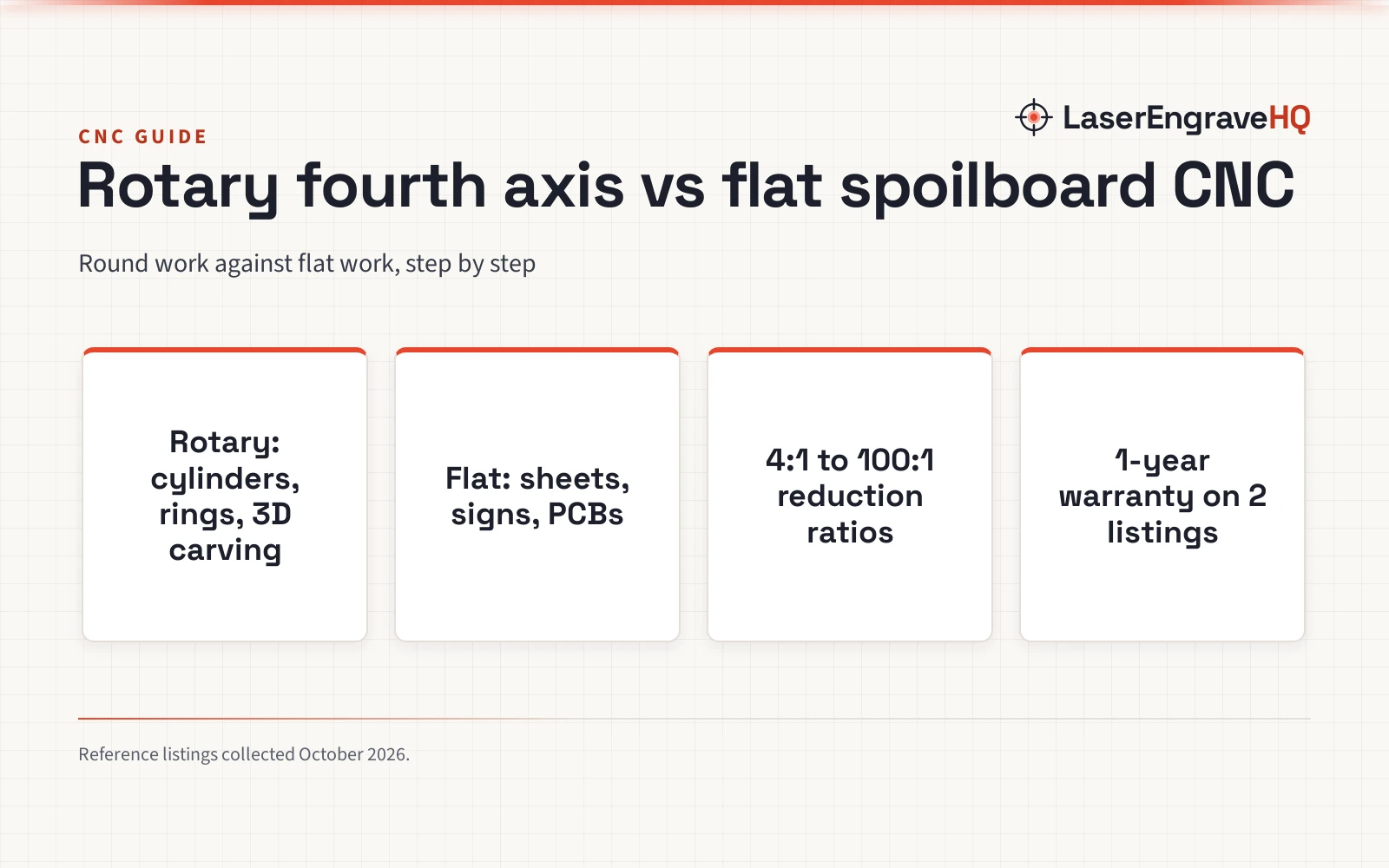
Rotary fourth axis vs flat spoilboard CNC: rotary modules carve cylinders and 3D shapes; flat spoilboards handle sheets and signs. Compare by work type.

On this page
Top picks at a glance
As an Amazon Associate I earn from qualifying purchases.
- 1
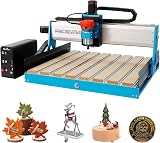 6050 CNC Router Machine9.6/10View on Amazon
- 2
 CNC Spoilboard Surfacing Router Bit9.6/10View on Amazon
- 3
 Twotrees TTC450 Pro All-Metal CNC Router Machine with NEMA 579.6/10View on Amazon
- 4
 ACMER M2 Laser Rotary RollerView on Amazon
- 5
 Genmitsu 4th Axis Rotary Module for 4040 and 3030 Series CNCView on Amazon
- 6
 CNCTOPBAOS K12-100mm CNC 4th Axis Rotary Table 4 Jaw Chuck w/View on Amazon
- 7
 Snapmaker 2.0 Rotary ModuleView on Amazon
- 8
 CNCTOPBAOS CNC Machine 4th Axis Rotary Table 65mm 3 Jaw ChuckView on Amazon
- 9
 ORTUR Laser Rotary RollerView on Amazon
Rotary fourth axis vs flat spoilboard CNC, the direct answer: a rotary fourth axis spins the workpiece so the tool can carve cylinders, rings and 3D shapes, while a flat spoilboard holds sheet and block stock for 2.5D carving. Both cut; the choice is round work against flat work. This guide explains the differences step by step, with figures from the rotary axis listings LaserEngraveHQ collected.
Other machines to compare
 ACMER M2 Laser Rotary RollerCheck price on Amazon
 Genmitsu 4th Axis Rotary Module for 4040 and 3030 Series CNCCheck price on Amazon
 CNCTOPBAOS K12-100mm CNC 4th Axis Rotary Table 4 Jaw Chuck w/Check price on Amazon
 Snapmaker 2.0 Rotary ModuleCheck price on Amazon
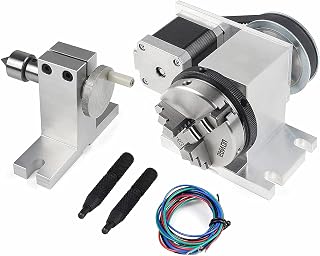 CNCTOPBAOS CNC Machine 4th Axis Rotary Table 65mm 3 Jaw ChuckCheck price on Amazon
 ORTUR Laser Rotary RollerCheck price on Amazon
LaserEngraveHQ earns a commission from purchases made through these links, at no extra cost to you. Affiliate disclosure.
Rotary fourth axis vs flat spoilboard CNC: the short version
The listings show the rotary side clearly:
- Rotary fourth axis modules add a spinning A axis to a 3-axis machine. The Longer 3-in-1 packs roller, chuck, sphere and ring modules with 360-degree-per-second engraving and a 0.45-degree minimum angle; the Genmitsu 4th axis uses a NEMA17 planetary geared stepper with a 10:1 ratio, 0.1-degree minimum angle and 300 degrees per second; the Snapmaker harmonic drive module runs a 100:1 reducer to a 0.1-degree minimum angle at 45 degrees per second.
- Flat spoilboard CNC is the standard setup: the workpiece clamps or vacuums to a flat sacrificial board and the spindle carves from above. No rotary listings describe spoilboards, so the flat side is general guidance: simpler setup, full XY work area, no fourth-axis toolpaths needed.
What the rotary listings state
10 rotary listings give a clear picture of the class. Chuck sizes run 63mm (CNCTOPBAOS 65mm, RATTMMOTOR) to 100mm (CNCTOPBAOS K12-100 models), with the OMTech 80mm 3-jaw clamping 2 to 63mm external and 25 to 70mm internal diameters. Clamping ranges run 1 to 50mm (RATTMMOTOR), 2 to 50mm diameter (Genmitsu), 10 to 200mm (Genmitsu), 15 to 275mm (SainSmart) and 4 to 138mm engraving space (ACMER M2). Reduction ratios run 4:1 (CNCTOPBAOS 65mm, RATTMMOTOR) to 100:1 (Snapmaker), with 6:1, 10:1 and 50:1 between. Minimum angles run 0.036 degrees per step (CNCTOPBAOS 50:1 harmonic) to 0.45 degrees (Longer). Stated weights include 2.1 kg (RATTMMOTOR) at the light end and 17.4 lb (CNCTOPBAOS K12-100 6:1) at the heavy end. Warranties: 1 year on the ACMER M2 and OMTech.
When a rotary fourth axis is the right call
Buy a rotary axis if the work is round: tumblers, rings, bats, bowls, dowels and 3D carvings. The Longer 3-in-1 covers rollers, chucks, spheres and rings in one kit at 8.71 pounds; the OMTech 80mm chuck targets rings, bracelets, pens, cups and tubes with 180-degree stepless angle adjustment. The trade-off is complexity: the Genmitsu listing notes that 4th-axis toolpaths need CAD/CAM software like Fusion 360 or Vectric, most of which is not free, and its 4040 series needs a separate offline controller.
When a flat spoilboard is the right call
Stay flat if the work is sheets, signs, panels and PCBs. A flat spoilboard uses the machine’s full XY travel, setups are clamps and tape, and nearly every CAM package handles 2.5D toolpaths. The trade-off is geometry: a flat setup cannot carve around a cylinder, and the fourth axis exists precisely for that job.
Buying advice: matching the module to the machine
Chuck size and clamping range
Match the chuck to the workpieces: 63mm chucks (CNCTOPBAOS 65mm, RATTMMOTOR) for small parts, 80mm (OMTech) for rings to cups, 100mm (CNCTOPBAOS K12-100) for larger cylinders. Check the clamping range against the actual diameters: 1 to 50mm, 2 to 63mm external, 15 to 275mm length on the SainSmart. The tailstock matters for long work: two listings include MT2 tailstocks for support, both CNCTOPBAOS K12-100 models.
Reduction ratio and precision
Higher reduction means finer steps and more torque: 4:1 on the budget end, 10:1 on the Genmitsu and SainSmart, 50:1 and 100:1 harmonic drives on the precision end at 0.036 and 0.1 degrees. For engraving text on tumblers, a 0.45-degree step is usually enough resolution; for 3D carving, the finer ratios earn their keep.
Tailstocks, center height and work length
Long cylinders need support at both ends. Two listings, both CNCTOPBAOS K12-100 models, include MT2 tailstocks with a 45mm expansion stroke; the 65mm and RATTMMOTOR kits include 54mm tailstocks with 20 to 30mm of telescopic stroke. Center height sets the maximum workpiece radius the module can swing: 50mm on the Genmitsu, 54mm on the 65mm kits, 65mm on the K12-100 models. Check work length against the tailstock figures: the Genmitsu lists 10 to 100mm with the tailstock and 10 to 200mm without it, while the SainSmart lists up to 275mm without the tailstock and 215mm with it.
Roller, chuck, or the 3-in-1 kit
Rollers and chucks hold work differently. The ACMER M2 is a roller with a one-piece rubber body and a 70A anti-slip rubber shaft, plus a toggle switch for rotary and non-rotary modes; rollers suit tumblers and cups held by friction. Chuck models grip the workpiece in jaws: the 65mm kits center within 0.05mm, and the K12-100 chucks list external jaw ranges of 30 to 80mm and internal ranges of 2 to 30mm. The Longer 3-in-1 bundles roller, chuck, sphere-engraving and ring-engraving modules in one kit, covering wine glasses, tumblers, baseball bats, rings and balls per its listing.
Motors and drive types
The motor and gearbox decide torque and precision. The 65mm kits and RATTMMOTOR use NEMA17 steppers at 1.7A with 45N.cm of torque through 4:1 belt reduction; the K12-100 models step up to NEMA23 at 3A, with the 6:1 model listing 270oz-in (1.8Nm) of holding torque. The 50:1 CNCTOPBAOS model uses a harmonic gapless gearbox the listing describes as having no backlash, for higher rigidity and smoother operation. Belt drives are the budget end, planetary gears sit in the middle on the Genmitsu and SainSmart, and harmonic drives are the precision end.
Software and machine fit
A rotary axis is only as useful as its toolchain. The Genmitsu listing notes 4th-axis toolpaths need CAD/CAM software like Fusion 360 or Vectric, most of which is not free, and its 4040 series needs a separate offline controller while the 3030 series ships with one. The Snapmaker module works with the free Snapmaker Luban software and offers 0.2, 1 and 5-degree rotation steps on the touchscreen. The Longer attachment works with LaserGRBL and LightBurn and fits the Nano, Ray5 and B1 series. Match the module to the machine first: the listings name the 4040-PRO and 3030 series, the Snapmaker A350T and A350, and the Longer Nano, Ray5 and B1 lines.
FAQ: lasers and CNC
What is a fourth axis on a CNC?
A rotary axis that spins the workpiece, usually called the A axis, so the tool can carve cylinders and 3D shapes instead of only flat stock.
Do I need special software for a rotary axis?
Yes. The Genmitsu listing notes 4th-axis toolpaths need CAD/CAM software like Fusion 360 or Vectric, most of which is not free.
Roller or chuck rotary?
Rollers suit tumblers and cylinders held by friction; chucks grip the workpiece positively. The Longer 3-in-1 includes both plus sphere and ring modules.
How precise are these modules?
Minimum angles run 0.036 degrees (harmonic 50:1) to 0.45 degrees (Longer), per the listings.
More laser and CNC guides
For the machines they mount to, browse our CNC routers guides.